
Logo

UK and EU textile labelling laws require clear fibre‑composition information on products so consumers can assess quality and retailers can demonstrate compliance.
Textile labelling requirements aim to inform consumers and businesses about the materials used in fabrics. When customers know what fibres a product contains, they can assess its quality, durability and suitability.
For textiles and clothing, specific legal rules set out what information must be shown on labels, packaging, and in any advertisements or online product descriptions.
In the UK and European Union (EU), listing a product’s fibre composition is mandatory. Other details – such as sizing, origin and care instructions – may be included but are optional.
The Textile Products (Labelling and Fibre Composition) Regulations 2012 set out the legal requirements for textile labelling in the UK, including how these rules are enforced and the penalties for not following them. Under Regulation 5 it is an offence to sell a textile product that doesn’t meet these labelling standards. The regulation also outlines which products and businesses are exempt from these rules.
Under the Windsor Framework, textile labelling requirements in Northern Ireland continue to align with EU Regulation (EU) No 1007/2011, including rules on permitted fibre names and how composition must be presented.
Retailers must be able to demonstrate that they took all reasonable steps to comply with these regulations. This includes ensuring the accuracy of information provided by staff as well as manufacturers and suppliers.
The regulations apply to any products made entirely from textile fibres, whether raw, semi-worked, manufactured or made-up. This applies no matter how the fibres are mixed or put together.
In addition, the following items are considered textile products:
The regulations exclude bespoke products, such as one-off items made by self-employed tailors or independent makers, even if made from donated or gifted fabrics.
There are some products that do not require fibre content labelling requirements, including:
If an item contains more than one fibre type, each component must be labelled with its correct composition – for example, wool 80%, cotton 20%. There are only certain fibre names you’re allowed to use, and the regulations list permitted names, along with the products that don’t need to show fibre content – see exempted products.
In the EU and UK, all textile items for consumers must include this information. Labels are usually stitched inside clothing, so they’re easy to find.
For business-to-business sales, fibre composition may be listed in accompanying commercial documents instead.
To meet the regulations and inform consumers, textile labels must:
Where fibre composition for textile products is difficult to determine, terms such as 'mixed fibres' or 'unspecified textile composition' may be used to help avoid misleading consumers. Small accessories like buttons, buckles, slide fasteners do not require fibre labelling.
Specific rules apply for labelling certain products, including corsetry and embroidered textiles.
Where identical textile items are sold in multipacks, fibre composition can be labelled on the packaging instead of each individual product.
Labels should be securely attached, but do not need to be permanent. Secure and durable swing tickets or gummed labels are acceptable at the point of sale. For pre-packed items, it is sufficient to show the fibre composition on the packaging only.
All new textile products must display their fibre composition with a label.
Second-hand products must also be labelled. If the fibre content cannot be determined – for example, when original labels are missing – retailers may describe the item as 'old made-up textile product' to clearly inform consumers of the uncertainty regarding fibre content.
If customers can order a product directly from an advert, the advert must state the fibre content.
This applies to:
Manufacturers, distributors, and importers must provide a label showing the item’s fibre content when introducing a textile product to the market under the Textile Products (Labelling and Fibre Composition) Regulations 2012. This information must be accurate and not misleading, reflecting the actual composition.
The Digital Markets, Competition and Consumers Act 2024 (DMCCA) also prohibits misleading claims, actions and omissions relating to product descriptions.
Examples of misleading claims include:
In Northern Ireland, the Trading Standards Service Northern Ireland enforces textile labelling regulations. They ensure retailers provide accurate information about fibre composition so consumers can make informed choices when purchasing textiles.
UK and EU textile labelling laws require clear fibre‑composition information on products so consumers can assess quality and retailers can demonstrate compliance.
Textile labelling requirements aim to inform consumers and businesses about the materials used in fabrics. When customers know what fibres a product contains, they can assess its quality, durability and suitability.
For textiles and clothing, specific legal rules set out what information must be shown on labels, packaging, and in any advertisements or online product descriptions.
In the UK and European Union (EU), listing a product’s fibre composition is mandatory. Other details – such as sizing, origin and care instructions – may be included but are optional.
The Textile Products (Labelling and Fibre Composition) Regulations 2012 set out the legal requirements for textile labelling in the UK, including how these rules are enforced and the penalties for not following them. Under Regulation 5 it is an offence to sell a textile product that doesn’t meet these labelling standards. The regulation also outlines which products and businesses are exempt from these rules.
Under the Windsor Framework, textile labelling requirements in Northern Ireland continue to align with EU Regulation (EU) No 1007/2011, including rules on permitted fibre names and how composition must be presented.
Retailers must be able to demonstrate that they took all reasonable steps to comply with these regulations. This includes ensuring the accuracy of information provided by staff as well as manufacturers and suppliers.
The regulations apply to any products made entirely from textile fibres, whether raw, semi-worked, manufactured or made-up. This applies no matter how the fibres are mixed or put together.
In addition, the following items are considered textile products:
The regulations exclude bespoke products, such as one-off items made by self-employed tailors or independent makers, even if made from donated or gifted fabrics.
There are some products that do not require fibre content labelling requirements, including:
If an item contains more than one fibre type, each component must be labelled with its correct composition – for example, wool 80%, cotton 20%. There are only certain fibre names you’re allowed to use, and the regulations list permitted names, along with the products that don’t need to show fibre content – see exempted products.
In the EU and UK, all textile items for consumers must include this information. Labels are usually stitched inside clothing, so they’re easy to find.
For business-to-business sales, fibre composition may be listed in accompanying commercial documents instead.
To meet the regulations and inform consumers, textile labels must:
Where fibre composition for textile products is difficult to determine, terms such as 'mixed fibres' or 'unspecified textile composition' may be used to help avoid misleading consumers. Small accessories like buttons, buckles, slide fasteners do not require fibre labelling.
Specific rules apply for labelling certain products, including corsetry and embroidered textiles.
Where identical textile items are sold in multipacks, fibre composition can be labelled on the packaging instead of each individual product.
Labels should be securely attached, but do not need to be permanent. Secure and durable swing tickets or gummed labels are acceptable at the point of sale. For pre-packed items, it is sufficient to show the fibre composition on the packaging only.
All new textile products must display their fibre composition with a label.
Second-hand products must also be labelled. If the fibre content cannot be determined – for example, when original labels are missing – retailers may describe the item as 'old made-up textile product' to clearly inform consumers of the uncertainty regarding fibre content.
If customers can order a product directly from an advert, the advert must state the fibre content.
This applies to:
Manufacturers, distributors, and importers must provide a label showing the item’s fibre content when introducing a textile product to the market under the Textile Products (Labelling and Fibre Composition) Regulations 2012. This information must be accurate and not misleading, reflecting the actual composition.
The Digital Markets, Competition and Consumers Act 2024 (DMCCA) also prohibits misleading claims, actions and omissions relating to product descriptions.
Examples of misleading claims include:
In Northern Ireland, the Trading Standards Service Northern Ireland enforces textile labelling regulations. They ensure retailers provide accurate information about fibre composition so consumers can make informed choices when purchasing textiles.
UK and EU textile labelling laws require clear fibre‑composition information on products so consumers can assess quality and retailers can demonstrate compliance.
Textile labelling requirements aim to inform consumers and businesses about the materials used in fabrics. When customers know what fibres a product contains, they can assess its quality, durability and suitability.
For textiles and clothing, specific legal rules set out what information must be shown on labels, packaging, and in any advertisements or online product descriptions.
In the UK and European Union (EU), listing a product’s fibre composition is mandatory. Other details – such as sizing, origin and care instructions – may be included but are optional.
The Textile Products (Labelling and Fibre Composition) Regulations 2012 set out the legal requirements for textile labelling in the UK, including how these rules are enforced and the penalties for not following them. Under Regulation 5 it is an offence to sell a textile product that doesn’t meet these labelling standards. The regulation also outlines which products and businesses are exempt from these rules.
Under the Windsor Framework, textile labelling requirements in Northern Ireland continue to align with EU Regulation (EU) No 1007/2011, including rules on permitted fibre names and how composition must be presented.
Retailers must be able to demonstrate that they took all reasonable steps to comply with these regulations. This includes ensuring the accuracy of information provided by staff as well as manufacturers and suppliers.
The regulations apply to any products made entirely from textile fibres, whether raw, semi-worked, manufactured or made-up. This applies no matter how the fibres are mixed or put together.
In addition, the following items are considered textile products:
The regulations exclude bespoke products, such as one-off items made by self-employed tailors or independent makers, even if made from donated or gifted fabrics.
There are some products that do not require fibre content labelling requirements, including:
If an item contains more than one fibre type, each component must be labelled with its correct composition – for example, wool 80%, cotton 20%. There are only certain fibre names you’re allowed to use, and the regulations list permitted names, along with the products that don’t need to show fibre content – see exempted products.
In the EU and UK, all textile items for consumers must include this information. Labels are usually stitched inside clothing, so they’re easy to find.
For business-to-business sales, fibre composition may be listed in accompanying commercial documents instead.
To meet the regulations and inform consumers, textile labels must:
Where fibre composition for textile products is difficult to determine, terms such as 'mixed fibres' or 'unspecified textile composition' may be used to help avoid misleading consumers. Small accessories like buttons, buckles, slide fasteners do not require fibre labelling.
Specific rules apply for labelling certain products, including corsetry and embroidered textiles.
Where identical textile items are sold in multipacks, fibre composition can be labelled on the packaging instead of each individual product.
Labels should be securely attached, but do not need to be permanent. Secure and durable swing tickets or gummed labels are acceptable at the point of sale. For pre-packed items, it is sufficient to show the fibre composition on the packaging only.
All new textile products must display their fibre composition with a label.
Second-hand products must also be labelled. If the fibre content cannot be determined – for example, when original labels are missing – retailers may describe the item as 'old made-up textile product' to clearly inform consumers of the uncertainty regarding fibre content.
If customers can order a product directly from an advert, the advert must state the fibre content.
This applies to:
Manufacturers, distributors, and importers must provide a label showing the item’s fibre content when introducing a textile product to the market under the Textile Products (Labelling and Fibre Composition) Regulations 2012. This information must be accurate and not misleading, reflecting the actual composition.
The Digital Markets, Competition and Consumers Act 2024 (DMCCA) also prohibits misleading claims, actions and omissions relating to product descriptions.
Examples of misleading claims include:
In Northern Ireland, the Trading Standards Service Northern Ireland enforces textile labelling regulations. They ensure retailers provide accurate information about fibre composition so consumers can make informed choices when purchasing textiles.
UK and EU textile labelling laws require clear fibre‑composition information on products so consumers can assess quality and retailers can demonstrate compliance.
Textile labelling requirements aim to inform consumers and businesses about the materials used in fabrics. When customers know what fibres a product contains, they can assess its quality, durability and suitability.
For textiles and clothing, specific legal rules set out what information must be shown on labels, packaging, and in any advertisements or online product descriptions.
In the UK and European Union (EU), listing a product’s fibre composition is mandatory. Other details – such as sizing, origin and care instructions – may be included but are optional.
The Textile Products (Labelling and Fibre Composition) Regulations 2012 set out the legal requirements for textile labelling in the UK, including how these rules are enforced and the penalties for not following them. Under Regulation 5 it is an offence to sell a textile product that doesn’t meet these labelling standards. The regulation also outlines which products and businesses are exempt from these rules.
Under the Windsor Framework, textile labelling requirements in Northern Ireland continue to align with EU Regulation (EU) No 1007/2011, including rules on permitted fibre names and how composition must be presented.
Retailers must be able to demonstrate that they took all reasonable steps to comply with these regulations. This includes ensuring the accuracy of information provided by staff as well as manufacturers and suppliers.
The regulations apply to any products made entirely from textile fibres, whether raw, semi-worked, manufactured or made-up. This applies no matter how the fibres are mixed or put together.
In addition, the following items are considered textile products:
The regulations exclude bespoke products, such as one-off items made by self-employed tailors or independent makers, even if made from donated or gifted fabrics.
There are some products that do not require fibre content labelling requirements, including:
If an item contains more than one fibre type, each component must be labelled with its correct composition – for example, wool 80%, cotton 20%. There are only certain fibre names you’re allowed to use, and the regulations list permitted names, along with the products that don’t need to show fibre content – see exempted products.
In the EU and UK, all textile items for consumers must include this information. Labels are usually stitched inside clothing, so they’re easy to find.
For business-to-business sales, fibre composition may be listed in accompanying commercial documents instead.
To meet the regulations and inform consumers, textile labels must:
Where fibre composition for textile products is difficult to determine, terms such as 'mixed fibres' or 'unspecified textile composition' may be used to help avoid misleading consumers. Small accessories like buttons, buckles, slide fasteners do not require fibre labelling.
Specific rules apply for labelling certain products, including corsetry and embroidered textiles.
Where identical textile items are sold in multipacks, fibre composition can be labelled on the packaging instead of each individual product.
Labels should be securely attached, but do not need to be permanent. Secure and durable swing tickets or gummed labels are acceptable at the point of sale. For pre-packed items, it is sufficient to show the fibre composition on the packaging only.
All new textile products must display their fibre composition with a label.
Second-hand products must also be labelled. If the fibre content cannot be determined – for example, when original labels are missing – retailers may describe the item as 'old made-up textile product' to clearly inform consumers of the uncertainty regarding fibre content.
If customers can order a product directly from an advert, the advert must state the fibre content.
This applies to:
Manufacturers, distributors, and importers must provide a label showing the item’s fibre content when introducing a textile product to the market under the Textile Products (Labelling and Fibre Composition) Regulations 2012. This information must be accurate and not misleading, reflecting the actual composition.
The Digital Markets, Competition and Consumers Act 2024 (DMCCA) also prohibits misleading claims, actions and omissions relating to product descriptions.
Examples of misleading claims include:
In Northern Ireland, the Trading Standards Service Northern Ireland enforces textile labelling regulations. They ensure retailers provide accurate information about fibre composition so consumers can make informed choices when purchasing textiles.
Find out your responsibilities when you sell goods, including describing them accurately and ensuring their quality, safety, durability and fitness for purpose.
If you supply goods to your customers either by sale, hire, part exchange or hire purchase, you must have the right to do so. This means that you must own the goods or have permission from the owner to sell.
All goods, whether new or used, must meet set standards which include:
Satisfactory quality is what a reasonable person would expect based on the type of goods, price, and any description or claims made by you or the manufacturer.
Quality involves several factors such as:
Goods must be suitable for the purpose the customer needs. If the customer tells you, or it’s clear, that they need the goods for a specific purpose, the goods must meet that requirement.
For example, if a customer wants a vacuum cleaner that removes pet hair, any model you suggest or support must be suitable for that specific need.
You must make sure that goods meet any description you give. For example, a vehicle must precisely match the model specified, have the stated engine size and reflect the accurate number of previous owners, as disclosed to the customer. Descriptions can be verbal, written or visual, such as a photograph on a website.
If you show a sample (like a carpet swatch) or a model (such as a display product), the goods you supply must match it.
As a trader, you are responsible for ensuring that the customer receives the goods. This can be achieved either by handing the goods directly to them in a shop or by delivering them to the customer’s home or another agreed location.
If you have agreed on a delivery date with your customer, you must deliver by that date.
If you do not agree a delivery date before the sale is completed, you must deliver the goods within 30 days from the date the contract is formed. In practical terms, this means the goods must reach the customer no later than 30 days after they place the order.
You should not routinely leave delivery to the end of the 30 days if you can deliver earlier.
As the trader, you are responsible for the goods until the customer, or someone they have authorised, receives them. If you arrange a courier to deliver the items, you are responsible for any errors or issues that may arise during delivery by that courier.
However, if the customer independently arranges for their own carrier to collect and deliver the goods, you are not liable for any problems that might arise during transit.
If you agree to install the goods you supply, you must carry out the installation properly. This is not only a legal obligation, but also an important aspect of providing good customer service.
Fulfilling these responsibilities shows professionalism and can help support the success and reputation of your business.
The Consumer Rights Act 2015 defines 'digital content' as 'data which is produced and supplied in digital form'.
It covers many digital formats including:
The law sets standards for every digital content transaction, requiring it to meet specific criteria.
Digital content supplied to consumers should be:
Find out your responsibilities when you sell services including providing services with care and skill within a reasonable time and for a reasonable charge.
When you enter into a contract to supply services to a customer, you must:
If you supply goods as part of providing a service, those goods must also meet the relevant legal requirements for goods under the Consumer Rights Act.
For example, if you are hired as a central heating engineer to install a central heating system, you must meet obligations for both the installation service and the goods provided – such as pipes, radiators and boilers. You must ensure these goods meet the required standards, such as being of satisfactory quality.
Consumers have numerous rights when buying goods, including the right to reject unsatisfactory goods and get a refund.
If you supply goods that fail to meet contract terms, e.g. because goods are of unsatisfactory quality, you are legally required to resolve the issue. Consumers have specific remedies available under the Consumer Rights Act.
The remedies you offer will depend on the specific situation and how long it has been since the customer received the goods.
Consumers may access the following remedies:
If you have supplied goods that do not meet the required standards, and the customer received them within the past 30 days, the customer usually has a right to reject the goods and request a refund. This is known as the short term right to reject.
If the consumer requests a repair or replacement within the initial 30–day period, this timeframe is paused while the requested action is carried out.
Once the customer receives their goods back, they will then have the remaining duration of the original 30–day period, or at least seven days (whichever is longer) to check whether the repair or replacement has been successful and to decide whether to reject the goods.
If the short term right to reject period has ended or is not used, the customer may still ask for a repair or replacement. You must provide a repair or replacement at no extra cost, within a reasonable time and without causing any significant inconvenience.
A customer cannot choose between these two remedies if providing one is impossible or disproportionate to the other. For example, if repair is the most cost–effective option and can be done within a reasonable time, without causing significant inconvenience, then the customer cannot insist on a replacement.
The customer only has to give you one opportunity to repair or replace. If this fails or the goods become faulty again, then they can either keep the goods and ask for a price reduction or reject the goods and obtain a refund. This is referred to as the final right to reject.
The customer may also seek a price reduction or reject goods if you fail to repair or replace them within a reasonable time or if it causes them significant inconvenience.
When a consumer chooses repair, replacement or exercises their final right to reject and the problem is found within six months of delivery, the law generally presumes that the fault was there at the time of delivery. However, the trader can challenge this assumption by providing evidence to the contrary e.g. by showing that a fault was caused by normal wear and tear or by obvious signs of misuse. This is known as the reversed burden of proof.
If you can’t prove that faults were not present at the time of delivery, you are liable for repair, replacement or a price reduction or refund.
After the first six months, the burden of proof will lie with the customer. This may apply if there was a hidden or underlying fault when the customer took delivery of the goods.
The consumer also carries the burden of proof when using their short term right to reject.
If you do not deliver by an agreed time or within 30 days and it was essential to the customer to receive on time – either they told you before agreeing to buy, or this was clear from the circumstances (for example, a wedding cake which is to be delivered on the wedding day) then the customer can cancel the contract and request a refund.
If the delivery time wasn’t essential, the consumer may set a new reasonable deadline for delivery, which must be appropriate considering the circumstances. If you still do not deliver after this extended timeframe, then the customer can seek a refund.
If you do not remember the customer buying the goods, you may ask them for proof of purchase. This does not have to be a receipt; alternative evidence such as a bank statement or credit card statement can be acceptable.
When a customer is entitled to a refund, you must pay it without undue delay, and within 14 days of agreeing that they are entitled to it.
If goods don’t conform to the contract within the first six months, you are generally expected to provide a full refund. For hire agreements, you should reimburse any payment made for goods not used or services not delivered.
After the first six months, you may make a deduction from the refund for the customer’s use of the goods. The deduction should be reasonable and proportionate.
A deduction for use of motor vehicles may be made after the first 30 days.
You should issue the refund using the original payment method, unless the customer agrees to a different option. As a trader, you are responsible for the reasonable cost of returning goods, unless the customer is returning them to the original location where they got them, such as a retail shop.
However, consumers are not required to return the goods to this place unless the contract clearly required it from the start. Even when goods are returned to the shop, the customer may still be able to claim those costs from the trader. For example, if a motor vehicle breaks down and the consumer has to pay for a recovery service to return it, they may seek reimbursement.
Consumers have a number of rights when buying digital content such as computer games, TV programmes, books, computer software or mobile device apps.
If you supply digital content as part of a contract which is not of satisfactory quality, fit for a particular purpose or as described, the customer may be entitled to the following remedies.
If digital content does not meet the contract, the customer’s first step is to request a repair or replacement.
You must carry out the repair or replacement within a reasonable time and without causing significant inconvenience.
You must cover all associated costs such as labour, materials or postage.
You do not have to offer a repair or replacement if it is impossible to do so or if this is disproportionate compared to another remedy, such as a refund.
If a fault appears with the digital content within the first six months of delivery, it is presumed that the issue existed on the day of supply, unless you can prove otherwise or the circumstances make this unlikely. For example, computer software that works well for four months and only fails after the consumer installs a different programme from a different provider.
If a repair or replacement is not possible, or you fail to repair or replace within a reasonable time, then the customer can request a price reduction. The amount may match the total price originally paid.
Consumer rights for digital content apply only if the consumer has to pay a monetary price as part of the contract.
Payments can be made using cash or other methods such as gift vouchers, or in–game virtual money. Digital content can be sold as a one–off purchase or by an ongoing subscription.
Free digital content, such as an app or game, does not carry the same rights as paid digital content. However, you are still responsible if the free digital content damages a consumer’s device or other digital content.
There are certain circumstances when free digital content is treated as paid content.
Consumers typically retain their rights when complimentary digital content is supplied with paid for goods, services or other digital content, or when it would not normally be available without payment.
For example, free antivirus software included with the sale of a computer is covered because antivirus software is usually only available for purchase or bundled with other paid goods.
Consumers have a number of rights when buying services, including the right to a repeated service when the original was not completed with care and skill.
If a customer is unhappy with a service you have provided, the Consumer Rights Act 2015 gives them several rights.
If the trader breaches the contract by failing to meet the required standards for the supply of services, the consumer can expect the trader to put things right.
The consumer is entitled by law to the following remedies: repeat performance, and price reduction.
This remedy is available when the trader fails to exercise reasonable care and skill or when they breach a requirement arising from the information they have given about the service. In such cases, the consumer can request the trader to repeat the service to complete it properly. This work must be done at no cost to the consumer, within a reasonable time and without causing significant inconvenience to the consumer.
The consumer cannot ask for repeat performance if completing the service to the required standard is not feasible.
A consumer can claim a price reduction if repeat performance is impossible or cannot be completed within a reasonable time or without causing significant inconvenience. The consumer can also claim a price reduction if the service is not completed within a reasonable time or if the trader fails to fulfil obligations based on information provided about aspects other than the service itself, such as information they have given about their business.
The amount of the price reduction will depend on how serious the breaches were, and it can be anything up to 100% of the price. If the consumer has already paid in full or in part for the service, they may be entitled to some money back.
Consumers have a number of rights with mixed contracts, including their short-term to reject.
Some contracts may involve a combination of goods, services and/or digital content. For example, electronic equipment may contain digital content, or a garage may install parts when carrying out a service.
For mixed contracts, all relevant parts of the Consumer Rights Act will apply. For example, if a garage is installing parts when carrying out a service, the rights and remedies for goods will apply to the parts (goods), while rights and remedies for services will apply to labour the garage performs.
The rules differ slightly for goods that are sold with digital content. If there is a problem with the digital content sold with goods, in most circumstances the consumer has two options:
If you have a contract for the supply and installation of goods, and there is a problem with the installation, the customer:
Customers cannot claim for disclosed defects, wear and tear, damage they caused, or change-of-mind returns.
A customer won’t be able to ask for a refund, repair or replacement for any defects that were pointed out before they bought goods or if the defects would have been obvious to the customer when they were examining them before purchase.
They also cannot claim for damages they cause to goods, services or digital content.
If you provide a service with reasonable care and skill, but it does not achieve the consumer's desired outcome, the customer will not have grounds to claim unless there was an agreement to provide that specific outcome.
If a customer purchases in your shop or at another normal place of business, they do not have a right to cancel if they simply change their mind. The rules are different for distance and off-premises sales – see right to cancel consumer contracts.
A customer cannot make a claim under the Act for any goods or services that fail due to normal wear and tear.
For perishable goods like flowers or food, the right to reject usually only lasts for the product’s expected lifespan, such as the expiry date.
The standard 30 day right to reject applies to seasonal goods. For example, if a customer buys a Christmas gift in October and only discovers a fault on Christmas day, they no longer have a short term right to reject. Instead, they are entitled to repair, replacement or price reduction. However, you may offer a longer right to reject seasonal goods at your discretion.
Businesses must comply with the Consumer Rights Act when deciding to provide legally compliant guarantees.
Regardless of the remedy chosen, customers may also claim extra compensation for proven losses. This can include damage to property, personal injury or other reasonable expenses the customer can show they have incurred.
There is no requirement to offer a guarantee with your goods or services. However, if you do, or if there is a manufacturer’s guarantee, it becomes legally binding.
Any guarantee must:
The customer can ask you to provide this information even if you aren’t the guarantor.
If there is a problem with the goods or services provided, the consumer can choose whether to rely on the guarantee or to use their statutory rights under the Act.
You must respect and cannot deny a customer their statutory rights and should not try to pass off responsibility onto the manufacturer or another guarantee provider.
What to do when you can't resolve a complaint with a customer including seeking advice from Businessline and resolving through the small claims court.
If you have tried to resolve a customer's complaint but the situation is 'deadlocked', what happens next will depend on whether:
If you accept that the customer has a valid claim under the Consumer Rights Act, but are confident that you have offered the necessary refund, repair or replacement, you may already have met your legal obligations even if the customer disagrees.
If you're unsure whether what you have offered is sufficient, you should seek advice from Businessline.
If a customer does decide to pursue a claim, they can use the small claims court procedure for goods up to a maximum value of £5,000. You can choose to defend the claim yourself or appoint someone to represent you. Larger claims can be made through civil actions in the County Court.
A consumer cannot normally bring a claim to court more than six years after the breach of contract, which for goods is usually the date of delivery. Not all goods need to last this long; it is simply the legal timeframe for consumers to take action.
Always try to resolve complaints if possible. Time spent dealing with a legal claim is likely to be greater than the time needed to settle the matter amicably. Unresolved complaints also risk the loss of at least one customer and possible bad publicity for your business.
When there is a dispute between a business and a consumer, there are different options available to help resolve the issue. Alternative Dispute Resolution (ADR) is any process for the resolution of a dispute out of court.
Although traders do not have to agree to use ADR for a consumer dispute (unless it is compulsory for them by law, by scheme membership or by contract), traders are required to provide certain information about ADR to consumers.
When a trader is considering a consumer complaint and they have gone through their own complaint–handlings procedure, they must provide the consumer with:
The trader has to give the consumer details of an ADR provider but does not have to agree to use ADR.
The information must be provided in a 'durable medium' – for example, a letter or an email – and it will normally form part of the final 'deadlock' letter in response to a consumer complaint.
In addition, when a trader is subject to compulsory ADR, either by law or through the membership of a trade association, they must provide the name and website address of the ADR provider or scheme on their own website (if they have one) and as part of their general contract terms.
Rules for selling goods and services away from business premises
Doorstep selling is a specific type of off-premises sales that occurs when a seller visits a consumer’s home or workplace to sell goods, services, or digital content face-to-face.
Off-premises sales more broadly include any sales made during or immediately following a meeting between a trader and consumer at a location that is not the seller’s usual business premises, such as trade fairs or excursions.
If you sell goods, services or digital content to consumers during a visit to their home (known as doorstep selling), or at any place that is not your usual business premises, there are specific rules you need to follow.
Doorstep and other off-premises sales are ruled by the Consumer Contracts (Information, Cancellation and Additional Charges) Regulations 2013. These regulations apply whether the consumer invites you or you make an unsolicited visit.
If you agree a sale, in most circumstances you must provide customers with a 14-day cooling off period. During this period, customers can cancel if they simply change their mind. See right to cancel consumer contracts.
However, there are certain contracts which are exempt from the right to cancel. See exemptions from the right to cancel consumer contracts.
The regulations have specific rules to protect consumers from unfair practices during off-premises sales. These include:
No cold calling rules apply to doorstep sales; traders must not visit homes or zones that have been signed unless invited.
If you carry out door-to-door sales, you must check to see if there are any No Cold Calling signs, similar to the one below, displayed at any property you visit or zones in the area.
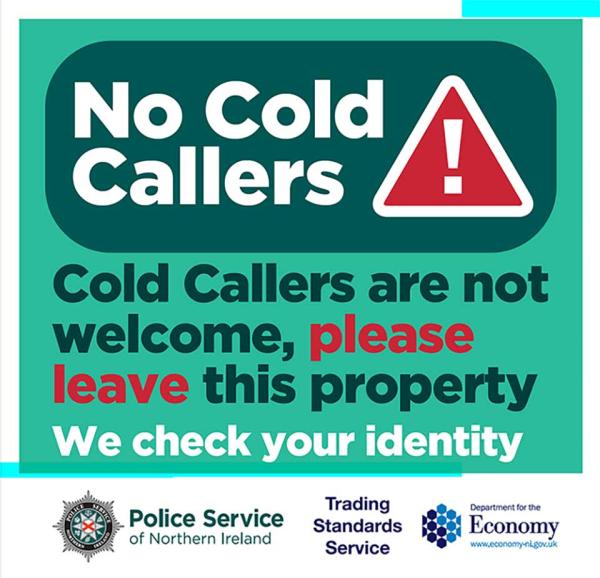
If you see a No Cold Calling sign or any request to leave a property, you must not call at the house unless the occupier has invited you.
You should also be aware of signage in the area you are operating in. Certain residential areas are designated No Cold Calling Zones, meaning you cannot call to any houses in that area unless invited.
No Cold Calling Zone Signs will usually be displayed on lampposts and in other visible places throughout the No Cold Calling Zone area.
If you call uninvited to a property displaying a No Cold Calling sign or to properties within a No Cold Calling Zone, you could be committing a criminal offence.
Doorstep sales conduct rules include respecting time, showing id, avoiding pressure and protecting vulnerable people.
When conducting door-to-door sales you should:
If you fail to consider and act upon the steps above, you could be committing an offence under the Digital Markets, Competition and Consumers Act 2024, and you could face prison or a fine if convicted.
See how to comply with the Digital Markets, Competition and Consumers Act 2024.
Selling goods, services, or digital content off-premises requires you to give customers specific information before and after entering into a contract.
If you sell goods, services or digital content to consumers away from your business premises, then there is certain information that you must give to your customers before and after they enter into a contract with you, including:
You must provide consumers with information in a way that is clear, easy to read and understand. You must provide the information on paper or, if the consumer agrees, on another durable medium, for example, in a personally addressed letter or email.
If you fail to provide consumers with information on their right to cancel (including informing them that they will be responsible for the cost of returning the goods or that they will have to pay for any services started within the cancellation period), then you will be committing a criminal offence. It is important that you keep records to prove that you have provided this information.
Some contracts are exempt from the requirement to provide the full list of information.
These contracts include:
Consumer contracts rules for doorstep sales, including knowing when cancellation rights do not apply.
There are certain contracts where the Consumer Contracts (Information, Cancellation and Additional Charges Regulations) do not apply - see exemptions from the right to cancel consumer contracts.
The exempted contracts most relevant to doorstep sales include:
Consumer contract rules after agreement include providing written confirmation, delivering on time, fair deposits, and clear terms.
Once a contract has been agreed you must:
For repairs and/or maintenance contracts, you may not need to provide the full list of required information if:
That information that should be provided on a durable medium e.g., paper or a personally addressed email includes:
The following details should be ideally provided on a durable medium, but alternatively, they can be made available, for example, via your website:
Check when the customer agrees to decide if the contract is off-premises and what rules apply.
If you visit a consumer in their home and leave a quotation (or send one later) giving them time to decide before entering into the contract, the contract will not be considered an off-premises contract. Instead, it will be treated as an on-premises contract, meaning that you will only have to provide the information required for on-premises contracts.
However, if the customer decides to enter into the contract during or immediately after your visit, the contract will be classified as an off-premises contract. In this case, you must comply with the full rules for off-premises contracts. This includes providing the full list of information and providing customers with their cancellation rights.
Businesses must inform consumers of their right to cancel off-premises contracts and explain how to do so clearly.
If you sell goods, digital content or services to a consumer in their home (or by another off-premises method) that costs more than £42, in most circumstances the consumer will have a 14-day right to cancel. This right gives consumers 14 calendar days to change their minds and cancel a service and/or return goods. They do not have to give a reason for doing so.
The cancellation end period can vary depending on the type of contract and other relevant circumstances, for example, if goods are delivered in instalments.
If you do not provide the customer with information on their cancellation rights, then the customer’s right to cancel can be extended by up to 12 months. The customer will not have to pay for any services provided or goods they have used.
You must make the customer aware of the process for cancellation and provide them with a model cancellation form. The customer does not have to use the form and may cancel by another method of communication, for example, by phone or email.
After the customer makes you aware they want to cancel:
For further information on cancellation rights, see right to cancel consumer contracts.
Ensure customers understand their cancellation rights before starting work during the cooling-off period.
In most circumstances, you should not start any work until the 14-day cooling off period has passed. However, the Consumer Contracts (Information, Cancellation and Additional Charges) Regulations do allow you to begin a service within the cancellation period and charge for these services provided that:
Any charges for services provided up to the point of cancellation should be reasonable and proportionate.
If the contract is for goods and services combined, otherwise known as sales contracts, then the customer will still be able to cancel the goods side of the contract and receive a refund. For example, a customer pays for the supply and fitting of a fireplace and asks that you install it within the cancellation period.
In these circumstances, the customer can still remove and return the fireplace for a refund but will be liable for the fitting charges (if you have advised them before the contract was formed that they would be liable for these costs).
If you fail to inform customers that they are liable for any charges for services performed within the cancellation period, fail to provide them with information on their right to cancel or if the customer does not request that you begin the services within the cancellation period, then the customer will not have to pay any charges.
Off-premises contracts may not carry cancellation rights for low-value sales, urgent repairs requested by the consumer, or personalised goods and services.
Consumers who enter into off-premises contracts will usually have 14 calendar days to change their minds. However, there are certain contracts which are exempt from the right to cancel.
Those most relevant to doorstep selling are:
Get a pedlar’s certificate for door-to-door sales and include required business details on all documents to meet legal obligations.
To conduct door-to-door sales, you must have a pedlar’s certificate. Pedlar certificates are issued by the Chief Constable of the Police Service of Northern Ireland. The licence must be produced when requested. You could receive a fine or imprisonment if you operate without a licence.
Under the Companies Act 2006, sole traders and partnerships must display owner names, business names, and contact addresses on invoices and receipts.
Under the Company, Limited Liability Partnership and Business (Names and Trading Disclosures) Regulations 2015, limited Companies and limited Liability Partnerships must display registered business names, company numbers, and registered addresses on business documents.
Rules for selling goods and services away from business premises
Doorstep selling is a specific type of off-premises sales that occurs when a seller visits a consumer’s home or workplace to sell goods, services, or digital content face-to-face.
Off-premises sales more broadly include any sales made during or immediately following a meeting between a trader and consumer at a location that is not the seller’s usual business premises, such as trade fairs or excursions.
If you sell goods, services or digital content to consumers during a visit to their home (known as doorstep selling), or at any place that is not your usual business premises, there are specific rules you need to follow.
Doorstep and other off-premises sales are ruled by the Consumer Contracts (Information, Cancellation and Additional Charges) Regulations 2013. These regulations apply whether the consumer invites you or you make an unsolicited visit.
If you agree a sale, in most circumstances you must provide customers with a 14-day cooling off period. During this period, customers can cancel if they simply change their mind. See right to cancel consumer contracts.
However, there are certain contracts which are exempt from the right to cancel. See exemptions from the right to cancel consumer contracts.
The regulations have specific rules to protect consumers from unfair practices during off-premises sales. These include:
No cold calling rules apply to doorstep sales; traders must not visit homes or zones that have been signed unless invited.
If you carry out door-to-door sales, you must check to see if there are any No Cold Calling signs, similar to the one below, displayed at any property you visit or zones in the area.
If you see a No Cold Calling sign or any request to leave a property, you must not call at the house unless the occupier has invited you.
You should also be aware of signage in the area you are operating in. Certain residential areas are designated No Cold Calling Zones, meaning you cannot call to any houses in that area unless invited.
No Cold Calling Zone Signs will usually be displayed on lampposts and in other visible places throughout the No Cold Calling Zone area.
If you call uninvited to a property displaying a No Cold Calling sign or to properties within a No Cold Calling Zone, you could be committing a criminal offence.
Doorstep sales conduct rules include respecting time, showing id, avoiding pressure and protecting vulnerable people.
When conducting door-to-door sales you should:
If you fail to consider and act upon the steps above, you could be committing an offence under the Digital Markets, Competition and Consumers Act 2024, and you could face prison or a fine if convicted.
See how to comply with the Digital Markets, Competition and Consumers Act 2024.
Selling goods, services, or digital content off-premises requires you to give customers specific information before and after entering into a contract.
If you sell goods, services or digital content to consumers away from your business premises, then there is certain information that you must give to your customers before and after they enter into a contract with you, including:
You must provide consumers with information in a way that is clear, easy to read and understand. You must provide the information on paper or, if the consumer agrees, on another durable medium, for example, in a personally addressed letter or email.
If you fail to provide consumers with information on their right to cancel (including informing them that they will be responsible for the cost of returning the goods or that they will have to pay for any services started within the cancellation period), then you will be committing a criminal offence. It is important that you keep records to prove that you have provided this information.
Some contracts are exempt from the requirement to provide the full list of information.
These contracts include:
Consumer contracts rules for doorstep sales, including knowing when cancellation rights do not apply.
There are certain contracts where the Consumer Contracts (Information, Cancellation and Additional Charges Regulations) do not apply - see exemptions from the right to cancel consumer contracts.
The exempted contracts most relevant to doorstep sales include:
Consumer contract rules after agreement include providing written confirmation, delivering on time, fair deposits, and clear terms.
Once a contract has been agreed you must:
For repairs and/or maintenance contracts, you may not need to provide the full list of required information if:
That information that should be provided on a durable medium e.g., paper or a personally addressed email includes:
The following details should be ideally provided on a durable medium, but alternatively, they can be made available, for example, via your website:
Check when the customer agrees to decide if the contract is off-premises and what rules apply.
If you visit a consumer in their home and leave a quotation (or send one later) giving them time to decide before entering into the contract, the contract will not be considered an off-premises contract. Instead, it will be treated as an on-premises contract, meaning that you will only have to provide the information required for on-premises contracts.
However, if the customer decides to enter into the contract during or immediately after your visit, the contract will be classified as an off-premises contract. In this case, you must comply with the full rules for off-premises contracts. This includes providing the full list of information and providing customers with their cancellation rights.
Businesses must inform consumers of their right to cancel off-premises contracts and explain how to do so clearly.
If you sell goods, digital content or services to a consumer in their home (or by another off-premises method) that costs more than £42, in most circumstances the consumer will have a 14-day right to cancel. This right gives consumers 14 calendar days to change their minds and cancel a service and/or return goods. They do not have to give a reason for doing so.
The cancellation end period can vary depending on the type of contract and other relevant circumstances, for example, if goods are delivered in instalments.
If you do not provide the customer with information on their cancellation rights, then the customer’s right to cancel can be extended by up to 12 months. The customer will not have to pay for any services provided or goods they have used.
You must make the customer aware of the process for cancellation and provide them with a model cancellation form. The customer does not have to use the form and may cancel by another method of communication, for example, by phone or email.
After the customer makes you aware they want to cancel:
For further information on cancellation rights, see right to cancel consumer contracts.
Ensure customers understand their cancellation rights before starting work during the cooling-off period.
In most circumstances, you should not start any work until the 14-day cooling off period has passed. However, the Consumer Contracts (Information, Cancellation and Additional Charges) Regulations do allow you to begin a service within the cancellation period and charge for these services provided that:
Any charges for services provided up to the point of cancellation should be reasonable and proportionate.
If the contract is for goods and services combined, otherwise known as sales contracts, then the customer will still be able to cancel the goods side of the contract and receive a refund. For example, a customer pays for the supply and fitting of a fireplace and asks that you install it within the cancellation period.
In these circumstances, the customer can still remove and return the fireplace for a refund but will be liable for the fitting charges (if you have advised them before the contract was formed that they would be liable for these costs).
If you fail to inform customers that they are liable for any charges for services performed within the cancellation period, fail to provide them with information on their right to cancel or if the customer does not request that you begin the services within the cancellation period, then the customer will not have to pay any charges.
Off-premises contracts may not carry cancellation rights for low-value sales, urgent repairs requested by the consumer, or personalised goods and services.
Consumers who enter into off-premises contracts will usually have 14 calendar days to change their minds. However, there are certain contracts which are exempt from the right to cancel.
Those most relevant to doorstep selling are:
Get a pedlar’s certificate for door-to-door sales and include required business details on all documents to meet legal obligations.
To conduct door-to-door sales, you must have a pedlar’s certificate. Pedlar certificates are issued by the Chief Constable of the Police Service of Northern Ireland. The licence must be produced when requested. You could receive a fine or imprisonment if you operate without a licence.
Under the Companies Act 2006, sole traders and partnerships must display owner names, business names, and contact addresses on invoices and receipts.
Under the Company, Limited Liability Partnership and Business (Names and Trading Disclosures) Regulations 2015, limited Companies and limited Liability Partnerships must display registered business names, company numbers, and registered addresses on business documents.
Rules for selling goods and services away from business premises
Doorstep selling is a specific type of off-premises sales that occurs when a seller visits a consumer’s home or workplace to sell goods, services, or digital content face-to-face.
Off-premises sales more broadly include any sales made during or immediately following a meeting between a trader and consumer at a location that is not the seller’s usual business premises, such as trade fairs or excursions.
If you sell goods, services or digital content to consumers during a visit to their home (known as doorstep selling), or at any place that is not your usual business premises, there are specific rules you need to follow.
Doorstep and other off-premises sales are ruled by the Consumer Contracts (Information, Cancellation and Additional Charges) Regulations 2013. These regulations apply whether the consumer invites you or you make an unsolicited visit.
If you agree a sale, in most circumstances you must provide customers with a 14-day cooling off period. During this period, customers can cancel if they simply change their mind. See right to cancel consumer contracts.
However, there are certain contracts which are exempt from the right to cancel. See exemptions from the right to cancel consumer contracts.
The regulations have specific rules to protect consumers from unfair practices during off-premises sales. These include:
No cold calling rules apply to doorstep sales; traders must not visit homes or zones that have been signed unless invited.
If you carry out door-to-door sales, you must check to see if there are any No Cold Calling signs, similar to the one below, displayed at any property you visit or zones in the area.
If you see a No Cold Calling sign or any request to leave a property, you must not call at the house unless the occupier has invited you.
You should also be aware of signage in the area you are operating in. Certain residential areas are designated No Cold Calling Zones, meaning you cannot call to any houses in that area unless invited.
No Cold Calling Zone Signs will usually be displayed on lampposts and in other visible places throughout the No Cold Calling Zone area.
If you call uninvited to a property displaying a No Cold Calling sign or to properties within a No Cold Calling Zone, you could be committing a criminal offence.
Doorstep sales conduct rules include respecting time, showing id, avoiding pressure and protecting vulnerable people.
When conducting door-to-door sales you should:
If you fail to consider and act upon the steps above, you could be committing an offence under the Digital Markets, Competition and Consumers Act 2024, and you could face prison or a fine if convicted.
See how to comply with the Digital Markets, Competition and Consumers Act 2024.
Selling goods, services, or digital content off-premises requires you to give customers specific information before and after entering into a contract.
If you sell goods, services or digital content to consumers away from your business premises, then there is certain information that you must give to your customers before and after they enter into a contract with you, including:
You must provide consumers with information in a way that is clear, easy to read and understand. You must provide the information on paper or, if the consumer agrees, on another durable medium, for example, in a personally addressed letter or email.
If you fail to provide consumers with information on their right to cancel (including informing them that they will be responsible for the cost of returning the goods or that they will have to pay for any services started within the cancellation period), then you will be committing a criminal offence. It is important that you keep records to prove that you have provided this information.
Some contracts are exempt from the requirement to provide the full list of information.
These contracts include:
Consumer contracts rules for doorstep sales, including knowing when cancellation rights do not apply.
There are certain contracts where the Consumer Contracts (Information, Cancellation and Additional Charges Regulations) do not apply - see exemptions from the right to cancel consumer contracts.
The exempted contracts most relevant to doorstep sales include:
Consumer contract rules after agreement include providing written confirmation, delivering on time, fair deposits, and clear terms.
Once a contract has been agreed you must:
For repairs and/or maintenance contracts, you may not need to provide the full list of required information if:
That information that should be provided on a durable medium e.g., paper or a personally addressed email includes:
The following details should be ideally provided on a durable medium, but alternatively, they can be made available, for example, via your website:
Check when the customer agrees to decide if the contract is off-premises and what rules apply.
If you visit a consumer in their home and leave a quotation (or send one later) giving them time to decide before entering into the contract, the contract will not be considered an off-premises contract. Instead, it will be treated as an on-premises contract, meaning that you will only have to provide the information required for on-premises contracts.
However, if the customer decides to enter into the contract during or immediately after your visit, the contract will be classified as an off-premises contract. In this case, you must comply with the full rules for off-premises contracts. This includes providing the full list of information and providing customers with their cancellation rights.
Businesses must inform consumers of their right to cancel off-premises contracts and explain how to do so clearly.
If you sell goods, digital content or services to a consumer in their home (or by another off-premises method) that costs more than £42, in most circumstances the consumer will have a 14-day right to cancel. This right gives consumers 14 calendar days to change their minds and cancel a service and/or return goods. They do not have to give a reason for doing so.
The cancellation end period can vary depending on the type of contract and other relevant circumstances, for example, if goods are delivered in instalments.
If you do not provide the customer with information on their cancellation rights, then the customer’s right to cancel can be extended by up to 12 months. The customer will not have to pay for any services provided or goods they have used.
You must make the customer aware of the process for cancellation and provide them with a model cancellation form. The customer does not have to use the form and may cancel by another method of communication, for example, by phone or email.
After the customer makes you aware they want to cancel:
For further information on cancellation rights, see right to cancel consumer contracts.
Ensure customers understand their cancellation rights before starting work during the cooling-off period.
In most circumstances, you should not start any work until the 14-day cooling off period has passed. However, the Consumer Contracts (Information, Cancellation and Additional Charges) Regulations do allow you to begin a service within the cancellation period and charge for these services provided that:
Any charges for services provided up to the point of cancellation should be reasonable and proportionate.
If the contract is for goods and services combined, otherwise known as sales contracts, then the customer will still be able to cancel the goods side of the contract and receive a refund. For example, a customer pays for the supply and fitting of a fireplace and asks that you install it within the cancellation period.
In these circumstances, the customer can still remove and return the fireplace for a refund but will be liable for the fitting charges (if you have advised them before the contract was formed that they would be liable for these costs).
If you fail to inform customers that they are liable for any charges for services performed within the cancellation period, fail to provide them with information on their right to cancel or if the customer does not request that you begin the services within the cancellation period, then the customer will not have to pay any charges.
Off-premises contracts may not carry cancellation rights for low-value sales, urgent repairs requested by the consumer, or personalised goods and services.
Consumers who enter into off-premises contracts will usually have 14 calendar days to change their minds. However, there are certain contracts which are exempt from the right to cancel.
Those most relevant to doorstep selling are:
Get a pedlar’s certificate for door-to-door sales and include required business details on all documents to meet legal obligations.
To conduct door-to-door sales, you must have a pedlar’s certificate. Pedlar certificates are issued by the Chief Constable of the Police Service of Northern Ireland. The licence must be produced when requested. You could receive a fine or imprisonment if you operate without a licence.
Under the Companies Act 2006, sole traders and partnerships must display owner names, business names, and contact addresses on invoices and receipts.
Under the Company, Limited Liability Partnership and Business (Names and Trading Disclosures) Regulations 2015, limited Companies and limited Liability Partnerships must display registered business names, company numbers, and registered addresses on business documents.
Rules for selling goods and services away from business premises
Doorstep selling is a specific type of off-premises sales that occurs when a seller visits a consumer’s home or workplace to sell goods, services, or digital content face-to-face.
Off-premises sales more broadly include any sales made during or immediately following a meeting between a trader and consumer at a location that is not the seller’s usual business premises, such as trade fairs or excursions.
If you sell goods, services or digital content to consumers during a visit to their home (known as doorstep selling), or at any place that is not your usual business premises, there are specific rules you need to follow.
Doorstep and other off-premises sales are ruled by the Consumer Contracts (Information, Cancellation and Additional Charges) Regulations 2013. These regulations apply whether the consumer invites you or you make an unsolicited visit.
If you agree a sale, in most circumstances you must provide customers with a 14-day cooling off period. During this period, customers can cancel if they simply change their mind. See right to cancel consumer contracts.
However, there are certain contracts which are exempt from the right to cancel. See exemptions from the right to cancel consumer contracts.
The regulations have specific rules to protect consumers from unfair practices during off-premises sales. These include:
No cold calling rules apply to doorstep sales; traders must not visit homes or zones that have been signed unless invited.
If you carry out door-to-door sales, you must check to see if there are any No Cold Calling signs, similar to the one below, displayed at any property you visit or zones in the area.
If you see a No Cold Calling sign or any request to leave a property, you must not call at the house unless the occupier has invited you.
You should also be aware of signage in the area you are operating in. Certain residential areas are designated No Cold Calling Zones, meaning you cannot call to any houses in that area unless invited.
No Cold Calling Zone Signs will usually be displayed on lampposts and in other visible places throughout the No Cold Calling Zone area.
If you call uninvited to a property displaying a No Cold Calling sign or to properties within a No Cold Calling Zone, you could be committing a criminal offence.
Doorstep sales conduct rules include respecting time, showing id, avoiding pressure and protecting vulnerable people.
When conducting door-to-door sales you should:
If you fail to consider and act upon the steps above, you could be committing an offence under the Digital Markets, Competition and Consumers Act 2024, and you could face prison or a fine if convicted.
See how to comply with the Digital Markets, Competition and Consumers Act 2024.
Selling goods, services, or digital content off-premises requires you to give customers specific information before and after entering into a contract.
If you sell goods, services or digital content to consumers away from your business premises, then there is certain information that you must give to your customers before and after they enter into a contract with you, including:
You must provide consumers with information in a way that is clear, easy to read and understand. You must provide the information on paper or, if the consumer agrees, on another durable medium, for example, in a personally addressed letter or email.
If you fail to provide consumers with information on their right to cancel (including informing them that they will be responsible for the cost of returning the goods or that they will have to pay for any services started within the cancellation period), then you will be committing a criminal offence. It is important that you keep records to prove that you have provided this information.
Some contracts are exempt from the requirement to provide the full list of information.
These contracts include:
Consumer contracts rules for doorstep sales, including knowing when cancellation rights do not apply.
There are certain contracts where the Consumer Contracts (Information, Cancellation and Additional Charges Regulations) do not apply - see exemptions from the right to cancel consumer contracts.
The exempted contracts most relevant to doorstep sales include:
Consumer contract rules after agreement include providing written confirmation, delivering on time, fair deposits, and clear terms.
Once a contract has been agreed you must:
For repairs and/or maintenance contracts, you may not need to provide the full list of required information if:
That information that should be provided on a durable medium e.g., paper or a personally addressed email includes:
The following details should be ideally provided on a durable medium, but alternatively, they can be made available, for example, via your website:
Check when the customer agrees to decide if the contract is off-premises and what rules apply.
If you visit a consumer in their home and leave a quotation (or send one later) giving them time to decide before entering into the contract, the contract will not be considered an off-premises contract. Instead, it will be treated as an on-premises contract, meaning that you will only have to provide the information required for on-premises contracts.
However, if the customer decides to enter into the contract during or immediately after your visit, the contract will be classified as an off-premises contract. In this case, you must comply with the full rules for off-premises contracts. This includes providing the full list of information and providing customers with their cancellation rights.
Businesses must inform consumers of their right to cancel off-premises contracts and explain how to do so clearly.
If you sell goods, digital content or services to a consumer in their home (or by another off-premises method) that costs more than £42, in most circumstances the consumer will have a 14-day right to cancel. This right gives consumers 14 calendar days to change their minds and cancel a service and/or return goods. They do not have to give a reason for doing so.
The cancellation end period can vary depending on the type of contract and other relevant circumstances, for example, if goods are delivered in instalments.
If you do not provide the customer with information on their cancellation rights, then the customer’s right to cancel can be extended by up to 12 months. The customer will not have to pay for any services provided or goods they have used.
You must make the customer aware of the process for cancellation and provide them with a model cancellation form. The customer does not have to use the form and may cancel by another method of communication, for example, by phone or email.
After the customer makes you aware they want to cancel:
For further information on cancellation rights, see right to cancel consumer contracts.
Ensure customers understand their cancellation rights before starting work during the cooling-off period.
In most circumstances, you should not start any work until the 14-day cooling off period has passed. However, the Consumer Contracts (Information, Cancellation and Additional Charges) Regulations do allow you to begin a service within the cancellation period and charge for these services provided that:
Any charges for services provided up to the point of cancellation should be reasonable and proportionate.
If the contract is for goods and services combined, otherwise known as sales contracts, then the customer will still be able to cancel the goods side of the contract and receive a refund. For example, a customer pays for the supply and fitting of a fireplace and asks that you install it within the cancellation period.
In these circumstances, the customer can still remove and return the fireplace for a refund but will be liable for the fitting charges (if you have advised them before the contract was formed that they would be liable for these costs).
If you fail to inform customers that they are liable for any charges for services performed within the cancellation period, fail to provide them with information on their right to cancel or if the customer does not request that you begin the services within the cancellation period, then the customer will not have to pay any charges.
Off-premises contracts may not carry cancellation rights for low-value sales, urgent repairs requested by the consumer, or personalised goods and services.
Consumers who enter into off-premises contracts will usually have 14 calendar days to change their minds. However, there are certain contracts which are exempt from the right to cancel.
Those most relevant to doorstep selling are:
Get a pedlar’s certificate for door-to-door sales and include required business details on all documents to meet legal obligations.
To conduct door-to-door sales, you must have a pedlar’s certificate. Pedlar certificates are issued by the Chief Constable of the Police Service of Northern Ireland. The licence must be produced when requested. You could receive a fine or imprisonment if you operate without a licence.
Under the Companies Act 2006, sole traders and partnerships must display owner names, business names, and contact addresses on invoices and receipts.
Under the Company, Limited Liability Partnership and Business (Names and Trading Disclosures) Regulations 2015, limited Companies and limited Liability Partnerships must display registered business names, company numbers, and registered addresses on business documents.