

Exemptions to the right to cancel for doorstep selling
In this guide:
- Doorstep and other off-premises sales
- Regulations for doorstep and other off-premises sales
- What are No Cold Calling signs and zones?
- How should you conduct doorstep sales?
- Providing clear and accessible consumer information
- Contracts exempt from the Consumer Contracts Regulations
- What are your legal obligations after a doorstep or other off-premises sales contract is agreed?
- Understanding contract types when you provide a quotation
- Customer’s right to cancel
- Services provided during the cancellation period
- Exemptions to the right to cancel for doorstep selling
- Licensing and other legal requirements for doorstep sales
Regulations for doorstep and other off-premises sales
Rules for selling goods and services away from business premises
Doorstep selling is a specific type of off-premises sales that occurs when a seller visits a consumer’s home or workplace to sell goods, services, or digital content face-to-face.
Off-premises sales more broadly include any sales made during or immediately following a meeting between a trader and consumer at a location that is not the seller’s usual business premises, such as trade fairs or excursions.
If you sell goods, services or digital content to consumers during a visit to their home (known as doorstep selling), or at any place that is not your usual business premises, there are specific rules you need to follow.
Doorstep and other off-premises sales are ruled by the Consumer Contracts (Information, Cancellation and Additional Charges) Regulations 2013. These regulations apply whether the consumer invites you or you make an unsolicited visit.If you agree a sale, in most circumstances you must provide customers with a 14-day cooling off period. During this period, customers can cancel if they simply change their mind. See right to cancel consumer contracts.
However, there are certain contracts which are exempt from the right to cancel. See exemptions from the right to cancel consumer contracts.Additional consumer protections
The regulations have specific rules to protect consumers from unfair practices during off-premises sales. These include:
- Prohibition of premium rate helplines - sellers cannot require consumers to use premium rate phone lines for customer helplines related to the contract.
- No default opt-outs for additional charges - contracts cannot include default options that automatically add charges (e.g., insurance cover). The consumer must explicitly opt in.
Developed withPrimary parentContent category
Source URL
/content/regulations-doorstep-and-other-premises-sales
Links
What are No Cold Calling signs and zones?
No cold calling rules apply to doorstep sales; traders must not visit homes or zones that have been signed unless invited.
If you carry out door-to-door sales, you must check to see if there are any No Cold Calling signs, similar to the one below, displayed at any property you visit or zones in the area.
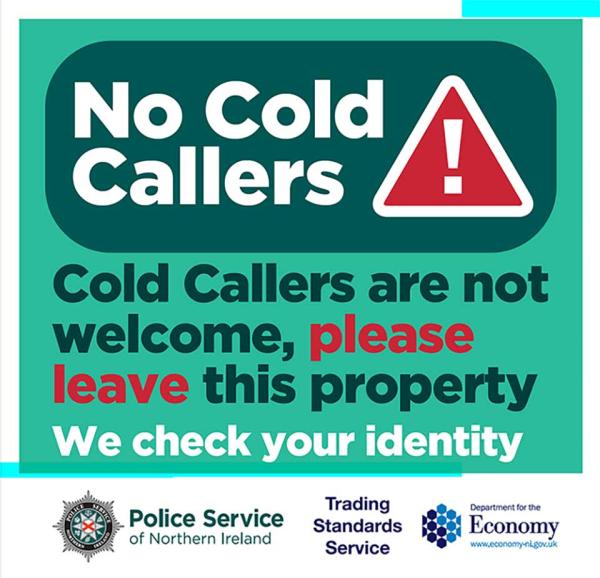
If you see a No Cold Calling sign or any request to leave a property, you must not call at the house unless the occupier has invited you.You should also be aware of signage in the area you are operating in. Certain residential areas are designated No Cold Calling Zones, meaning you cannot call to any houses in that area unless invited.
No Cold Calling Zone Signs will usually be displayed on lampposts and in other visible places throughout the No Cold Calling Zone area.
If you call uninvited to a property displaying a No Cold Calling sign or to properties within a No Cold Calling Zone, you could be committing a criminal offence.
Developed withActionsPrimary parentContent category
Source URL
/content/what-are-no-cold-calling-signs-and-zones
Links
How should you conduct doorstep sales?
Doorstep sales conduct rules include respecting time, showing id, avoiding pressure and protecting vulnerable people.
When conducting door-to-door sales you should:
- Consider the time – do not call very early in the morning or late at night unless the customer has asked you to.
- Show valid identification if possible.
- Always leave when asked to do so.
- Consider if the customer is vulnerable. A person can be vulnerable due to their age, physical or mental health, their gullibility or even the circumstances they are in. If you think a person is not in a position to agree to a contract, walk away and give them time to think it over. Encourage them to discuss the contract with an appropriate person before signing, for example, a family member, friend or neighbour.
- Never claim to be a member of a trade association or signed to a code of conduct if you are not.
- Never try to pressure a customer into buying your products, for example, by making exaggerated claims about crime rates in the area or by stating that you could lose your job if you don’t make a sale.
- Ensure that all staff you employ are fully trained on the legal requirements when doorstep selling, as you could be held liable for anything they do or say.
If you fail to consider and act upon the steps above, you could be committing an offence under the Digital Markets, Competition and Consumers Act 2024, and you could face prison or a fine if convicted.
See how to comply with the Digital Markets, Competition and Consumers Act 2024.
Developed withPrimary parentContent category
Source URL
/content/how-should-you-conduct-doorstep-sales
Links
Providing clear and accessible consumer information
Selling goods, services, or digital content off-premises requires you to give customers specific information before and after entering into a contract.
If you sell goods, services or digital content to consumers away from your business premises, then there is certain information that you must give to your customers before and after they enter into a contract with you, including:
- Your business name, geographical address and, where applicable, a telephone number and email address to allow customers to contact you quickly and efficiently.
- A description of the product, including as much information as possible.
- The total price, including delivery costs and any other applicable charges. Prices must be inclusive of VAT, and if a price can’t be calculated in advance, you must explain how it will be calculated, e.g., how much you charge per hour.
- Information on payment and performance of the contract, for example, how long you will take to complete a service or how long goods will take to be delivered.
- Information on a consumers right to cancel, including the cancellation process. You must provide consumers with a cancellation form, which must follow the same format as the model cancellation form provided in the regulations.
- If you are expecting consumers to pay for the cost of returning the goods, you must tell them about this beforehand.
- If you offer a service contract, a consumer may expressly request that you start your service within the cancellation period. You must tell them that if they later decide to cancel the contract before works are complete and within the 14 day period, then, they will be required to pay you reasonable costs for the service you have delivered up to the time of their cancellation. See services provided during the cancellation period.
You must provide consumers with information in a way that is clear, easy to read and understand. You must provide the information on paper or, if the consumer agrees, on another durable medium, for example, in a personally addressed letter or email.
If you fail to provide consumers with information on their right to cancel (including informing them that they will be responsible for the cost of returning the goods or that they will have to pay for any services started within the cancellation period), then you will be committing a criminal offence. It is important that you keep records to prove that you have provided this information.
Exemptions from full information requirements for certain off-premises contracts
Some contracts are exempt from the requirement to provide the full list of information.
These contracts include:- Contracts for £42 or less – doorstep and other off-premises contracts for £42 or less are exempt under the regulations; however, information about the price and characteristics of the product must always be provided.
- Repair or maintenance services contracts costing less than £170 – you will still be required to provide your name and address, the price and a cancellation form - see repairs and maintenance contracts.
Developed withActionsPrimary parentContent category
Source URL
/content/providing-clear-and-accessible-consumer-information
Links
Contracts exempt from the Consumer Contracts Regulations
Consumer contracts rules for doorstep sales, including knowing when cancellation rights do not apply.
There are certain contracts where the Consumer Contracts (Information, Cancellation and Additional Charges Regulations) do not apply - see exemptions from the right to cancel consumer contracts.
The exempted contracts most relevant to doorstep sales include:
- Financial Services e.g., banking, credit, insurance or personal pensions - however if credit or insurance is sold along with contracts for goods or services these will be known as ancillary contracts and the regulations will still apply.
- The construction of new buildings or substantial construction of new buildings e.g., barn conversions. This exemption does not apply to extensions to existing buildings which will still be covered.
- Residential letting contracts, but contracts with estate agents in relation to the sale or letting of properties will still be covered.
- Supply of consumables by regular rounds people e.g., delivery of milk or coal. The visits must be frequent and regular to a customer’s home, residence or workplace.
Developed withPrimary parentContent category
Source URL
/content/contracts-exempt-consumer-contracts-regulations
Links
What are your legal obligations after a doorstep or other off-premises sales contract is agreed?
Consumer contract rules after agreement include providing written confirmation, delivering on time, fair deposits, and clear terms.
Once a contract has been agreed you must:
- Provide a copy or confirmation of the contract on paper or another durable medium, no later than when goods are delivered or services start.
- Only take upfront deposits if necessary, for example, to purchase materials needed to start the work, and always ensure that any deposits you take are reasonable and proportionate.
- Deliver goods within 30 days unless another date is agreed.
- Provide services as soon as possible, ensuring that any agreed timescales are honoured.
- Perform services with reasonable care and skill and in accordance with any description you have made.
- Ensure goods are of satisfactory quality and as described.
- Get agreement from the customer before commencing any additional work which is in addition to the original contract. You will also need to provide the required information which is related to this additional work, for example, any new description, the price, and information on the right to cancel.
Repairs and maintenance contracts
For repairs and/or maintenance contracts, you may not need to provide the full list of required information if:
- the contract is a service only contract
- the customer has explicitly asked you to carry out a service for the purpose of repairs or maintenance (for uninvited visits then you must provide the full list of information)
- you are going to perform the service immediately
- the cost of the contract is £170 or less
That information that should be provided on a durable medium e.g., paper or a personally addressed email includes:
- your name and business address (if you are acting on behalf of another trader their name and business address)
- the total price inclusive of VAT or where the price cannot be reasonably calculated in advance, details of how the price will be calculated and an estimate of cost
- any delivery costs or additional charges
- a cancellation form where the right to cancel exists - see right to cancel consumer contracts
The following details should be ideally provided on a durable medium, but alternatively, they can be made available, for example, via your website:
- characteristics of the product
- their right to cancel, the process for cancellation and details of where the right to cancel does not exist and where the right to cancel is lost
Developed withActionsPrimary parentContent category
Source URL
/content/what-are-your-legal-obligations-after-doorstep-or-other-premises-sales-contract-agreed
Links
Understanding contract types when you provide a quotation
Check when the customer agrees to decide if the contract is off-premises and what rules apply.
If you visit a consumer in their home and leave a quotation (or send one later) giving them time to decide before entering into the contract, the contract will not be considered an off-premises contract. Instead, it will be treated as an on-premises contract, meaning that you will only have to provide the information required for on-premises contracts.
However, if the customer decides to enter into the contract during or immediately after your visit, the contract will be classified as an off-premises contract. In this case, you must comply with the full rules for off-premises contracts. This includes providing the full list of information and providing customers with their cancellation rights.
Developed withActionsPrimary parentContent category
Source URL
/content/understanding-contract-types-when-you-provide-quotation
Links
Customer’s right to cancel
Businesses must inform consumers of their right to cancel off-premises contracts and explain how to do so clearly.
If you sell goods, digital content or services to a consumer in their home (or by another off-premises method) that costs more than £42, in most circumstances the consumer will have a 14-day right to cancel. This right gives consumers 14 calendar days to change their minds and cancel a service and/or return goods. They do not have to give a reason for doing so.
The cancellation end period can vary depending on the type of contract and other relevant circumstances, for example, if goods are delivered in instalments.
If you do not provide the customer with information on their cancellation rights, then the customer’s right to cancel can be extended by up to 12 months. The customer will not have to pay for any services provided or goods they have used.
You must make the customer aware of the process for cancellation and provide them with a model cancellation form. The customer does not have to use the form and may cancel by another method of communication, for example, by phone or email.
After the customer makes you aware they want to cancel:
- The contract will come to an end.
- You must refund the customer all that they have already paid you including any basic delivery costs if applicable. Refunds should be made no later than 14 days from the day after the customer gives you notice of cancellation. If the customer is returning goods, you must refund them within 14 days of receiving the goods back, or if sooner, within 14 days of the customer providing proof of return.
- If you left any goods with the customer when the contract was made that cannot normally be, due to their nature, returned by post (for example paving slabs or a large piece of furniture), you must collect without any charge.
- The customer will be responsible for the cost of returning any other goods, provided you have told them before the contract was made that they will have to pay to return.
- Ancillary contracts – for example, an extended warranty sold with a home improvements contract, will also be cancelled. It is your responsibility to inform any business with whom you have arranged an ancillary contract that the contract has been terminated.
For further information on cancellation rights, see right to cancel consumer contracts.
Developed withActionsPrimary parentContent category
Source URL
/content/customers-right-cancel
Links
Services provided during the cancellation period
Ensure customers understand their cancellation rights before starting work during the cooling-off period.
In most circumstances, you should not start any work until the 14-day cooling off period has passed. However, the Consumer Contracts (Information, Cancellation and Additional Charges) Regulations do allow you to begin a service within the cancellation period and charge for these services provided that:
- the customer has expressly requested that you begin within the cancellation period
- you have advised the customer that they will be liable to pay for any services provided up until the point of cancellation
- you make the customer aware and get their acknowledgement that if services are fully performed during the cancellation period, they will lose their right to cancel
Any charges for services provided up to the point of cancellation should be reasonable and proportionate.
If the contract is for goods and services combined, otherwise known as sales contracts, then the customer will still be able to cancel the goods side of the contract and receive a refund. For example, a customer pays for the supply and fitting of a fireplace and asks that you install it within the cancellation period.
In these circumstances, the customer can still remove and return the fireplace for a refund but will be liable for the fitting charges (if you have advised them before the contract was formed that they would be liable for these costs).
If you fail to inform customers that they are liable for any charges for services performed within the cancellation period, fail to provide them with information on their right to cancel or if the customer does not request that you begin the services within the cancellation period, then the customer will not have to pay any charges.
Developed withPrimary parentContent category
Source URL
/content/services-provided-during-cancellation-period
Links
Exemptions to the right to cancel for doorstep selling
Off-premises contracts may not carry cancellation rights for low-value sales, urgent repairs requested by the consumer, or personalised goods and services.
Consumers who enter into off-premises contracts will usually have 14 calendar days to change their minds. However, there are certain contracts which are exempt from the right to cancel.
Those most relevant to doorstep selling are:
- Off-premises contracts for £42 or less.
- Off-premises contracts where the consumer has contacted you to carry out urgent repairs or maintenance, for example - a customer calls you out to fix a significant water leak that is causing damage to their property. Any additional work carried out whilst at the customers property that is not part of the urgent repairs or maintenance will still carry a right to cancel.
- Goods that are clearly personalised or made to a customer’s specification, for example made to measure blinds for non-standard sized windows.
Developed withActionsPrimary parentContent category
Source URL
/content/exemptions-right-cancel-doorstep-selling
Links
Licensing and other legal requirements for doorstep sales
Get a pedlar’s certificate for door-to-door sales and include required business details on all documents to meet legal obligations.
To conduct door-to-door sales, you must have a pedlar’s certificate. Pedlar certificates are issued by the Chief Constable of the Police Service of Northern Ireland. The licence must be produced when requested. You could receive a fine or imprisonment if you operate without a licence.
Under the Companies Act 2006, sole traders and partnerships must display owner names, business names, and contact addresses on invoices and receipts.
Under the Company, Limited Liability Partnership and Business (Names and Trading Disclosures) Regulations 2015, limited Companies and limited Liability Partnerships must display registered business names, company numbers, and registered addresses on business documents.
Developed withActionsPrimary parentContent category
Source URL
/content/licensing-and-other-legal-requirements-doorstep-sales
Links
Customer’s right to cancel
In this guide:
- Doorstep and other off-premises sales
- Regulations for doorstep and other off-premises sales
- What are No Cold Calling signs and zones?
- How should you conduct doorstep sales?
- Providing clear and accessible consumer information
- Contracts exempt from the Consumer Contracts Regulations
- What are your legal obligations after a doorstep or other off-premises sales contract is agreed?
- Understanding contract types when you provide a quotation
- Customer’s right to cancel
- Services provided during the cancellation period
- Exemptions to the right to cancel for doorstep selling
- Licensing and other legal requirements for doorstep sales
Regulations for doorstep and other off-premises sales
Rules for selling goods and services away from business premises
Doorstep selling is a specific type of off-premises sales that occurs when a seller visits a consumer’s home or workplace to sell goods, services, or digital content face-to-face.
Off-premises sales more broadly include any sales made during or immediately following a meeting between a trader and consumer at a location that is not the seller’s usual business premises, such as trade fairs or excursions.
If you sell goods, services or digital content to consumers during a visit to their home (known as doorstep selling), or at any place that is not your usual business premises, there are specific rules you need to follow.
Doorstep and other off-premises sales are ruled by the Consumer Contracts (Information, Cancellation and Additional Charges) Regulations 2013. These regulations apply whether the consumer invites you or you make an unsolicited visit.If you agree a sale, in most circumstances you must provide customers with a 14-day cooling off period. During this period, customers can cancel if they simply change their mind. See right to cancel consumer contracts.
However, there are certain contracts which are exempt from the right to cancel. See exemptions from the right to cancel consumer contracts.Additional consumer protections
The regulations have specific rules to protect consumers from unfair practices during off-premises sales. These include:
- Prohibition of premium rate helplines - sellers cannot require consumers to use premium rate phone lines for customer helplines related to the contract.
- No default opt-outs for additional charges - contracts cannot include default options that automatically add charges (e.g., insurance cover). The consumer must explicitly opt in.
Developed withPrimary parentContent category
Source URL
/content/regulations-doorstep-and-other-premises-sales
Links
What are No Cold Calling signs and zones?
No cold calling rules apply to doorstep sales; traders must not visit homes or zones that have been signed unless invited.
If you carry out door-to-door sales, you must check to see if there are any No Cold Calling signs, similar to the one below, displayed at any property you visit or zones in the area.
If you see a No Cold Calling sign or any request to leave a property, you must not call at the house unless the occupier has invited you.You should also be aware of signage in the area you are operating in. Certain residential areas are designated No Cold Calling Zones, meaning you cannot call to any houses in that area unless invited.
No Cold Calling Zone Signs will usually be displayed on lampposts and in other visible places throughout the No Cold Calling Zone area.
If you call uninvited to a property displaying a No Cold Calling sign or to properties within a No Cold Calling Zone, you could be committing a criminal offence.
Developed withActionsPrimary parentContent category
Source URL
/content/what-are-no-cold-calling-signs-and-zones
Links
How should you conduct doorstep sales?
Doorstep sales conduct rules include respecting time, showing id, avoiding pressure and protecting vulnerable people.
When conducting door-to-door sales you should:
- Consider the time – do not call very early in the morning or late at night unless the customer has asked you to.
- Show valid identification if possible.
- Always leave when asked to do so.
- Consider if the customer is vulnerable. A person can be vulnerable due to their age, physical or mental health, their gullibility or even the circumstances they are in. If you think a person is not in a position to agree to a contract, walk away and give them time to think it over. Encourage them to discuss the contract with an appropriate person before signing, for example, a family member, friend or neighbour.
- Never claim to be a member of a trade association or signed to a code of conduct if you are not.
- Never try to pressure a customer into buying your products, for example, by making exaggerated claims about crime rates in the area or by stating that you could lose your job if you don’t make a sale.
- Ensure that all staff you employ are fully trained on the legal requirements when doorstep selling, as you could be held liable for anything they do or say.
If you fail to consider and act upon the steps above, you could be committing an offence under the Digital Markets, Competition and Consumers Act 2024, and you could face prison or a fine if convicted.
See how to comply with the Digital Markets, Competition and Consumers Act 2024.
Developed withPrimary parentContent category
Source URL
/content/how-should-you-conduct-doorstep-sales
Links
Providing clear and accessible consumer information
Selling goods, services, or digital content off-premises requires you to give customers specific information before and after entering into a contract.
If you sell goods, services or digital content to consumers away from your business premises, then there is certain information that you must give to your customers before and after they enter into a contract with you, including:
- Your business name, geographical address and, where applicable, a telephone number and email address to allow customers to contact you quickly and efficiently.
- A description of the product, including as much information as possible.
- The total price, including delivery costs and any other applicable charges. Prices must be inclusive of VAT, and if a price can’t be calculated in advance, you must explain how it will be calculated, e.g., how much you charge per hour.
- Information on payment and performance of the contract, for example, how long you will take to complete a service or how long goods will take to be delivered.
- Information on a consumers right to cancel, including the cancellation process. You must provide consumers with a cancellation form, which must follow the same format as the model cancellation form provided in the regulations.
- If you are expecting consumers to pay for the cost of returning the goods, you must tell them about this beforehand.
- If you offer a service contract, a consumer may expressly request that you start your service within the cancellation period. You must tell them that if they later decide to cancel the contract before works are complete and within the 14 day period, then, they will be required to pay you reasonable costs for the service you have delivered up to the time of their cancellation. See services provided during the cancellation period.
You must provide consumers with information in a way that is clear, easy to read and understand. You must provide the information on paper or, if the consumer agrees, on another durable medium, for example, in a personally addressed letter or email.
If you fail to provide consumers with information on their right to cancel (including informing them that they will be responsible for the cost of returning the goods or that they will have to pay for any services started within the cancellation period), then you will be committing a criminal offence. It is important that you keep records to prove that you have provided this information.
Exemptions from full information requirements for certain off-premises contracts
Some contracts are exempt from the requirement to provide the full list of information.
These contracts include:- Contracts for £42 or less – doorstep and other off-premises contracts for £42 or less are exempt under the regulations; however, information about the price and characteristics of the product must always be provided.
- Repair or maintenance services contracts costing less than £170 – you will still be required to provide your name and address, the price and a cancellation form - see repairs and maintenance contracts.
Developed withActionsPrimary parentContent category
Source URL
/content/providing-clear-and-accessible-consumer-information
Links
Contracts exempt from the Consumer Contracts Regulations
Consumer contracts rules for doorstep sales, including knowing when cancellation rights do not apply.
There are certain contracts where the Consumer Contracts (Information, Cancellation and Additional Charges Regulations) do not apply - see exemptions from the right to cancel consumer contracts.
The exempted contracts most relevant to doorstep sales include:
- Financial Services e.g., banking, credit, insurance or personal pensions - however if credit or insurance is sold along with contracts for goods or services these will be known as ancillary contracts and the regulations will still apply.
- The construction of new buildings or substantial construction of new buildings e.g., barn conversions. This exemption does not apply to extensions to existing buildings which will still be covered.
- Residential letting contracts, but contracts with estate agents in relation to the sale or letting of properties will still be covered.
- Supply of consumables by regular rounds people e.g., delivery of milk or coal. The visits must be frequent and regular to a customer’s home, residence or workplace.
Developed withPrimary parentContent category
Source URL
/content/contracts-exempt-consumer-contracts-regulations
Links
What are your legal obligations after a doorstep or other off-premises sales contract is agreed?
Consumer contract rules after agreement include providing written confirmation, delivering on time, fair deposits, and clear terms.
Once a contract has been agreed you must:
- Provide a copy or confirmation of the contract on paper or another durable medium, no later than when goods are delivered or services start.
- Only take upfront deposits if necessary, for example, to purchase materials needed to start the work, and always ensure that any deposits you take are reasonable and proportionate.
- Deliver goods within 30 days unless another date is agreed.
- Provide services as soon as possible, ensuring that any agreed timescales are honoured.
- Perform services with reasonable care and skill and in accordance with any description you have made.
- Ensure goods are of satisfactory quality and as described.
- Get agreement from the customer before commencing any additional work which is in addition to the original contract. You will also need to provide the required information which is related to this additional work, for example, any new description, the price, and information on the right to cancel.
Repairs and maintenance contracts
For repairs and/or maintenance contracts, you may not need to provide the full list of required information if:
- the contract is a service only contract
- the customer has explicitly asked you to carry out a service for the purpose of repairs or maintenance (for uninvited visits then you must provide the full list of information)
- you are going to perform the service immediately
- the cost of the contract is £170 or less
That information that should be provided on a durable medium e.g., paper or a personally addressed email includes:
- your name and business address (if you are acting on behalf of another trader their name and business address)
- the total price inclusive of VAT or where the price cannot be reasonably calculated in advance, details of how the price will be calculated and an estimate of cost
- any delivery costs or additional charges
- a cancellation form where the right to cancel exists - see right to cancel consumer contracts
The following details should be ideally provided on a durable medium, but alternatively, they can be made available, for example, via your website:
- characteristics of the product
- their right to cancel, the process for cancellation and details of where the right to cancel does not exist and where the right to cancel is lost
Developed withActionsPrimary parentContent category
Source URL
/content/what-are-your-legal-obligations-after-doorstep-or-other-premises-sales-contract-agreed
Links
Understanding contract types when you provide a quotation
Check when the customer agrees to decide if the contract is off-premises and what rules apply.
If you visit a consumer in their home and leave a quotation (or send one later) giving them time to decide before entering into the contract, the contract will not be considered an off-premises contract. Instead, it will be treated as an on-premises contract, meaning that you will only have to provide the information required for on-premises contracts.
However, if the customer decides to enter into the contract during or immediately after your visit, the contract will be classified as an off-premises contract. In this case, you must comply with the full rules for off-premises contracts. This includes providing the full list of information and providing customers with their cancellation rights.
Developed withActionsPrimary parentContent category
Source URL
/content/understanding-contract-types-when-you-provide-quotation
Links
Customer’s right to cancel
Businesses must inform consumers of their right to cancel off-premises contracts and explain how to do so clearly.
If you sell goods, digital content or services to a consumer in their home (or by another off-premises method) that costs more than £42, in most circumstances the consumer will have a 14-day right to cancel. This right gives consumers 14 calendar days to change their minds and cancel a service and/or return goods. They do not have to give a reason for doing so.
The cancellation end period can vary depending on the type of contract and other relevant circumstances, for example, if goods are delivered in instalments.
If you do not provide the customer with information on their cancellation rights, then the customer’s right to cancel can be extended by up to 12 months. The customer will not have to pay for any services provided or goods they have used.
You must make the customer aware of the process for cancellation and provide them with a model cancellation form. The customer does not have to use the form and may cancel by another method of communication, for example, by phone or email.
After the customer makes you aware they want to cancel:
- The contract will come to an end.
- You must refund the customer all that they have already paid you including any basic delivery costs if applicable. Refunds should be made no later than 14 days from the day after the customer gives you notice of cancellation. If the customer is returning goods, you must refund them within 14 days of receiving the goods back, or if sooner, within 14 days of the customer providing proof of return.
- If you left any goods with the customer when the contract was made that cannot normally be, due to their nature, returned by post (for example paving slabs or a large piece of furniture), you must collect without any charge.
- The customer will be responsible for the cost of returning any other goods, provided you have told them before the contract was made that they will have to pay to return.
- Ancillary contracts – for example, an extended warranty sold with a home improvements contract, will also be cancelled. It is your responsibility to inform any business with whom you have arranged an ancillary contract that the contract has been terminated.
For further information on cancellation rights, see right to cancel consumer contracts.
Developed withActionsPrimary parentContent category
Source URL
/content/customers-right-cancel
Links
Services provided during the cancellation period
Ensure customers understand their cancellation rights before starting work during the cooling-off period.
In most circumstances, you should not start any work until the 14-day cooling off period has passed. However, the Consumer Contracts (Information, Cancellation and Additional Charges) Regulations do allow you to begin a service within the cancellation period and charge for these services provided that:
- the customer has expressly requested that you begin within the cancellation period
- you have advised the customer that they will be liable to pay for any services provided up until the point of cancellation
- you make the customer aware and get their acknowledgement that if services are fully performed during the cancellation period, they will lose their right to cancel
Any charges for services provided up to the point of cancellation should be reasonable and proportionate.
If the contract is for goods and services combined, otherwise known as sales contracts, then the customer will still be able to cancel the goods side of the contract and receive a refund. For example, a customer pays for the supply and fitting of a fireplace and asks that you install it within the cancellation period.
In these circumstances, the customer can still remove and return the fireplace for a refund but will be liable for the fitting charges (if you have advised them before the contract was formed that they would be liable for these costs).
If you fail to inform customers that they are liable for any charges for services performed within the cancellation period, fail to provide them with information on their right to cancel or if the customer does not request that you begin the services within the cancellation period, then the customer will not have to pay any charges.
Developed withPrimary parentContent category
Source URL
/content/services-provided-during-cancellation-period
Links
Exemptions to the right to cancel for doorstep selling
Off-premises contracts may not carry cancellation rights for low-value sales, urgent repairs requested by the consumer, or personalised goods and services.
Consumers who enter into off-premises contracts will usually have 14 calendar days to change their minds. However, there are certain contracts which are exempt from the right to cancel.
Those most relevant to doorstep selling are:
- Off-premises contracts for £42 or less.
- Off-premises contracts where the consumer has contacted you to carry out urgent repairs or maintenance, for example - a customer calls you out to fix a significant water leak that is causing damage to their property. Any additional work carried out whilst at the customers property that is not part of the urgent repairs or maintenance will still carry a right to cancel.
- Goods that are clearly personalised or made to a customer’s specification, for example made to measure blinds for non-standard sized windows.
Developed withActionsPrimary parentContent category
Source URL
/content/exemptions-right-cancel-doorstep-selling
Links
Licensing and other legal requirements for doorstep sales
Get a pedlar’s certificate for door-to-door sales and include required business details on all documents to meet legal obligations.
To conduct door-to-door sales, you must have a pedlar’s certificate. Pedlar certificates are issued by the Chief Constable of the Police Service of Northern Ireland. The licence must be produced when requested. You could receive a fine or imprisonment if you operate without a licence.
Under the Companies Act 2006, sole traders and partnerships must display owner names, business names, and contact addresses on invoices and receipts.
Under the Company, Limited Liability Partnership and Business (Names and Trading Disclosures) Regulations 2015, limited Companies and limited Liability Partnerships must display registered business names, company numbers, and registered addresses on business documents.
Developed withActionsPrimary parentContent category
Source URL
/content/licensing-and-other-legal-requirements-doorstep-sales
Links
What are your legal obligations after a doorstep or other off-premises sales contract is agreed?
In this guide:
- Doorstep and other off-premises sales
- Regulations for doorstep and other off-premises sales
- What are No Cold Calling signs and zones?
- How should you conduct doorstep sales?
- Providing clear and accessible consumer information
- Contracts exempt from the Consumer Contracts Regulations
- What are your legal obligations after a doorstep or other off-premises sales contract is agreed?
- Understanding contract types when you provide a quotation
- Customer’s right to cancel
- Services provided during the cancellation period
- Exemptions to the right to cancel for doorstep selling
- Licensing and other legal requirements for doorstep sales
Regulations for doorstep and other off-premises sales
Rules for selling goods and services away from business premises
Doorstep selling is a specific type of off-premises sales that occurs when a seller visits a consumer’s home or workplace to sell goods, services, or digital content face-to-face.
Off-premises sales more broadly include any sales made during or immediately following a meeting between a trader and consumer at a location that is not the seller’s usual business premises, such as trade fairs or excursions.
If you sell goods, services or digital content to consumers during a visit to their home (known as doorstep selling), or at any place that is not your usual business premises, there are specific rules you need to follow.
Doorstep and other off-premises sales are ruled by the Consumer Contracts (Information, Cancellation and Additional Charges) Regulations 2013. These regulations apply whether the consumer invites you or you make an unsolicited visit.If you agree a sale, in most circumstances you must provide customers with a 14-day cooling off period. During this period, customers can cancel if they simply change their mind. See right to cancel consumer contracts.
However, there are certain contracts which are exempt from the right to cancel. See exemptions from the right to cancel consumer contracts.Additional consumer protections
The regulations have specific rules to protect consumers from unfair practices during off-premises sales. These include:
- Prohibition of premium rate helplines - sellers cannot require consumers to use premium rate phone lines for customer helplines related to the contract.
- No default opt-outs for additional charges - contracts cannot include default options that automatically add charges (e.g., insurance cover). The consumer must explicitly opt in.
Developed withPrimary parentContent category
Source URL
/content/regulations-doorstep-and-other-premises-sales
Links
What are No Cold Calling signs and zones?
No cold calling rules apply to doorstep sales; traders must not visit homes or zones that have been signed unless invited.
If you carry out door-to-door sales, you must check to see if there are any No Cold Calling signs, similar to the one below, displayed at any property you visit or zones in the area.
If you see a No Cold Calling sign or any request to leave a property, you must not call at the house unless the occupier has invited you.You should also be aware of signage in the area you are operating in. Certain residential areas are designated No Cold Calling Zones, meaning you cannot call to any houses in that area unless invited.
No Cold Calling Zone Signs will usually be displayed on lampposts and in other visible places throughout the No Cold Calling Zone area.
If you call uninvited to a property displaying a No Cold Calling sign or to properties within a No Cold Calling Zone, you could be committing a criminal offence.
Developed withActionsPrimary parentContent category
Source URL
/content/what-are-no-cold-calling-signs-and-zones
Links
How should you conduct doorstep sales?
Doorstep sales conduct rules include respecting time, showing id, avoiding pressure and protecting vulnerable people.
When conducting door-to-door sales you should:
- Consider the time – do not call very early in the morning or late at night unless the customer has asked you to.
- Show valid identification if possible.
- Always leave when asked to do so.
- Consider if the customer is vulnerable. A person can be vulnerable due to their age, physical or mental health, their gullibility or even the circumstances they are in. If you think a person is not in a position to agree to a contract, walk away and give them time to think it over. Encourage them to discuss the contract with an appropriate person before signing, for example, a family member, friend or neighbour.
- Never claim to be a member of a trade association or signed to a code of conduct if you are not.
- Never try to pressure a customer into buying your products, for example, by making exaggerated claims about crime rates in the area or by stating that you could lose your job if you don’t make a sale.
- Ensure that all staff you employ are fully trained on the legal requirements when doorstep selling, as you could be held liable for anything they do or say.
If you fail to consider and act upon the steps above, you could be committing an offence under the Digital Markets, Competition and Consumers Act 2024, and you could face prison or a fine if convicted.
See how to comply with the Digital Markets, Competition and Consumers Act 2024.
Developed withPrimary parentContent category
Source URL
/content/how-should-you-conduct-doorstep-sales
Links
Providing clear and accessible consumer information
Selling goods, services, or digital content off-premises requires you to give customers specific information before and after entering into a contract.
If you sell goods, services or digital content to consumers away from your business premises, then there is certain information that you must give to your customers before and after they enter into a contract with you, including:
- Your business name, geographical address and, where applicable, a telephone number and email address to allow customers to contact you quickly and efficiently.
- A description of the product, including as much information as possible.
- The total price, including delivery costs and any other applicable charges. Prices must be inclusive of VAT, and if a price can’t be calculated in advance, you must explain how it will be calculated, e.g., how much you charge per hour.
- Information on payment and performance of the contract, for example, how long you will take to complete a service or how long goods will take to be delivered.
- Information on a consumers right to cancel, including the cancellation process. You must provide consumers with a cancellation form, which must follow the same format as the model cancellation form provided in the regulations.
- If you are expecting consumers to pay for the cost of returning the goods, you must tell them about this beforehand.
- If you offer a service contract, a consumer may expressly request that you start your service within the cancellation period. You must tell them that if they later decide to cancel the contract before works are complete and within the 14 day period, then, they will be required to pay you reasonable costs for the service you have delivered up to the time of their cancellation. See services provided during the cancellation period.
You must provide consumers with information in a way that is clear, easy to read and understand. You must provide the information on paper or, if the consumer agrees, on another durable medium, for example, in a personally addressed letter or email.
If you fail to provide consumers with information on their right to cancel (including informing them that they will be responsible for the cost of returning the goods or that they will have to pay for any services started within the cancellation period), then you will be committing a criminal offence. It is important that you keep records to prove that you have provided this information.
Exemptions from full information requirements for certain off-premises contracts
Some contracts are exempt from the requirement to provide the full list of information.
These contracts include:- Contracts for £42 or less – doorstep and other off-premises contracts for £42 or less are exempt under the regulations; however, information about the price and characteristics of the product must always be provided.
- Repair or maintenance services contracts costing less than £170 – you will still be required to provide your name and address, the price and a cancellation form - see repairs and maintenance contracts.
Developed withActionsPrimary parentContent category
Source URL
/content/providing-clear-and-accessible-consumer-information
Links
Contracts exempt from the Consumer Contracts Regulations
Consumer contracts rules for doorstep sales, including knowing when cancellation rights do not apply.
There are certain contracts where the Consumer Contracts (Information, Cancellation and Additional Charges Regulations) do not apply - see exemptions from the right to cancel consumer contracts.
The exempted contracts most relevant to doorstep sales include:
- Financial Services e.g., banking, credit, insurance or personal pensions - however if credit or insurance is sold along with contracts for goods or services these will be known as ancillary contracts and the regulations will still apply.
- The construction of new buildings or substantial construction of new buildings e.g., barn conversions. This exemption does not apply to extensions to existing buildings which will still be covered.
- Residential letting contracts, but contracts with estate agents in relation to the sale or letting of properties will still be covered.
- Supply of consumables by regular rounds people e.g., delivery of milk or coal. The visits must be frequent and regular to a customer’s home, residence or workplace.
Developed withPrimary parentContent category
Source URL
/content/contracts-exempt-consumer-contracts-regulations
Links
What are your legal obligations after a doorstep or other off-premises sales contract is agreed?
Consumer contract rules after agreement include providing written confirmation, delivering on time, fair deposits, and clear terms.
Once a contract has been agreed you must:
- Provide a copy or confirmation of the contract on paper or another durable medium, no later than when goods are delivered or services start.
- Only take upfront deposits if necessary, for example, to purchase materials needed to start the work, and always ensure that any deposits you take are reasonable and proportionate.
- Deliver goods within 30 days unless another date is agreed.
- Provide services as soon as possible, ensuring that any agreed timescales are honoured.
- Perform services with reasonable care and skill and in accordance with any description you have made.
- Ensure goods are of satisfactory quality and as described.
- Get agreement from the customer before commencing any additional work which is in addition to the original contract. You will also need to provide the required information which is related to this additional work, for example, any new description, the price, and information on the right to cancel.
Repairs and maintenance contracts
For repairs and/or maintenance contracts, you may not need to provide the full list of required information if:
- the contract is a service only contract
- the customer has explicitly asked you to carry out a service for the purpose of repairs or maintenance (for uninvited visits then you must provide the full list of information)
- you are going to perform the service immediately
- the cost of the contract is £170 or less
That information that should be provided on a durable medium e.g., paper or a personally addressed email includes:
- your name and business address (if you are acting on behalf of another trader their name and business address)
- the total price inclusive of VAT or where the price cannot be reasonably calculated in advance, details of how the price will be calculated and an estimate of cost
- any delivery costs or additional charges
- a cancellation form where the right to cancel exists - see right to cancel consumer contracts
The following details should be ideally provided on a durable medium, but alternatively, they can be made available, for example, via your website:
- characteristics of the product
- their right to cancel, the process for cancellation and details of where the right to cancel does not exist and where the right to cancel is lost
Developed withActionsPrimary parentContent category
Source URL
/content/what-are-your-legal-obligations-after-doorstep-or-other-premises-sales-contract-agreed
Links
Understanding contract types when you provide a quotation
Check when the customer agrees to decide if the contract is off-premises and what rules apply.
If you visit a consumer in their home and leave a quotation (or send one later) giving them time to decide before entering into the contract, the contract will not be considered an off-premises contract. Instead, it will be treated as an on-premises contract, meaning that you will only have to provide the information required for on-premises contracts.
However, if the customer decides to enter into the contract during or immediately after your visit, the contract will be classified as an off-premises contract. In this case, you must comply with the full rules for off-premises contracts. This includes providing the full list of information and providing customers with their cancellation rights.
Developed withActionsPrimary parentContent category
Source URL
/content/understanding-contract-types-when-you-provide-quotation
Links
Customer’s right to cancel
Businesses must inform consumers of their right to cancel off-premises contracts and explain how to do so clearly.
If you sell goods, digital content or services to a consumer in their home (or by another off-premises method) that costs more than £42, in most circumstances the consumer will have a 14-day right to cancel. This right gives consumers 14 calendar days to change their minds and cancel a service and/or return goods. They do not have to give a reason for doing so.
The cancellation end period can vary depending on the type of contract and other relevant circumstances, for example, if goods are delivered in instalments.
If you do not provide the customer with information on their cancellation rights, then the customer’s right to cancel can be extended by up to 12 months. The customer will not have to pay for any services provided or goods they have used.
You must make the customer aware of the process for cancellation and provide them with a model cancellation form. The customer does not have to use the form and may cancel by another method of communication, for example, by phone or email.
After the customer makes you aware they want to cancel:
- The contract will come to an end.
- You must refund the customer all that they have already paid you including any basic delivery costs if applicable. Refunds should be made no later than 14 days from the day after the customer gives you notice of cancellation. If the customer is returning goods, you must refund them within 14 days of receiving the goods back, or if sooner, within 14 days of the customer providing proof of return.
- If you left any goods with the customer when the contract was made that cannot normally be, due to their nature, returned by post (for example paving slabs or a large piece of furniture), you must collect without any charge.
- The customer will be responsible for the cost of returning any other goods, provided you have told them before the contract was made that they will have to pay to return.
- Ancillary contracts – for example, an extended warranty sold with a home improvements contract, will also be cancelled. It is your responsibility to inform any business with whom you have arranged an ancillary contract that the contract has been terminated.
For further information on cancellation rights, see right to cancel consumer contracts.
Developed withActionsPrimary parentContent category
Source URL
/content/customers-right-cancel
Links
Services provided during the cancellation period
Ensure customers understand their cancellation rights before starting work during the cooling-off period.
In most circumstances, you should not start any work until the 14-day cooling off period has passed. However, the Consumer Contracts (Information, Cancellation and Additional Charges) Regulations do allow you to begin a service within the cancellation period and charge for these services provided that:
- the customer has expressly requested that you begin within the cancellation period
- you have advised the customer that they will be liable to pay for any services provided up until the point of cancellation
- you make the customer aware and get their acknowledgement that if services are fully performed during the cancellation period, they will lose their right to cancel
Any charges for services provided up to the point of cancellation should be reasonable and proportionate.
If the contract is for goods and services combined, otherwise known as sales contracts, then the customer will still be able to cancel the goods side of the contract and receive a refund. For example, a customer pays for the supply and fitting of a fireplace and asks that you install it within the cancellation period.
In these circumstances, the customer can still remove and return the fireplace for a refund but will be liable for the fitting charges (if you have advised them before the contract was formed that they would be liable for these costs).
If you fail to inform customers that they are liable for any charges for services performed within the cancellation period, fail to provide them with information on their right to cancel or if the customer does not request that you begin the services within the cancellation period, then the customer will not have to pay any charges.
Developed withPrimary parentContent category
Source URL
/content/services-provided-during-cancellation-period
Links
Exemptions to the right to cancel for doorstep selling
Off-premises contracts may not carry cancellation rights for low-value sales, urgent repairs requested by the consumer, or personalised goods and services.
Consumers who enter into off-premises contracts will usually have 14 calendar days to change their minds. However, there are certain contracts which are exempt from the right to cancel.
Those most relevant to doorstep selling are:
- Off-premises contracts for £42 or less.
- Off-premises contracts where the consumer has contacted you to carry out urgent repairs or maintenance, for example - a customer calls you out to fix a significant water leak that is causing damage to their property. Any additional work carried out whilst at the customers property that is not part of the urgent repairs or maintenance will still carry a right to cancel.
- Goods that are clearly personalised or made to a customer’s specification, for example made to measure blinds for non-standard sized windows.
Developed withActionsPrimary parentContent category
Source URL
/content/exemptions-right-cancel-doorstep-selling
Links
Licensing and other legal requirements for doorstep sales
Get a pedlar’s certificate for door-to-door sales and include required business details on all documents to meet legal obligations.
To conduct door-to-door sales, you must have a pedlar’s certificate. Pedlar certificates are issued by the Chief Constable of the Police Service of Northern Ireland. The licence must be produced when requested. You could receive a fine or imprisonment if you operate without a licence.
Under the Companies Act 2006, sole traders and partnerships must display owner names, business names, and contact addresses on invoices and receipts.
Under the Company, Limited Liability Partnership and Business (Names and Trading Disclosures) Regulations 2015, limited Companies and limited Liability Partnerships must display registered business names, company numbers, and registered addresses on business documents.
Developed withActionsPrimary parentContent category
Source URL
/content/licensing-and-other-legal-requirements-doorstep-sales
Links
Contracts exempt from the Consumer Contracts Regulations
In this guide:
- Doorstep and other off-premises sales
- Regulations for doorstep and other off-premises sales
- What are No Cold Calling signs and zones?
- How should you conduct doorstep sales?
- Providing clear and accessible consumer information
- Contracts exempt from the Consumer Contracts Regulations
- What are your legal obligations after a doorstep or other off-premises sales contract is agreed?
- Understanding contract types when you provide a quotation
- Customer’s right to cancel
- Services provided during the cancellation period
- Exemptions to the right to cancel for doorstep selling
- Licensing and other legal requirements for doorstep sales
Regulations for doorstep and other off-premises sales
Rules for selling goods and services away from business premises
Doorstep selling is a specific type of off-premises sales that occurs when a seller visits a consumer’s home or workplace to sell goods, services, or digital content face-to-face.
Off-premises sales more broadly include any sales made during or immediately following a meeting between a trader and consumer at a location that is not the seller’s usual business premises, such as trade fairs or excursions.
If you sell goods, services or digital content to consumers during a visit to their home (known as doorstep selling), or at any place that is not your usual business premises, there are specific rules you need to follow.
Doorstep and other off-premises sales are ruled by the Consumer Contracts (Information, Cancellation and Additional Charges) Regulations 2013. These regulations apply whether the consumer invites you or you make an unsolicited visit.If you agree a sale, in most circumstances you must provide customers with a 14-day cooling off period. During this period, customers can cancel if they simply change their mind. See right to cancel consumer contracts.
However, there are certain contracts which are exempt from the right to cancel. See exemptions from the right to cancel consumer contracts.Additional consumer protections
The regulations have specific rules to protect consumers from unfair practices during off-premises sales. These include:
- Prohibition of premium rate helplines - sellers cannot require consumers to use premium rate phone lines for customer helplines related to the contract.
- No default opt-outs for additional charges - contracts cannot include default options that automatically add charges (e.g., insurance cover). The consumer must explicitly opt in.
Developed withPrimary parentContent category
Source URL
/content/regulations-doorstep-and-other-premises-sales
Links
What are No Cold Calling signs and zones?
No cold calling rules apply to doorstep sales; traders must not visit homes or zones that have been signed unless invited.
If you carry out door-to-door sales, you must check to see if there are any No Cold Calling signs, similar to the one below, displayed at any property you visit or zones in the area.
If you see a No Cold Calling sign or any request to leave a property, you must not call at the house unless the occupier has invited you.You should also be aware of signage in the area you are operating in. Certain residential areas are designated No Cold Calling Zones, meaning you cannot call to any houses in that area unless invited.
No Cold Calling Zone Signs will usually be displayed on lampposts and in other visible places throughout the No Cold Calling Zone area.
If you call uninvited to a property displaying a No Cold Calling sign or to properties within a No Cold Calling Zone, you could be committing a criminal offence.
Developed withActionsPrimary parentContent category
Source URL
/content/what-are-no-cold-calling-signs-and-zones
Links
How should you conduct doorstep sales?
Doorstep sales conduct rules include respecting time, showing id, avoiding pressure and protecting vulnerable people.
When conducting door-to-door sales you should:
- Consider the time – do not call very early in the morning or late at night unless the customer has asked you to.
- Show valid identification if possible.
- Always leave when asked to do so.
- Consider if the customer is vulnerable. A person can be vulnerable due to their age, physical or mental health, their gullibility or even the circumstances they are in. If you think a person is not in a position to agree to a contract, walk away and give them time to think it over. Encourage them to discuss the contract with an appropriate person before signing, for example, a family member, friend or neighbour.
- Never claim to be a member of a trade association or signed to a code of conduct if you are not.
- Never try to pressure a customer into buying your products, for example, by making exaggerated claims about crime rates in the area or by stating that you could lose your job if you don’t make a sale.
- Ensure that all staff you employ are fully trained on the legal requirements when doorstep selling, as you could be held liable for anything they do or say.
If you fail to consider and act upon the steps above, you could be committing an offence under the Digital Markets, Competition and Consumers Act 2024, and you could face prison or a fine if convicted.
See how to comply with the Digital Markets, Competition and Consumers Act 2024.
Developed withPrimary parentContent category
Source URL
/content/how-should-you-conduct-doorstep-sales
Links
Providing clear and accessible consumer information
Selling goods, services, or digital content off-premises requires you to give customers specific information before and after entering into a contract.
If you sell goods, services or digital content to consumers away from your business premises, then there is certain information that you must give to your customers before and after they enter into a contract with you, including:
- Your business name, geographical address and, where applicable, a telephone number and email address to allow customers to contact you quickly and efficiently.
- A description of the product, including as much information as possible.
- The total price, including delivery costs and any other applicable charges. Prices must be inclusive of VAT, and if a price can’t be calculated in advance, you must explain how it will be calculated, e.g., how much you charge per hour.
- Information on payment and performance of the contract, for example, how long you will take to complete a service or how long goods will take to be delivered.
- Information on a consumers right to cancel, including the cancellation process. You must provide consumers with a cancellation form, which must follow the same format as the model cancellation form provided in the regulations.
- If you are expecting consumers to pay for the cost of returning the goods, you must tell them about this beforehand.
- If you offer a service contract, a consumer may expressly request that you start your service within the cancellation period. You must tell them that if they later decide to cancel the contract before works are complete and within the 14 day period, then, they will be required to pay you reasonable costs for the service you have delivered up to the time of their cancellation. See services provided during the cancellation period.
You must provide consumers with information in a way that is clear, easy to read and understand. You must provide the information on paper or, if the consumer agrees, on another durable medium, for example, in a personally addressed letter or email.
If you fail to provide consumers with information on their right to cancel (including informing them that they will be responsible for the cost of returning the goods or that they will have to pay for any services started within the cancellation period), then you will be committing a criminal offence. It is important that you keep records to prove that you have provided this information.
Exemptions from full information requirements for certain off-premises contracts
Some contracts are exempt from the requirement to provide the full list of information.
These contracts include:- Contracts for £42 or less – doorstep and other off-premises contracts for £42 or less are exempt under the regulations; however, information about the price and characteristics of the product must always be provided.
- Repair or maintenance services contracts costing less than £170 – you will still be required to provide your name and address, the price and a cancellation form - see repairs and maintenance contracts.
Developed withActionsPrimary parentContent category
Source URL
/content/providing-clear-and-accessible-consumer-information
Links
Contracts exempt from the Consumer Contracts Regulations
Consumer contracts rules for doorstep sales, including knowing when cancellation rights do not apply.
There are certain contracts where the Consumer Contracts (Information, Cancellation and Additional Charges Regulations) do not apply - see exemptions from the right to cancel consumer contracts.
The exempted contracts most relevant to doorstep sales include:
- Financial Services e.g., banking, credit, insurance or personal pensions - however if credit or insurance is sold along with contracts for goods or services these will be known as ancillary contracts and the regulations will still apply.
- The construction of new buildings or substantial construction of new buildings e.g., barn conversions. This exemption does not apply to extensions to existing buildings which will still be covered.
- Residential letting contracts, but contracts with estate agents in relation to the sale or letting of properties will still be covered.
- Supply of consumables by regular rounds people e.g., delivery of milk or coal. The visits must be frequent and regular to a customer’s home, residence or workplace.
Developed withPrimary parentContent category
Source URL
/content/contracts-exempt-consumer-contracts-regulations
Links
What are your legal obligations after a doorstep or other off-premises sales contract is agreed?
Consumer contract rules after agreement include providing written confirmation, delivering on time, fair deposits, and clear terms.
Once a contract has been agreed you must:
- Provide a copy or confirmation of the contract on paper or another durable medium, no later than when goods are delivered or services start.
- Only take upfront deposits if necessary, for example, to purchase materials needed to start the work, and always ensure that any deposits you take are reasonable and proportionate.
- Deliver goods within 30 days unless another date is agreed.
- Provide services as soon as possible, ensuring that any agreed timescales are honoured.
- Perform services with reasonable care and skill and in accordance with any description you have made.
- Ensure goods are of satisfactory quality and as described.
- Get agreement from the customer before commencing any additional work which is in addition to the original contract. You will also need to provide the required information which is related to this additional work, for example, any new description, the price, and information on the right to cancel.
Repairs and maintenance contracts
For repairs and/or maintenance contracts, you may not need to provide the full list of required information if:
- the contract is a service only contract
- the customer has explicitly asked you to carry out a service for the purpose of repairs or maintenance (for uninvited visits then you must provide the full list of information)
- you are going to perform the service immediately
- the cost of the contract is £170 or less
That information that should be provided on a durable medium e.g., paper or a personally addressed email includes:
- your name and business address (if you are acting on behalf of another trader their name and business address)
- the total price inclusive of VAT or where the price cannot be reasonably calculated in advance, details of how the price will be calculated and an estimate of cost
- any delivery costs or additional charges
- a cancellation form where the right to cancel exists - see right to cancel consumer contracts
The following details should be ideally provided on a durable medium, but alternatively, they can be made available, for example, via your website:
- characteristics of the product
- their right to cancel, the process for cancellation and details of where the right to cancel does not exist and where the right to cancel is lost
Developed withActionsPrimary parentContent category
Source URL
/content/what-are-your-legal-obligations-after-doorstep-or-other-premises-sales-contract-agreed
Links
Understanding contract types when you provide a quotation
Check when the customer agrees to decide if the contract is off-premises and what rules apply.
If you visit a consumer in their home and leave a quotation (or send one later) giving them time to decide before entering into the contract, the contract will not be considered an off-premises contract. Instead, it will be treated as an on-premises contract, meaning that you will only have to provide the information required for on-premises contracts.
However, if the customer decides to enter into the contract during or immediately after your visit, the contract will be classified as an off-premises contract. In this case, you must comply with the full rules for off-premises contracts. This includes providing the full list of information and providing customers with their cancellation rights.
Developed withActionsPrimary parentContent category
Source URL
/content/understanding-contract-types-when-you-provide-quotation
Links
Customer’s right to cancel
Businesses must inform consumers of their right to cancel off-premises contracts and explain how to do so clearly.
If you sell goods, digital content or services to a consumer in their home (or by another off-premises method) that costs more than £42, in most circumstances the consumer will have a 14-day right to cancel. This right gives consumers 14 calendar days to change their minds and cancel a service and/or return goods. They do not have to give a reason for doing so.
The cancellation end period can vary depending on the type of contract and other relevant circumstances, for example, if goods are delivered in instalments.
If you do not provide the customer with information on their cancellation rights, then the customer’s right to cancel can be extended by up to 12 months. The customer will not have to pay for any services provided or goods they have used.
You must make the customer aware of the process for cancellation and provide them with a model cancellation form. The customer does not have to use the form and may cancel by another method of communication, for example, by phone or email.
After the customer makes you aware they want to cancel:
- The contract will come to an end.
- You must refund the customer all that they have already paid you including any basic delivery costs if applicable. Refunds should be made no later than 14 days from the day after the customer gives you notice of cancellation. If the customer is returning goods, you must refund them within 14 days of receiving the goods back, or if sooner, within 14 days of the customer providing proof of return.
- If you left any goods with the customer when the contract was made that cannot normally be, due to their nature, returned by post (for example paving slabs or a large piece of furniture), you must collect without any charge.
- The customer will be responsible for the cost of returning any other goods, provided you have told them before the contract was made that they will have to pay to return.
- Ancillary contracts – for example, an extended warranty sold with a home improvements contract, will also be cancelled. It is your responsibility to inform any business with whom you have arranged an ancillary contract that the contract has been terminated.
For further information on cancellation rights, see right to cancel consumer contracts.
Developed withActionsPrimary parentContent category
Source URL
/content/customers-right-cancel
Links
Services provided during the cancellation period
Ensure customers understand their cancellation rights before starting work during the cooling-off period.
In most circumstances, you should not start any work until the 14-day cooling off period has passed. However, the Consumer Contracts (Information, Cancellation and Additional Charges) Regulations do allow you to begin a service within the cancellation period and charge for these services provided that:
- the customer has expressly requested that you begin within the cancellation period
- you have advised the customer that they will be liable to pay for any services provided up until the point of cancellation
- you make the customer aware and get their acknowledgement that if services are fully performed during the cancellation period, they will lose their right to cancel
Any charges for services provided up to the point of cancellation should be reasonable and proportionate.
If the contract is for goods and services combined, otherwise known as sales contracts, then the customer will still be able to cancel the goods side of the contract and receive a refund. For example, a customer pays for the supply and fitting of a fireplace and asks that you install it within the cancellation period.
In these circumstances, the customer can still remove and return the fireplace for a refund but will be liable for the fitting charges (if you have advised them before the contract was formed that they would be liable for these costs).
If you fail to inform customers that they are liable for any charges for services performed within the cancellation period, fail to provide them with information on their right to cancel or if the customer does not request that you begin the services within the cancellation period, then the customer will not have to pay any charges.
Developed withPrimary parentContent category
Source URL
/content/services-provided-during-cancellation-period
Links
Exemptions to the right to cancel for doorstep selling
Off-premises contracts may not carry cancellation rights for low-value sales, urgent repairs requested by the consumer, or personalised goods and services.
Consumers who enter into off-premises contracts will usually have 14 calendar days to change their minds. However, there are certain contracts which are exempt from the right to cancel.
Those most relevant to doorstep selling are:
- Off-premises contracts for £42 or less.
- Off-premises contracts where the consumer has contacted you to carry out urgent repairs or maintenance, for example - a customer calls you out to fix a significant water leak that is causing damage to their property. Any additional work carried out whilst at the customers property that is not part of the urgent repairs or maintenance will still carry a right to cancel.
- Goods that are clearly personalised or made to a customer’s specification, for example made to measure blinds for non-standard sized windows.
Developed withActionsPrimary parentContent category
Source URL
/content/exemptions-right-cancel-doorstep-selling
Links
Licensing and other legal requirements for doorstep sales
Get a pedlar’s certificate for door-to-door sales and include required business details on all documents to meet legal obligations.
To conduct door-to-door sales, you must have a pedlar’s certificate. Pedlar certificates are issued by the Chief Constable of the Police Service of Northern Ireland. The licence must be produced when requested. You could receive a fine or imprisonment if you operate without a licence.
Under the Companies Act 2006, sole traders and partnerships must display owner names, business names, and contact addresses on invoices and receipts.
Under the Company, Limited Liability Partnership and Business (Names and Trading Disclosures) Regulations 2015, limited Companies and limited Liability Partnerships must display registered business names, company numbers, and registered addresses on business documents.
Developed withActionsPrimary parentContent category
Source URL
/content/licensing-and-other-legal-requirements-doorstep-sales
Links
How should you conduct doorstep sales?
In this guide:
- Doorstep and other off-premises sales
- Regulations for doorstep and other off-premises sales
- What are No Cold Calling signs and zones?
- How should you conduct doorstep sales?
- Providing clear and accessible consumer information
- Contracts exempt from the Consumer Contracts Regulations
- What are your legal obligations after a doorstep or other off-premises sales contract is agreed?
- Understanding contract types when you provide a quotation
- Customer’s right to cancel
- Services provided during the cancellation period
- Exemptions to the right to cancel for doorstep selling
- Licensing and other legal requirements for doorstep sales
Regulations for doorstep and other off-premises sales
Rules for selling goods and services away from business premises
Doorstep selling is a specific type of off-premises sales that occurs when a seller visits a consumer’s home or workplace to sell goods, services, or digital content face-to-face.
Off-premises sales more broadly include any sales made during or immediately following a meeting between a trader and consumer at a location that is not the seller’s usual business premises, such as trade fairs or excursions.
If you sell goods, services or digital content to consumers during a visit to their home (known as doorstep selling), or at any place that is not your usual business premises, there are specific rules you need to follow.
Doorstep and other off-premises sales are ruled by the Consumer Contracts (Information, Cancellation and Additional Charges) Regulations 2013. These regulations apply whether the consumer invites you or you make an unsolicited visit.If you agree a sale, in most circumstances you must provide customers with a 14-day cooling off period. During this period, customers can cancel if they simply change their mind. See right to cancel consumer contracts.
However, there are certain contracts which are exempt from the right to cancel. See exemptions from the right to cancel consumer contracts.Additional consumer protections
The regulations have specific rules to protect consumers from unfair practices during off-premises sales. These include:
- Prohibition of premium rate helplines - sellers cannot require consumers to use premium rate phone lines for customer helplines related to the contract.
- No default opt-outs for additional charges - contracts cannot include default options that automatically add charges (e.g., insurance cover). The consumer must explicitly opt in.
Developed withPrimary parentContent category
Source URL
/content/regulations-doorstep-and-other-premises-sales
Links
What are No Cold Calling signs and zones?
No cold calling rules apply to doorstep sales; traders must not visit homes or zones that have been signed unless invited.
If you carry out door-to-door sales, you must check to see if there are any No Cold Calling signs, similar to the one below, displayed at any property you visit or zones in the area.
If you see a No Cold Calling sign or any request to leave a property, you must not call at the house unless the occupier has invited you.You should also be aware of signage in the area you are operating in. Certain residential areas are designated No Cold Calling Zones, meaning you cannot call to any houses in that area unless invited.
No Cold Calling Zone Signs will usually be displayed on lampposts and in other visible places throughout the No Cold Calling Zone area.
If you call uninvited to a property displaying a No Cold Calling sign or to properties within a No Cold Calling Zone, you could be committing a criminal offence.
Developed withActionsPrimary parentContent category
Source URL
/content/what-are-no-cold-calling-signs-and-zones
Links
How should you conduct doorstep sales?
Doorstep sales conduct rules include respecting time, showing id, avoiding pressure and protecting vulnerable people.
When conducting door-to-door sales you should:
- Consider the time – do not call very early in the morning or late at night unless the customer has asked you to.
- Show valid identification if possible.
- Always leave when asked to do so.
- Consider if the customer is vulnerable. A person can be vulnerable due to their age, physical or mental health, their gullibility or even the circumstances they are in. If you think a person is not in a position to agree to a contract, walk away and give them time to think it over. Encourage them to discuss the contract with an appropriate person before signing, for example, a family member, friend or neighbour.
- Never claim to be a member of a trade association or signed to a code of conduct if you are not.
- Never try to pressure a customer into buying your products, for example, by making exaggerated claims about crime rates in the area or by stating that you could lose your job if you don’t make a sale.
- Ensure that all staff you employ are fully trained on the legal requirements when doorstep selling, as you could be held liable for anything they do or say.
If you fail to consider and act upon the steps above, you could be committing an offence under the Digital Markets, Competition and Consumers Act 2024, and you could face prison or a fine if convicted.
See how to comply with the Digital Markets, Competition and Consumers Act 2024.
Developed withPrimary parentContent category
Source URL
/content/how-should-you-conduct-doorstep-sales
Links
Providing clear and accessible consumer information
Selling goods, services, or digital content off-premises requires you to give customers specific information before and after entering into a contract.
If you sell goods, services or digital content to consumers away from your business premises, then there is certain information that you must give to your customers before and after they enter into a contract with you, including:
- Your business name, geographical address and, where applicable, a telephone number and email address to allow customers to contact you quickly and efficiently.
- A description of the product, including as much information as possible.
- The total price, including delivery costs and any other applicable charges. Prices must be inclusive of VAT, and if a price can’t be calculated in advance, you must explain how it will be calculated, e.g., how much you charge per hour.
- Information on payment and performance of the contract, for example, how long you will take to complete a service or how long goods will take to be delivered.
- Information on a consumers right to cancel, including the cancellation process. You must provide consumers with a cancellation form, which must follow the same format as the model cancellation form provided in the regulations.
- If you are expecting consumers to pay for the cost of returning the goods, you must tell them about this beforehand.
- If you offer a service contract, a consumer may expressly request that you start your service within the cancellation period. You must tell them that if they later decide to cancel the contract before works are complete and within the 14 day period, then, they will be required to pay you reasonable costs for the service you have delivered up to the time of their cancellation. See services provided during the cancellation period.
You must provide consumers with information in a way that is clear, easy to read and understand. You must provide the information on paper or, if the consumer agrees, on another durable medium, for example, in a personally addressed letter or email.
If you fail to provide consumers with information on their right to cancel (including informing them that they will be responsible for the cost of returning the goods or that they will have to pay for any services started within the cancellation period), then you will be committing a criminal offence. It is important that you keep records to prove that you have provided this information.
Exemptions from full information requirements for certain off-premises contracts
Some contracts are exempt from the requirement to provide the full list of information.
These contracts include:- Contracts for £42 or less – doorstep and other off-premises contracts for £42 or less are exempt under the regulations; however, information about the price and characteristics of the product must always be provided.
- Repair or maintenance services contracts costing less than £170 – you will still be required to provide your name and address, the price and a cancellation form - see repairs and maintenance contracts.
Developed withActionsPrimary parentContent category
Source URL
/content/providing-clear-and-accessible-consumer-information
Links
Contracts exempt from the Consumer Contracts Regulations
Consumer contracts rules for doorstep sales, including knowing when cancellation rights do not apply.
There are certain contracts where the Consumer Contracts (Information, Cancellation and Additional Charges Regulations) do not apply - see exemptions from the right to cancel consumer contracts.
The exempted contracts most relevant to doorstep sales include:
- Financial Services e.g., banking, credit, insurance or personal pensions - however if credit or insurance is sold along with contracts for goods or services these will be known as ancillary contracts and the regulations will still apply.
- The construction of new buildings or substantial construction of new buildings e.g., barn conversions. This exemption does not apply to extensions to existing buildings which will still be covered.
- Residential letting contracts, but contracts with estate agents in relation to the sale or letting of properties will still be covered.
- Supply of consumables by regular rounds people e.g., delivery of milk or coal. The visits must be frequent and regular to a customer’s home, residence or workplace.
Developed withPrimary parentContent category
Source URL
/content/contracts-exempt-consumer-contracts-regulations
Links
What are your legal obligations after a doorstep or other off-premises sales contract is agreed?
Consumer contract rules after agreement include providing written confirmation, delivering on time, fair deposits, and clear terms.
Once a contract has been agreed you must:
- Provide a copy or confirmation of the contract on paper or another durable medium, no later than when goods are delivered or services start.
- Only take upfront deposits if necessary, for example, to purchase materials needed to start the work, and always ensure that any deposits you take are reasonable and proportionate.
- Deliver goods within 30 days unless another date is agreed.
- Provide services as soon as possible, ensuring that any agreed timescales are honoured.
- Perform services with reasonable care and skill and in accordance with any description you have made.
- Ensure goods are of satisfactory quality and as described.
- Get agreement from the customer before commencing any additional work which is in addition to the original contract. You will also need to provide the required information which is related to this additional work, for example, any new description, the price, and information on the right to cancel.
Repairs and maintenance contracts
For repairs and/or maintenance contracts, you may not need to provide the full list of required information if:
- the contract is a service only contract
- the customer has explicitly asked you to carry out a service for the purpose of repairs or maintenance (for uninvited visits then you must provide the full list of information)
- you are going to perform the service immediately
- the cost of the contract is £170 or less
That information that should be provided on a durable medium e.g., paper or a personally addressed email includes:
- your name and business address (if you are acting on behalf of another trader their name and business address)
- the total price inclusive of VAT or where the price cannot be reasonably calculated in advance, details of how the price will be calculated and an estimate of cost
- any delivery costs or additional charges
- a cancellation form where the right to cancel exists - see right to cancel consumer contracts
The following details should be ideally provided on a durable medium, but alternatively, they can be made available, for example, via your website:
- characteristics of the product
- their right to cancel, the process for cancellation and details of where the right to cancel does not exist and where the right to cancel is lost
Developed withActionsPrimary parentContent category
Source URL
/content/what-are-your-legal-obligations-after-doorstep-or-other-premises-sales-contract-agreed
Links
Understanding contract types when you provide a quotation
Check when the customer agrees to decide if the contract is off-premises and what rules apply.
If you visit a consumer in their home and leave a quotation (or send one later) giving them time to decide before entering into the contract, the contract will not be considered an off-premises contract. Instead, it will be treated as an on-premises contract, meaning that you will only have to provide the information required for on-premises contracts.
However, if the customer decides to enter into the contract during or immediately after your visit, the contract will be classified as an off-premises contract. In this case, you must comply with the full rules for off-premises contracts. This includes providing the full list of information and providing customers with their cancellation rights.
Developed withActionsPrimary parentContent category
Source URL
/content/understanding-contract-types-when-you-provide-quotation
Links
Customer’s right to cancel
Businesses must inform consumers of their right to cancel off-premises contracts and explain how to do so clearly.
If you sell goods, digital content or services to a consumer in their home (or by another off-premises method) that costs more than £42, in most circumstances the consumer will have a 14-day right to cancel. This right gives consumers 14 calendar days to change their minds and cancel a service and/or return goods. They do not have to give a reason for doing so.
The cancellation end period can vary depending on the type of contract and other relevant circumstances, for example, if goods are delivered in instalments.
If you do not provide the customer with information on their cancellation rights, then the customer’s right to cancel can be extended by up to 12 months. The customer will not have to pay for any services provided or goods they have used.
You must make the customer aware of the process for cancellation and provide them with a model cancellation form. The customer does not have to use the form and may cancel by another method of communication, for example, by phone or email.
After the customer makes you aware they want to cancel:
- The contract will come to an end.
- You must refund the customer all that they have already paid you including any basic delivery costs if applicable. Refunds should be made no later than 14 days from the day after the customer gives you notice of cancellation. If the customer is returning goods, you must refund them within 14 days of receiving the goods back, or if sooner, within 14 days of the customer providing proof of return.
- If you left any goods with the customer when the contract was made that cannot normally be, due to their nature, returned by post (for example paving slabs or a large piece of furniture), you must collect without any charge.
- The customer will be responsible for the cost of returning any other goods, provided you have told them before the contract was made that they will have to pay to return.
- Ancillary contracts – for example, an extended warranty sold with a home improvements contract, will also be cancelled. It is your responsibility to inform any business with whom you have arranged an ancillary contract that the contract has been terminated.
For further information on cancellation rights, see right to cancel consumer contracts.
Developed withActionsPrimary parentContent category
Source URL
/content/customers-right-cancel
Links
Services provided during the cancellation period
Ensure customers understand their cancellation rights before starting work during the cooling-off period.
In most circumstances, you should not start any work until the 14-day cooling off period has passed. However, the Consumer Contracts (Information, Cancellation and Additional Charges) Regulations do allow you to begin a service within the cancellation period and charge for these services provided that:
- the customer has expressly requested that you begin within the cancellation period
- you have advised the customer that they will be liable to pay for any services provided up until the point of cancellation
- you make the customer aware and get their acknowledgement that if services are fully performed during the cancellation period, they will lose their right to cancel
Any charges for services provided up to the point of cancellation should be reasonable and proportionate.
If the contract is for goods and services combined, otherwise known as sales contracts, then the customer will still be able to cancel the goods side of the contract and receive a refund. For example, a customer pays for the supply and fitting of a fireplace and asks that you install it within the cancellation period.
In these circumstances, the customer can still remove and return the fireplace for a refund but will be liable for the fitting charges (if you have advised them before the contract was formed that they would be liable for these costs).
If you fail to inform customers that they are liable for any charges for services performed within the cancellation period, fail to provide them with information on their right to cancel or if the customer does not request that you begin the services within the cancellation period, then the customer will not have to pay any charges.
Developed withPrimary parentContent category
Source URL
/content/services-provided-during-cancellation-period
Links
Exemptions to the right to cancel for doorstep selling
Off-premises contracts may not carry cancellation rights for low-value sales, urgent repairs requested by the consumer, or personalised goods and services.
Consumers who enter into off-premises contracts will usually have 14 calendar days to change their minds. However, there are certain contracts which are exempt from the right to cancel.
Those most relevant to doorstep selling are:
- Off-premises contracts for £42 or less.
- Off-premises contracts where the consumer has contacted you to carry out urgent repairs or maintenance, for example - a customer calls you out to fix a significant water leak that is causing damage to their property. Any additional work carried out whilst at the customers property that is not part of the urgent repairs or maintenance will still carry a right to cancel.
- Goods that are clearly personalised or made to a customer’s specification, for example made to measure blinds for non-standard sized windows.
Developed withActionsPrimary parentContent category
Source URL
/content/exemptions-right-cancel-doorstep-selling
Links
Licensing and other legal requirements for doorstep sales
Get a pedlar’s certificate for door-to-door sales and include required business details on all documents to meet legal obligations.
To conduct door-to-door sales, you must have a pedlar’s certificate. Pedlar certificates are issued by the Chief Constable of the Police Service of Northern Ireland. The licence must be produced when requested. You could receive a fine or imprisonment if you operate without a licence.
Under the Companies Act 2006, sole traders and partnerships must display owner names, business names, and contact addresses on invoices and receipts.
Under the Company, Limited Liability Partnership and Business (Names and Trading Disclosures) Regulations 2015, limited Companies and limited Liability Partnerships must display registered business names, company numbers, and registered addresses on business documents.
Developed withActionsPrimary parentContent category
Source URL
/content/licensing-and-other-legal-requirements-doorstep-sales
Links
What are No Cold Calling signs and zones?
In this guide:
- Doorstep and other off-premises sales
- Regulations for doorstep and other off-premises sales
- What are No Cold Calling signs and zones?
- How should you conduct doorstep sales?
- Providing clear and accessible consumer information
- Contracts exempt from the Consumer Contracts Regulations
- What are your legal obligations after a doorstep or other off-premises sales contract is agreed?
- Understanding contract types when you provide a quotation
- Customer’s right to cancel
- Services provided during the cancellation period
- Exemptions to the right to cancel for doorstep selling
- Licensing and other legal requirements for doorstep sales
Regulations for doorstep and other off-premises sales
Rules for selling goods and services away from business premises
Doorstep selling is a specific type of off-premises sales that occurs when a seller visits a consumer’s home or workplace to sell goods, services, or digital content face-to-face.
Off-premises sales more broadly include any sales made during or immediately following a meeting between a trader and consumer at a location that is not the seller’s usual business premises, such as trade fairs or excursions.
If you sell goods, services or digital content to consumers during a visit to their home (known as doorstep selling), or at any place that is not your usual business premises, there are specific rules you need to follow.
Doorstep and other off-premises sales are ruled by the Consumer Contracts (Information, Cancellation and Additional Charges) Regulations 2013. These regulations apply whether the consumer invites you or you make an unsolicited visit.If you agree a sale, in most circumstances you must provide customers with a 14-day cooling off period. During this period, customers can cancel if they simply change their mind. See right to cancel consumer contracts.
However, there are certain contracts which are exempt from the right to cancel. See exemptions from the right to cancel consumer contracts.Additional consumer protections
The regulations have specific rules to protect consumers from unfair practices during off-premises sales. These include:
- Prohibition of premium rate helplines - sellers cannot require consumers to use premium rate phone lines for customer helplines related to the contract.
- No default opt-outs for additional charges - contracts cannot include default options that automatically add charges (e.g., insurance cover). The consumer must explicitly opt in.
Developed withPrimary parentContent category
Source URL
/content/regulations-doorstep-and-other-premises-sales
Links
What are No Cold Calling signs and zones?
No cold calling rules apply to doorstep sales; traders must not visit homes or zones that have been signed unless invited.
If you carry out door-to-door sales, you must check to see if there are any No Cold Calling signs, similar to the one below, displayed at any property you visit or zones in the area.
If you see a No Cold Calling sign or any request to leave a property, you must not call at the house unless the occupier has invited you.You should also be aware of signage in the area you are operating in. Certain residential areas are designated No Cold Calling Zones, meaning you cannot call to any houses in that area unless invited.
No Cold Calling Zone Signs will usually be displayed on lampposts and in other visible places throughout the No Cold Calling Zone area.
If you call uninvited to a property displaying a No Cold Calling sign or to properties within a No Cold Calling Zone, you could be committing a criminal offence.
Developed withActionsPrimary parentContent category
Source URL
/content/what-are-no-cold-calling-signs-and-zones
Links
How should you conduct doorstep sales?
Doorstep sales conduct rules include respecting time, showing id, avoiding pressure and protecting vulnerable people.
When conducting door-to-door sales you should:
- Consider the time – do not call very early in the morning or late at night unless the customer has asked you to.
- Show valid identification if possible.
- Always leave when asked to do so.
- Consider if the customer is vulnerable. A person can be vulnerable due to their age, physical or mental health, their gullibility or even the circumstances they are in. If you think a person is not in a position to agree to a contract, walk away and give them time to think it over. Encourage them to discuss the contract with an appropriate person before signing, for example, a family member, friend or neighbour.
- Never claim to be a member of a trade association or signed to a code of conduct if you are not.
- Never try to pressure a customer into buying your products, for example, by making exaggerated claims about crime rates in the area or by stating that you could lose your job if you don’t make a sale.
- Ensure that all staff you employ are fully trained on the legal requirements when doorstep selling, as you could be held liable for anything they do or say.
If you fail to consider and act upon the steps above, you could be committing an offence under the Digital Markets, Competition and Consumers Act 2024, and you could face prison or a fine if convicted.
See how to comply with the Digital Markets, Competition and Consumers Act 2024.
Developed withPrimary parentContent category
Source URL
/content/how-should-you-conduct-doorstep-sales
Links
Providing clear and accessible consumer information
Selling goods, services, or digital content off-premises requires you to give customers specific information before and after entering into a contract.
If you sell goods, services or digital content to consumers away from your business premises, then there is certain information that you must give to your customers before and after they enter into a contract with you, including:
- Your business name, geographical address and, where applicable, a telephone number and email address to allow customers to contact you quickly and efficiently.
- A description of the product, including as much information as possible.
- The total price, including delivery costs and any other applicable charges. Prices must be inclusive of VAT, and if a price can’t be calculated in advance, you must explain how it will be calculated, e.g., how much you charge per hour.
- Information on payment and performance of the contract, for example, how long you will take to complete a service or how long goods will take to be delivered.
- Information on a consumers right to cancel, including the cancellation process. You must provide consumers with a cancellation form, which must follow the same format as the model cancellation form provided in the regulations.
- If you are expecting consumers to pay for the cost of returning the goods, you must tell them about this beforehand.
- If you offer a service contract, a consumer may expressly request that you start your service within the cancellation period. You must tell them that if they later decide to cancel the contract before works are complete and within the 14 day period, then, they will be required to pay you reasonable costs for the service you have delivered up to the time of their cancellation. See services provided during the cancellation period.
You must provide consumers with information in a way that is clear, easy to read and understand. You must provide the information on paper or, if the consumer agrees, on another durable medium, for example, in a personally addressed letter or email.
If you fail to provide consumers with information on their right to cancel (including informing them that they will be responsible for the cost of returning the goods or that they will have to pay for any services started within the cancellation period), then you will be committing a criminal offence. It is important that you keep records to prove that you have provided this information.
Exemptions from full information requirements for certain off-premises contracts
Some contracts are exempt from the requirement to provide the full list of information.
These contracts include:- Contracts for £42 or less – doorstep and other off-premises contracts for £42 or less are exempt under the regulations; however, information about the price and characteristics of the product must always be provided.
- Repair or maintenance services contracts costing less than £170 – you will still be required to provide your name and address, the price and a cancellation form - see repairs and maintenance contracts.
Developed withActionsPrimary parentContent category
Source URL
/content/providing-clear-and-accessible-consumer-information
Links
Contracts exempt from the Consumer Contracts Regulations
Consumer contracts rules for doorstep sales, including knowing when cancellation rights do not apply.
There are certain contracts where the Consumer Contracts (Information, Cancellation and Additional Charges Regulations) do not apply - see exemptions from the right to cancel consumer contracts.
The exempted contracts most relevant to doorstep sales include:
- Financial Services e.g., banking, credit, insurance or personal pensions - however if credit or insurance is sold along with contracts for goods or services these will be known as ancillary contracts and the regulations will still apply.
- The construction of new buildings or substantial construction of new buildings e.g., barn conversions. This exemption does not apply to extensions to existing buildings which will still be covered.
- Residential letting contracts, but contracts with estate agents in relation to the sale or letting of properties will still be covered.
- Supply of consumables by regular rounds people e.g., delivery of milk or coal. The visits must be frequent and regular to a customer’s home, residence or workplace.
Developed withPrimary parentContent category
Source URL
/content/contracts-exempt-consumer-contracts-regulations
Links
What are your legal obligations after a doorstep or other off-premises sales contract is agreed?
Consumer contract rules after agreement include providing written confirmation, delivering on time, fair deposits, and clear terms.
Once a contract has been agreed you must:
- Provide a copy or confirmation of the contract on paper or another durable medium, no later than when goods are delivered or services start.
- Only take upfront deposits if necessary, for example, to purchase materials needed to start the work, and always ensure that any deposits you take are reasonable and proportionate.
- Deliver goods within 30 days unless another date is agreed.
- Provide services as soon as possible, ensuring that any agreed timescales are honoured.
- Perform services with reasonable care and skill and in accordance with any description you have made.
- Ensure goods are of satisfactory quality and as described.
- Get agreement from the customer before commencing any additional work which is in addition to the original contract. You will also need to provide the required information which is related to this additional work, for example, any new description, the price, and information on the right to cancel.
Repairs and maintenance contracts
For repairs and/or maintenance contracts, you may not need to provide the full list of required information if:
- the contract is a service only contract
- the customer has explicitly asked you to carry out a service for the purpose of repairs or maintenance (for uninvited visits then you must provide the full list of information)
- you are going to perform the service immediately
- the cost of the contract is £170 or less
That information that should be provided on a durable medium e.g., paper or a personally addressed email includes:
- your name and business address (if you are acting on behalf of another trader their name and business address)
- the total price inclusive of VAT or where the price cannot be reasonably calculated in advance, details of how the price will be calculated and an estimate of cost
- any delivery costs or additional charges
- a cancellation form where the right to cancel exists - see right to cancel consumer contracts
The following details should be ideally provided on a durable medium, but alternatively, they can be made available, for example, via your website:
- characteristics of the product
- their right to cancel, the process for cancellation and details of where the right to cancel does not exist and where the right to cancel is lost
Developed withActionsPrimary parentContent category
Source URL
/content/what-are-your-legal-obligations-after-doorstep-or-other-premises-sales-contract-agreed
Links
Understanding contract types when you provide a quotation
Check when the customer agrees to decide if the contract is off-premises and what rules apply.
If you visit a consumer in their home and leave a quotation (or send one later) giving them time to decide before entering into the contract, the contract will not be considered an off-premises contract. Instead, it will be treated as an on-premises contract, meaning that you will only have to provide the information required for on-premises contracts.
However, if the customer decides to enter into the contract during or immediately after your visit, the contract will be classified as an off-premises contract. In this case, you must comply with the full rules for off-premises contracts. This includes providing the full list of information and providing customers with their cancellation rights.
Developed withActionsPrimary parentContent category
Source URL
/content/understanding-contract-types-when-you-provide-quotation
Links
Customer’s right to cancel
Businesses must inform consumers of their right to cancel off-premises contracts and explain how to do so clearly.
If you sell goods, digital content or services to a consumer in their home (or by another off-premises method) that costs more than £42, in most circumstances the consumer will have a 14-day right to cancel. This right gives consumers 14 calendar days to change their minds and cancel a service and/or return goods. They do not have to give a reason for doing so.
The cancellation end period can vary depending on the type of contract and other relevant circumstances, for example, if goods are delivered in instalments.
If you do not provide the customer with information on their cancellation rights, then the customer’s right to cancel can be extended by up to 12 months. The customer will not have to pay for any services provided or goods they have used.
You must make the customer aware of the process for cancellation and provide them with a model cancellation form. The customer does not have to use the form and may cancel by another method of communication, for example, by phone or email.
After the customer makes you aware they want to cancel:
- The contract will come to an end.
- You must refund the customer all that they have already paid you including any basic delivery costs if applicable. Refunds should be made no later than 14 days from the day after the customer gives you notice of cancellation. If the customer is returning goods, you must refund them within 14 days of receiving the goods back, or if sooner, within 14 days of the customer providing proof of return.
- If you left any goods with the customer when the contract was made that cannot normally be, due to their nature, returned by post (for example paving slabs or a large piece of furniture), you must collect without any charge.
- The customer will be responsible for the cost of returning any other goods, provided you have told them before the contract was made that they will have to pay to return.
- Ancillary contracts – for example, an extended warranty sold with a home improvements contract, will also be cancelled. It is your responsibility to inform any business with whom you have arranged an ancillary contract that the contract has been terminated.
For further information on cancellation rights, see right to cancel consumer contracts.
Developed withActionsPrimary parentContent category
Source URL
/content/customers-right-cancel
Links
Services provided during the cancellation period
Ensure customers understand their cancellation rights before starting work during the cooling-off period.
In most circumstances, you should not start any work until the 14-day cooling off period has passed. However, the Consumer Contracts (Information, Cancellation and Additional Charges) Regulations do allow you to begin a service within the cancellation period and charge for these services provided that:
- the customer has expressly requested that you begin within the cancellation period
- you have advised the customer that they will be liable to pay for any services provided up until the point of cancellation
- you make the customer aware and get their acknowledgement that if services are fully performed during the cancellation period, they will lose their right to cancel
Any charges for services provided up to the point of cancellation should be reasonable and proportionate.
If the contract is for goods and services combined, otherwise known as sales contracts, then the customer will still be able to cancel the goods side of the contract and receive a refund. For example, a customer pays for the supply and fitting of a fireplace and asks that you install it within the cancellation period.
In these circumstances, the customer can still remove and return the fireplace for a refund but will be liable for the fitting charges (if you have advised them before the contract was formed that they would be liable for these costs).
If you fail to inform customers that they are liable for any charges for services performed within the cancellation period, fail to provide them with information on their right to cancel or if the customer does not request that you begin the services within the cancellation period, then the customer will not have to pay any charges.
Developed withPrimary parentContent category
Source URL
/content/services-provided-during-cancellation-period
Links
Exemptions to the right to cancel for doorstep selling
Off-premises contracts may not carry cancellation rights for low-value sales, urgent repairs requested by the consumer, or personalised goods and services.
Consumers who enter into off-premises contracts will usually have 14 calendar days to change their minds. However, there are certain contracts which are exempt from the right to cancel.
Those most relevant to doorstep selling are:
- Off-premises contracts for £42 or less.
- Off-premises contracts where the consumer has contacted you to carry out urgent repairs or maintenance, for example - a customer calls you out to fix a significant water leak that is causing damage to their property. Any additional work carried out whilst at the customers property that is not part of the urgent repairs or maintenance will still carry a right to cancel.
- Goods that are clearly personalised or made to a customer’s specification, for example made to measure blinds for non-standard sized windows.
Developed withActionsPrimary parentContent category
Source URL
/content/exemptions-right-cancel-doorstep-selling
Links
Licensing and other legal requirements for doorstep sales
Get a pedlar’s certificate for door-to-door sales and include required business details on all documents to meet legal obligations.
To conduct door-to-door sales, you must have a pedlar’s certificate. Pedlar certificates are issued by the Chief Constable of the Police Service of Northern Ireland. The licence must be produced when requested. You could receive a fine or imprisonment if you operate without a licence.
Under the Companies Act 2006, sole traders and partnerships must display owner names, business names, and contact addresses on invoices and receipts.
Under the Company, Limited Liability Partnership and Business (Names and Trading Disclosures) Regulations 2015, limited Companies and limited Liability Partnerships must display registered business names, company numbers, and registered addresses on business documents.
Developed withActionsPrimary parentContent category
Source URL
/content/licensing-and-other-legal-requirements-doorstep-sales
Links
Regulations for doorstep and other off-premises sales
In this guide:
- Doorstep and other off-premises sales
- Regulations for doorstep and other off-premises sales
- What are No Cold Calling signs and zones?
- How should you conduct doorstep sales?
- Providing clear and accessible consumer information
- Contracts exempt from the Consumer Contracts Regulations
- What are your legal obligations after a doorstep or other off-premises sales contract is agreed?
- Understanding contract types when you provide a quotation
- Customer’s right to cancel
- Services provided during the cancellation period
- Exemptions to the right to cancel for doorstep selling
- Licensing and other legal requirements for doorstep sales
Regulations for doorstep and other off-premises sales
Rules for selling goods and services away from business premises
Doorstep selling is a specific type of off-premises sales that occurs when a seller visits a consumer’s home or workplace to sell goods, services, or digital content face-to-face.
Off-premises sales more broadly include any sales made during or immediately following a meeting between a trader and consumer at a location that is not the seller’s usual business premises, such as trade fairs or excursions.
If you sell goods, services or digital content to consumers during a visit to their home (known as doorstep selling), or at any place that is not your usual business premises, there are specific rules you need to follow.
Doorstep and other off-premises sales are ruled by the Consumer Contracts (Information, Cancellation and Additional Charges) Regulations 2013. These regulations apply whether the consumer invites you or you make an unsolicited visit.If you agree a sale, in most circumstances you must provide customers with a 14-day cooling off period. During this period, customers can cancel if they simply change their mind. See right to cancel consumer contracts.
However, there are certain contracts which are exempt from the right to cancel. See exemptions from the right to cancel consumer contracts.Additional consumer protections
The regulations have specific rules to protect consumers from unfair practices during off-premises sales. These include:
- Prohibition of premium rate helplines - sellers cannot require consumers to use premium rate phone lines for customer helplines related to the contract.
- No default opt-outs for additional charges - contracts cannot include default options that automatically add charges (e.g., insurance cover). The consumer must explicitly opt in.
Developed withPrimary parentContent category
Source URL
/content/regulations-doorstep-and-other-premises-sales
Links
What are No Cold Calling signs and zones?
No cold calling rules apply to doorstep sales; traders must not visit homes or zones that have been signed unless invited.
If you carry out door-to-door sales, you must check to see if there are any No Cold Calling signs, similar to the one below, displayed at any property you visit or zones in the area.
If you see a No Cold Calling sign or any request to leave a property, you must not call at the house unless the occupier has invited you.You should also be aware of signage in the area you are operating in. Certain residential areas are designated No Cold Calling Zones, meaning you cannot call to any houses in that area unless invited.
No Cold Calling Zone Signs will usually be displayed on lampposts and in other visible places throughout the No Cold Calling Zone area.
If you call uninvited to a property displaying a No Cold Calling sign or to properties within a No Cold Calling Zone, you could be committing a criminal offence.
Developed withActionsPrimary parentContent category
Source URL
/content/what-are-no-cold-calling-signs-and-zones
Links
How should you conduct doorstep sales?
Doorstep sales conduct rules include respecting time, showing id, avoiding pressure and protecting vulnerable people.
When conducting door-to-door sales you should:
- Consider the time – do not call very early in the morning or late at night unless the customer has asked you to.
- Show valid identification if possible.
- Always leave when asked to do so.
- Consider if the customer is vulnerable. A person can be vulnerable due to their age, physical or mental health, their gullibility or even the circumstances they are in. If you think a person is not in a position to agree to a contract, walk away and give them time to think it over. Encourage them to discuss the contract with an appropriate person before signing, for example, a family member, friend or neighbour.
- Never claim to be a member of a trade association or signed to a code of conduct if you are not.
- Never try to pressure a customer into buying your products, for example, by making exaggerated claims about crime rates in the area or by stating that you could lose your job if you don’t make a sale.
- Ensure that all staff you employ are fully trained on the legal requirements when doorstep selling, as you could be held liable for anything they do or say.
If you fail to consider and act upon the steps above, you could be committing an offence under the Digital Markets, Competition and Consumers Act 2024, and you could face prison or a fine if convicted.
See how to comply with the Digital Markets, Competition and Consumers Act 2024.
Developed withPrimary parentContent category
Source URL
/content/how-should-you-conduct-doorstep-sales
Links
Providing clear and accessible consumer information
Selling goods, services, or digital content off-premises requires you to give customers specific information before and after entering into a contract.
If you sell goods, services or digital content to consumers away from your business premises, then there is certain information that you must give to your customers before and after they enter into a contract with you, including:
- Your business name, geographical address and, where applicable, a telephone number and email address to allow customers to contact you quickly and efficiently.
- A description of the product, including as much information as possible.
- The total price, including delivery costs and any other applicable charges. Prices must be inclusive of VAT, and if a price can’t be calculated in advance, you must explain how it will be calculated, e.g., how much you charge per hour.
- Information on payment and performance of the contract, for example, how long you will take to complete a service or how long goods will take to be delivered.
- Information on a consumers right to cancel, including the cancellation process. You must provide consumers with a cancellation form, which must follow the same format as the model cancellation form provided in the regulations.
- If you are expecting consumers to pay for the cost of returning the goods, you must tell them about this beforehand.
- If you offer a service contract, a consumer may expressly request that you start your service within the cancellation period. You must tell them that if they later decide to cancel the contract before works are complete and within the 14 day period, then, they will be required to pay you reasonable costs for the service you have delivered up to the time of their cancellation. See services provided during the cancellation period.
You must provide consumers with information in a way that is clear, easy to read and understand. You must provide the information on paper or, if the consumer agrees, on another durable medium, for example, in a personally addressed letter or email.
If you fail to provide consumers with information on their right to cancel (including informing them that they will be responsible for the cost of returning the goods or that they will have to pay for any services started within the cancellation period), then you will be committing a criminal offence. It is important that you keep records to prove that you have provided this information.
Exemptions from full information requirements for certain off-premises contracts
Some contracts are exempt from the requirement to provide the full list of information.
These contracts include:- Contracts for £42 or less – doorstep and other off-premises contracts for £42 or less are exempt under the regulations; however, information about the price and characteristics of the product must always be provided.
- Repair or maintenance services contracts costing less than £170 – you will still be required to provide your name and address, the price and a cancellation form - see repairs and maintenance contracts.
Developed withActionsPrimary parentContent category
Source URL
/content/providing-clear-and-accessible-consumer-information
Links
Contracts exempt from the Consumer Contracts Regulations
Consumer contracts rules for doorstep sales, including knowing when cancellation rights do not apply.
There are certain contracts where the Consumer Contracts (Information, Cancellation and Additional Charges Regulations) do not apply - see exemptions from the right to cancel consumer contracts.
The exempted contracts most relevant to doorstep sales include:
- Financial Services e.g., banking, credit, insurance or personal pensions - however if credit or insurance is sold along with contracts for goods or services these will be known as ancillary contracts and the regulations will still apply.
- The construction of new buildings or substantial construction of new buildings e.g., barn conversions. This exemption does not apply to extensions to existing buildings which will still be covered.
- Residential letting contracts, but contracts with estate agents in relation to the sale or letting of properties will still be covered.
- Supply of consumables by regular rounds people e.g., delivery of milk or coal. The visits must be frequent and regular to a customer’s home, residence or workplace.
Developed withPrimary parentContent category
Source URL
/content/contracts-exempt-consumer-contracts-regulations
Links
What are your legal obligations after a doorstep or other off-premises sales contract is agreed?
Consumer contract rules after agreement include providing written confirmation, delivering on time, fair deposits, and clear terms.
Once a contract has been agreed you must:
- Provide a copy or confirmation of the contract on paper or another durable medium, no later than when goods are delivered or services start.
- Only take upfront deposits if necessary, for example, to purchase materials needed to start the work, and always ensure that any deposits you take are reasonable and proportionate.
- Deliver goods within 30 days unless another date is agreed.
- Provide services as soon as possible, ensuring that any agreed timescales are honoured.
- Perform services with reasonable care and skill and in accordance with any description you have made.
- Ensure goods are of satisfactory quality and as described.
- Get agreement from the customer before commencing any additional work which is in addition to the original contract. You will also need to provide the required information which is related to this additional work, for example, any new description, the price, and information on the right to cancel.
Repairs and maintenance contracts
For repairs and/or maintenance contracts, you may not need to provide the full list of required information if:
- the contract is a service only contract
- the customer has explicitly asked you to carry out a service for the purpose of repairs or maintenance (for uninvited visits then you must provide the full list of information)
- you are going to perform the service immediately
- the cost of the contract is £170 or less
That information that should be provided on a durable medium e.g., paper or a personally addressed email includes:
- your name and business address (if you are acting on behalf of another trader their name and business address)
- the total price inclusive of VAT or where the price cannot be reasonably calculated in advance, details of how the price will be calculated and an estimate of cost
- any delivery costs or additional charges
- a cancellation form where the right to cancel exists - see right to cancel consumer contracts
The following details should be ideally provided on a durable medium, but alternatively, they can be made available, for example, via your website:
- characteristics of the product
- their right to cancel, the process for cancellation and details of where the right to cancel does not exist and where the right to cancel is lost
Developed withActionsPrimary parentContent category
Source URL
/content/what-are-your-legal-obligations-after-doorstep-or-other-premises-sales-contract-agreed
Links
Understanding contract types when you provide a quotation
Check when the customer agrees to decide if the contract is off-premises and what rules apply.
If you visit a consumer in their home and leave a quotation (or send one later) giving them time to decide before entering into the contract, the contract will not be considered an off-premises contract. Instead, it will be treated as an on-premises contract, meaning that you will only have to provide the information required for on-premises contracts.
However, if the customer decides to enter into the contract during or immediately after your visit, the contract will be classified as an off-premises contract. In this case, you must comply with the full rules for off-premises contracts. This includes providing the full list of information and providing customers with their cancellation rights.
Developed withActionsPrimary parentContent category
Source URL
/content/understanding-contract-types-when-you-provide-quotation
Links
Customer’s right to cancel
Businesses must inform consumers of their right to cancel off-premises contracts and explain how to do so clearly.
If you sell goods, digital content or services to a consumer in their home (or by another off-premises method) that costs more than £42, in most circumstances the consumer will have a 14-day right to cancel. This right gives consumers 14 calendar days to change their minds and cancel a service and/or return goods. They do not have to give a reason for doing so.
The cancellation end period can vary depending on the type of contract and other relevant circumstances, for example, if goods are delivered in instalments.
If you do not provide the customer with information on their cancellation rights, then the customer’s right to cancel can be extended by up to 12 months. The customer will not have to pay for any services provided or goods they have used.
You must make the customer aware of the process for cancellation and provide them with a model cancellation form. The customer does not have to use the form and may cancel by another method of communication, for example, by phone or email.
After the customer makes you aware they want to cancel:
- The contract will come to an end.
- You must refund the customer all that they have already paid you including any basic delivery costs if applicable. Refunds should be made no later than 14 days from the day after the customer gives you notice of cancellation. If the customer is returning goods, you must refund them within 14 days of receiving the goods back, or if sooner, within 14 days of the customer providing proof of return.
- If you left any goods with the customer when the contract was made that cannot normally be, due to their nature, returned by post (for example paving slabs or a large piece of furniture), you must collect without any charge.
- The customer will be responsible for the cost of returning any other goods, provided you have told them before the contract was made that they will have to pay to return.
- Ancillary contracts – for example, an extended warranty sold with a home improvements contract, will also be cancelled. It is your responsibility to inform any business with whom you have arranged an ancillary contract that the contract has been terminated.
For further information on cancellation rights, see right to cancel consumer contracts.
Developed withActionsPrimary parentContent category
Source URL
/content/customers-right-cancel
Links
Services provided during the cancellation period
Ensure customers understand their cancellation rights before starting work during the cooling-off period.
In most circumstances, you should not start any work until the 14-day cooling off period has passed. However, the Consumer Contracts (Information, Cancellation and Additional Charges) Regulations do allow you to begin a service within the cancellation period and charge for these services provided that:
- the customer has expressly requested that you begin within the cancellation period
- you have advised the customer that they will be liable to pay for any services provided up until the point of cancellation
- you make the customer aware and get their acknowledgement that if services are fully performed during the cancellation period, they will lose their right to cancel
Any charges for services provided up to the point of cancellation should be reasonable and proportionate.
If the contract is for goods and services combined, otherwise known as sales contracts, then the customer will still be able to cancel the goods side of the contract and receive a refund. For example, a customer pays for the supply and fitting of a fireplace and asks that you install it within the cancellation period.
In these circumstances, the customer can still remove and return the fireplace for a refund but will be liable for the fitting charges (if you have advised them before the contract was formed that they would be liable for these costs).
If you fail to inform customers that they are liable for any charges for services performed within the cancellation period, fail to provide them with information on their right to cancel or if the customer does not request that you begin the services within the cancellation period, then the customer will not have to pay any charges.
Developed withPrimary parentContent category
Source URL
/content/services-provided-during-cancellation-period
Links
Exemptions to the right to cancel for doorstep selling
Off-premises contracts may not carry cancellation rights for low-value sales, urgent repairs requested by the consumer, or personalised goods and services.
Consumers who enter into off-premises contracts will usually have 14 calendar days to change their minds. However, there are certain contracts which are exempt from the right to cancel.
Those most relevant to doorstep selling are:
- Off-premises contracts for £42 or less.
- Off-premises contracts where the consumer has contacted you to carry out urgent repairs or maintenance, for example - a customer calls you out to fix a significant water leak that is causing damage to their property. Any additional work carried out whilst at the customers property that is not part of the urgent repairs or maintenance will still carry a right to cancel.
- Goods that are clearly personalised or made to a customer’s specification, for example made to measure blinds for non-standard sized windows.
Developed withActionsPrimary parentContent category
Source URL
/content/exemptions-right-cancel-doorstep-selling
Links
Licensing and other legal requirements for doorstep sales
Get a pedlar’s certificate for door-to-door sales and include required business details on all documents to meet legal obligations.
To conduct door-to-door sales, you must have a pedlar’s certificate. Pedlar certificates are issued by the Chief Constable of the Police Service of Northern Ireland. The licence must be produced when requested. You could receive a fine or imprisonment if you operate without a licence.
Under the Companies Act 2006, sole traders and partnerships must display owner names, business names, and contact addresses on invoices and receipts.
Under the Company, Limited Liability Partnership and Business (Names and Trading Disclosures) Regulations 2015, limited Companies and limited Liability Partnerships must display registered business names, company numbers, and registered addresses on business documents.
Developed withActionsPrimary parentContent category
Source URL
/content/licensing-and-other-legal-requirements-doorstep-sales
Links
Accurate descriptions: Used vehicle sales
Fair trading for businesses selling goods or services
An overview of the law relating to fair trading and how this may affect your business - including areas such as pricing and product description.
When you sell products and services, you must comply with fair trading laws - covering areas such as:
- pricing
- weights and measures
- descriptions of products and services
- the contract between a buyer and seller
- competition between businesses
- intellectual property and counterfeiting
What are the rules around fair trade?
The law sets out practices that are illegal when selling goods or services. These unfair practices include misleading customers and using aggressive selling practices.
Misleading customers
You must not mislead customers about the goods or services you sell. For example, it is against the law to give customers wrong information, such as advertising something as being reduced when it never costs a higher price. It is also illegal to keep important information hidden. You must be open and honest with your customers.
Aggressive selling
You must not use aggressive selling techniques. It is illegal to pressure a customer to buy goods or services. For example, this might be refusing to leave their home until they make a purchase or constantly contacting them.
Other unfair practices include taking away a customer's statutory rights by displaying signs such as 'sold as seen' or 'no refunds' - a customer is entitled to redress if goods or services are faulty or misdescribed under the rules of the Consumer Rights Act 2015.
Pricing and other fair trading rules
If your business sells goods or services, you must provide the price to customers. This rule applies whether you are selling to individuals or other businesses.
If the price for a good or service is not pre-determined by your business, you must supply, if asked:
- the price of the good or service
- the method for calculating the price - if you can't give an exact price - so the customer can check the price
- a sufficiently detailed estimate
Read more on the rules of pricing goods and services.
You must also give customers:
- the general terms and conditions that you use, if any
- information on any contract terms governed by the law of a particular country
- the existence of an after-sales guarantee, if any, not imposed by law
- the main features of the service, if not already apparent from the context
- the name of the regulating institution if you work in a regulated profession
- information about your insurance cover, the contact details of the insurer and territorial coverage - if you are required to hold professional liability insurance or a guarantee
- contact details where any complaint can be made
- your legal status and form (for example, whether you are a sole trader or a limited company)
- Your business address and contact details where you can be reached directly
Note that this list is not exhaustive and not all service providers are covered by these rules. There may also be further information that you must provide to a customer if they ask for it.
Fair trading law for certain goods and services
There are trading laws covering businesses that deal in specific goods and services, such as:
- property
- holidays
Understanding the laws that affect you is required for running a successful business. If you don't comply, you could face legal penalties. It could also damage your business reputation.
Also on this siteContent category
Source URL
/content/fair-trading-businesses-selling-goods-or-services
Links
Accurate descriptions: Rules for describing your products and services
How to describe your products and services in a lawful way in line with consumer protection legislation.
Any description of a product, including goods, services and digital content, a trader (either yourself or another trader) or any other matter connected to a consumer’s transactional decision must not mislead them or contain false or untruthful information.
You must also not omit details about products, including goods, services and digital content, or omit any information that is legally required, such as information required from an invitation to purchase or information required in consumer contracts, to ensure your customers are able to make a fully informed decision about whether to buy or not.
The Digital Markets, Competition and Consumers Act 2024 (DMCCA) makes it an offence to engage in an unfair commercial practice. This includes anything a trader does or fails to do when promoting or supplying a product, including goods, services and digital content, to consumers.
Dishonest practices could include untruthful advertising, omitting important information, or providing deceptive after-sales information. Using these unfair practices, known as a misleading action and a misleading omission, breach the act. and are potentially a criminal offence.
Any business that trades in goods or services must comply with the act. Directors, managers and other employees can also be liable to follow the rules.
Transactional decision
The misleading information given or information not provided to a consumer must cause, or be likely to cause, a consumer to make a different transactional decision.
A transactional decision is any decision a consumer makes in relation to a product. It can be taken before, during or after a purchase is made or a contract is agreed. There doesn’t have to be an actual transaction for there to be a transactional decision.
Examples of transactional decisions include:
- decision to visit a shop, click on a website, view a property or attend a sales presentation
- decision to buy a product like goods, services, digital content
- decision to sell a product (to a trader or another consumer)
- decision to sign a contract
- decision to exercise their rights, for example use their right to cancel or seek a repair or replacement of faulty goods
- decision to pay a debt
What is a misleading action under unfair trading law?
A misleading action occurs when information relating to a product or a practice contains false information or is in some way untruthful, or its overall presentation deceives or is likely to mislead the consumer.
A false or untruthful product description can mislead a customer with information relating to things such as the price or how the price is calculated, or the need for a service, part, replacement or repair. For example, a customer pays £50 for a product, without being told the price does not include VAT. As this was not explained in the advert, the advert is misleading.
For more information on practices that could be misleading actions, see the Digital Markets, Competition and Consumers Act 2024 (DMCCA).
What is a misleading omission under unfair trading law?
A misleading omission is when a trader omits or hides material information or provides it in an unclear, unintelligible, ambiguous, or untimely way. For example, to make an informed decision about whether to buy or how much to pay, the consumer buying a car needs to know whether the vehicle has previously been an insurance write-off; you, as the trader, have to disclose this information, whether or not the consumer asks for it.
For a practice to be unfair, the trader's misleading action or omission must be likely to cause a consumer to take a transactional decision that they would not have taken otherwise - as above, this could be, for example, to buy as opposed to not buy, having work done or not, or paying a different amount for goods.
How can a misleading action or omission be given?
When selling, a misleading action or omission can be provided in several ways, including:
- verbally
- in writing (for example, in an advert, a brochure, or on an invoice or order form)
- by illustration (for example, in advertisements or on packaging)
- by implication
What does the law require?
The Digital Markets, Competition and Consumers Act does not cover insignificant inaccuracies. Only a court can decide whether the actions of a trader would adversely affect a consumer.
You can check which laws apply to the goods and services you trade in by asking your local Trading Standards office.
Avoiding committing an offence
In the first instance, you should ensure that all descriptions are not misleading. This means that not only should they be accurate, but they should be presented in a way that would not mislead - for example, by being understood in the wrong context.
To avoid committing misleading omissions, traders should ensure that they are open and honest with customers, including anything that might make the product or the offer less attractive. Breaching certain provisions could be a criminal offence - see unfair commercial practices.
A consumer’s right to redress
If a consumer has been the victim of misleading actions or aggressive selling, there are regulations which give them a right to redress through a civil court order. The customer may be entitled to claim compensation, a price reduction or cancel the contract. These rights do not apply to misleading omissions.
The rights of redress for affected consumers are currently provided for by the Consumer Protection from Unfair Trading Regulations 2008 (CPRs).
Also on this siteContent category
Source URL
/content/accurate-descriptions-rules-describing-your-products-and-services
Links
Accurate descriptions: Used vehicle sales
How to describe used vehicle sales in a lawful way in line with consumer protection legislation.
If you sell used vehicles, you must ensure that the descriptions are listed accurately. This includes the mileage, condition, history and specification. This type of information will likely affect a consumer's decision whether to purchase the vehicle. These descriptions are controlled by the Digital Markets, Competition and Consumers Act 2024 (DMCCA).
How to ensure accurate descriptions are applied
To comply with the law, a trader and their employees need to show that they took all reasonable steps to trade fairly and honestly with their customers when selling used vehicles. This practice is known as acting with due diligence. Reasonable steps you would carry out as a trader include:
- When buying motor vehicles always ask about their mileage and make sure it is written on the purchase document and not given verbally. Get the seller's signature declaring whether the history is correct, incorrect or unknown.
- Do not rely solely on the mileage statement of the previous owner unless they are the original owner. Only offer a vehicle for sale as genuine mileage when the full mileage history is known.
- Check the vehicle’s history. For example, whether it is recorded as stolen, is subject to outstanding finance, has been written off as an insurance loss or accident damaged.
- Check that you have the right to sell the vehicle. For instance, is the vehicle still subject to a hire purchase agreement. If yes, you do not own it.
- When inspecting a vehicle, make sure that the overall condition, both mechanically and physically is consistent with its age. Look at the vehicle's service history and MOT history to determine if there is a consistent increase in mileage over time.
- Inspect the vehicle yourself including reading the service history and contacting traders who have previously serviced the vehicle to establish that the service history is correct and keep a record of this inspection.
- Ensure that all staff who may meet customers are properly trained and instructed in these matters and have access to all relevant details (for example, purchase invoices and results of any checks made).
What is unlawful – mileage description
The mileage displayed on a vehicle odometer should accurately represent the distance the vehicle has travelled. Displaying an incorrect odometer reading may be a misleading action. To comply with the law, you must tell the consumer the accurate mileage, as failure to do this may be a misleading omission.
There are several practices that are prohibited, including:
- Making a misleading statement about a vehicle’s mileage, such as altering the odometer to a lower figure or zero, or making other false claims in writing or verbally.
- Failing to provide all the information required when making an invitation to purchase, for example advertising a car with a price that doesn’t include VAT. See what information must not be omitted from invitations to purchase.
- Selling a vehicle that has been subject to a prior misleading action or omission. This could include having the vehicle on the forecourt, selling it with an incorrect odometer reading or not informing the consumer of the actual mileage.
- Having false mileage in an advertisement, for example, 'low mileage' stickers.
- Not telling the consumer the odometer reading or the fact that an odometer unit was faulty and replaced (either with a new or second-hand unit) may be a misleading omission.
- If the accuracy of the odometer reading is in doubt, you must make this clear to prospective customers. This is usually done using disclaimers (which obscure the entire odometer reading). It is always advisable to use disclaimers to avoid the potential false mileage description being read by consumers.
- It is not sufficient to disclaim all mileage without carrying out checks to confirm their accuracy. Even if a trader wasn't aware that the mileage was wrong, their actions could still be against the law.
You should be able to show that you have checks in place to verify the mileage on the odometer and show that these checks are carried out. However, despite having these checks in place, verifying the mileage recorded may still be impossible, and you should state this to customers.
What is unlawful – description of used vehicle sales
Examples of unlawful trading practices include:
- Having false information in an advertisement. For example, ‘in excellent condition’ or ‘drives like new’ when you have knowledge of an existing fault with the vehicle.
- Making incorrect statements or not informing consumers of the correct service history, previous accident damage, number of previous owners, technical specification (e.g. engine size, miles per gallon), insurance grouping or environmental performance.
- Misleading consumers by making them believe they have no right to redress under the Consumer Rights Act, using statements such as 'sold as seen' or 'trade sale'.
- Hiding additional costs. For example, administration fees, delivery or other non-optional charges.
- Not disclosing that a vehicle was previously used for business purposes, such as rental or taxi.
The DMCCA lists banned trading practices which are considered unfair and provide a defence to any criminal charges. For example, a banned practice includes claiming or creating the impression that you are a private seller when you are a trader.
A full list of the 32 banned practices can be found in the Digital Markets, Competition and Consumers Act 2024 (DMCCA).All unlawful practices can be made verbally, in writing, visually or by association. They can be made by anyone in your business, including staff members. Businesses, business owners and staff members can all be held accountable for their actions.
Used vehicle warranties
Any warranty or guarantee you supply free of charge or sell separately with a vehicle is in addition to a consumer's legal rights under the Consumer Rights Act 2015. You cannot refuse to deal with a complaint because it is excluded from a warranty, or the warranty period has expired. Any warranty you give is legally binding.
Developed withAlso on this siteContent category
Source URL
/content/accurate-descriptions-used-vehicle-sales
Links
Working with Northern Ireland Trading Standards Service
How Trading Standards can help your business comply with the law when a customer has lodged a complaint about your business or you need general advice.
The Northern Ireland Trading Standards Service (TSS) enforces the laws on goods and services within Northern Ireland.
Customer complaints
The TSS receives complaints from customers about a wide range of consumer issues, including:
- misleading descriptions or prices
- inaccurate weights and measures
- consumer credit
- unfair commercial practices
The TSS can investigate customers' complaints and take appropriate enforcement action where necessary. This ranges from advice to warnings to criminal prosecutions. In some cases the business may want to seek independent legal advice.
Find out more
If you'd like general advice regarding any consumer legislation - you should contact TSS. It can provide free and impartial guidance.
It may be that by seeking their advice on your trading policies, you can prevent any complaints arising.
Also on this siteContent category
Source URL
/content/working-northern-ireland-trading-standards-service
Links