
How to develop a brand strategy for start-ups
How design affects your business
Good design can help your business thrive by improving your brand, products, services, packaging and many other aspects of your business
Design can affect your business in many ways. It can help determine or improve:
- the look and feel of your products and services
- the packaging the products are in
- the functionality of your office space
- your branding and marketing collateral
What is the importance of design?
Using design is not just about making the things you create look good. It's about making them work efficiently to increase the profitability of your business.
For new businesses, it can be useful to understand how different aspects of design can help develop or enhance many aspects of your business.
The role of design in business
Working with designers in a range of design disciplines - such as graphic design, service design, workplace design and retail design - can bring many advantages to your business. For example, design can help you to:
- attract and retain customers
- streamline processes and operations
- create better interactions and experiences for staff, customers and suppliers
- develop new products and services and take them to market
Product designers can help you research and develop your ideas and concepts using computer-aided design. They can also test your concepts with customers and manufacturers using rough models before producing detailed prototypes that you can cost and evaluate. Find out more about concept development and testing.
Brand designers can help you create a consistent image across all aspects of your business. Your brand should make your products and services attractive and distinctive. Read about creating a brand strategy for business.
Graphic designers communicate ideas and information through visual methods, such as in your business' marketing and sales material, signage, logos, reports, websites and stationery. Graphic design is a key aspect of building a brand.
Service designers can help you plan and organise the people, infrastructure, communications and materials that make up the service you deliver.
Workplace design is an important consideration for any business employing staff because the space in which they work can have a direct impact on your staff's productivity and creativity. Also, if your workplace is regularly visited by your clients, it can affect how your company is perceived.
Ecodesign - or 'green design' - is a process where raw materials, manufacture, distribution and end use of products are all considered within the overall design. You can apply ecodesign to both existing and new products. See ecodesign in product and service development.
Packaging design is also very important when selling your product. Your packaging can help you protect your product in transit, storage or during distribution and it can also reduce your environmental impact. Find product packaging design: top tips or see how you can design packaging to reduce environmental impacts.
Also on this siteContent category
Source URL
/content/how-design-affects-your-business
Links
Understanding different aspects of design
Business benefits of different design elements, including user-centred and sustainable design, as well as designing work processes, supply chain and office spaces
There are many aspects of design that are useful for businesses, in addition to the different design disciplines.
User-centred design
User-centred design is a proven business strategy. It is based on getting a detailed understanding of your products' or services' end-users and their needs and designing your product or service to meet those requirements. Read more on user-centred design.
Sustainable design
Sustainable design - also known as ecodesign, green or clean design - involves designing or redesigning products, services, processes or systems to avoid or repair damage to the environment, society and the economy. It has many business benefits, including:
- cost savings
- increased customer satisfaction
- reduced liabilities for environmental damage
- lower insurance premiums
See more on ecodesign in product and service development.
Product life cycle design
Product life cycle design is a feature of sustainable design. It is based on considering the whole life cycle of a product or service from the design stage, through production, sale, use and end of life. The aim is to make sure that your product or service:
- meets its purpose in the most efficient way during production, sale and use
- can be remanufactured, disassembled or recycled easily once it is no longer in use
Find out more about product life cycle and producing goods for manufacturing and reuse.
Work process design
This aims to find the best way to produce your goods and services, starting from your suppliers and inputs, through the production process and on to outputs and customers. These processes can then be tracked on a process flow chart or other system. It can improve work procedures and systems and reduce inefficiency and waste.
Supply chain design
This concentrates on the physical and geographical aspects of the supply chain, to make sure that it is based on the most efficient and sustainable sources of inputs for your business. See how to reduce the environmental impact of your supply chain.
Workplace design
Good architecture and design of work spaces can help your business be a better employer, increase efficiency and gain more customers.
To learn more about the role of design in business, see how design affects your business.
Also on this siteContent category
Source URL
/content/understanding-different-aspects-design
Links
How to develop a brand strategy for start-ups
How to develop a brand strategy for your business and make your brand design stand out from the crowd
Good brand design is a way of associating a clear, consistent set of values with your products and services. This is a good way of attracting new customers and making sure that existing customers and contacts remember your business.
How do you develop a brand strategy?
Brand strategy draws on many design disciplines. It aims to produce a long-term plan for the development of a company's brand in order to achieve specific goals, ie tap into the consumer needs, emotions or establish a competitive presence.
Brand strategy includes an element of graphic design, which is used to establish your business' identity through visual means such as:
- business name's colours and lettering style
- logos
- stationery
- website
- marketing
Your brand strategy will also include a communication component that will look at:
- identifying your audience
- determining what your message it
- deciding on the creative (ie image attributes) you will use to send out your message
You may also want to consider as part of your brand strategy elements of product and packaging design, as well as retail design and visual merchandising to create the right look and environment in your shops, market stalls or window displays.
Not all types of brand strategies may be suitable for your business. See more on choosing the right brand strategy.
Brand design building blocks
Your brand should be:
- simple, memorable, consistent
- relevant to your customers and their needs - aim to create associations that are appropriate to your product or service, whether this is aspirational, reliable etc
- reinforced whenever possible on all communications, marketing, websites, business and sales environments
- current and fresh - so make changes when necessary, although this won't usually involve reinventing the brand unless your business changes radically
- effective in all media - from print and TV, to digital and social media advertising
Decide how much of the brand design you can do yourself and what you will employ a designer for. Either way, it's a good idea to involve employees. They know your products or services well and are likely to be familiar with your customers.
For more information, find 8 design tips for creating a successful brand and watch a case study below to see how Traction Finance successfully rebranded their business for growth.
Also on this siteContent category
Source URL
/content/how-develop-brand-strategy-start-ups
Links
How to find the right designer or design agency
How to choose the right designer or design agency to work with, and develop an ongoing relationship with them
If you decide you want to use a professional designer or consultant, it is important to make the right choice and to include them in your project from the earliest stage.
How a designer can help you
A designer can offer you a range of useful skills and knowledge. For example, they can:
- be specialists in an area such as website design, marketing or product research
- be a consultant with an overview of your business sector or market
- maximise your team's potential to use good design - read about setting up a design team
- free your time to work on other aspects of your business
- provide an outsider's overview - you may be too close to see the best way forward
Finding the right designer
You can find designers from a variety of sources, including:
- word of mouth
- inspirational case studies - eg from the Design Council
- help from a business adviser - find your local Enterprise Agency
Once you find and shortlist possible designers, ask them:
- for a summary of their credentials
- to explain briefly how they would approach your project
You may want to commission your preferred agencies to do some preliminary creative work for a fee. You can evaluate that before selecting your final agency.
When making your final choice, consider the designers':
- track record
- evidence of success in solving business problems
- personality and ethos - you need to develop a good working relationship with them
After you choose the design agency you want to commission, you need to work with them to write a design brief. The brief should cover your project's key objectives and your business' strategic goals. See how to write an effective design brief and find more tips to help you choose and work with a designer.
Also on this siteContent category
Source URL
/content/how-find-right-designer-or-design-agency
Links
Setting up a design team for your project
How to set up a good team to manage your design project and provide them with the right resources to work successfully
Whether you are doing the design work within your business or employing an external design agency, you will often need to set up a team that will manage the design project.
What is a design team?
A design team will typically include:
- a designer - who will generate and document ideas about the product and produce a creative vision
- a project manager - who will have the authority to make design-related decisions, and the responsibility to ensure that the project team stays on task and on budget
- relevant staff - eg from sales, technical, marketing and research teams, who will contribute key information to the design process
- selected customers, suppliers or stakeholders - whose buy-in or engagement is essential to the success of your project
As well as the people, you will need to consider and determine their roles, objectives and the tools and methods they use, as well as the project structure within which they will operate.
Design project resources
Your design team will need the right resources and conditions to work successfully. These may include:
- time, equipment and funding to do the job
- encouragement for people to be creative, with only essential restrictions
- a good brief - see how to write and effective design brief
- regular reviews and updates so that time, effort and money are not wasted
- good project management - read more about project management
- clear agreements on issues such as intellectual property, regulations, etc
See how to create an effective design team and choose and work with a designer.
Also on this siteContent category
Source URL
/content/setting-design-team-your-project
Links
Design IP protection for start-ups
How to protect your designs against copying and ensure that you don't infringe other people's intellectual property rights
If your business creates an original design, it is considered your intellectual property (IP). You may want to protect it from unauthorised copying or misuse by other people.
An original design can include your:
- brand
- logo
- invention
- products and services
- written or artistic material created by you or your organisation.
Different types of IP rights can effectively protect your designs, including:
Protecting your designs
There are two main ways of protecting designs in the UK:
- through unregistered design rights
- by way of registering your designs
Design right is an automatic right which allows you to protect your designs in the UK and prevent others from copying or misusing them. If you register a design, you may be able to strengthen and extend protection to other countries of any design right or copyright protection that may exist automatically. See how to protect your registered designs.
Making money from your designs
Design, just like any other type of intellectual property, is your asset. You can sell it, licence it and use it to increase your revenue or as security.
Design sets you apart from the competition and embodies your unique selling points and marketing potential. Protecting your design allows you to maximise its value to your business. Read about protecting intellectual property.
Avoid copying other people's designs
As well as protecting your own design IP, you must make sure you are not infringing the IP of others. If you do, the IP owner can take legal action against you.
It's a good idea to carry out design or trade mark searches to check that someone else hasn't already come up with the same idea as you. See how to avoid infringing other people's IP.
Content category
Source URL
/content/design-ip-protection-start-ups
Links
Design IP protection for start-ups
How design affects your business
Good design can help your business thrive by improving your brand, products, services, packaging and many other aspects of your business
Design can affect your business in many ways. It can help determine or improve:
- the look and feel of your products and services
- the packaging the products are in
- the functionality of your office space
- your branding and marketing collateral
What is the importance of design?
Using design is not just about making the things you create look good. It's about making them work efficiently to increase the profitability of your business.
For new businesses, it can be useful to understand how different aspects of design can help develop or enhance many aspects of your business.
The role of design in business
Working with designers in a range of design disciplines - such as graphic design, service design, workplace design and retail design - can bring many advantages to your business. For example, design can help you to:
- attract and retain customers
- streamline processes and operations
- create better interactions and experiences for staff, customers and suppliers
- develop new products and services and take them to market
Product designers can help you research and develop your ideas and concepts using computer-aided design. They can also test your concepts with customers and manufacturers using rough models before producing detailed prototypes that you can cost and evaluate. Find out more about concept development and testing.
Brand designers can help you create a consistent image across all aspects of your business. Your brand should make your products and services attractive and distinctive. Read about creating a brand strategy for business.
Graphic designers communicate ideas and information through visual methods, such as in your business' marketing and sales material, signage, logos, reports, websites and stationery. Graphic design is a key aspect of building a brand.
Service designers can help you plan and organise the people, infrastructure, communications and materials that make up the service you deliver.
Workplace design is an important consideration for any business employing staff because the space in which they work can have a direct impact on your staff's productivity and creativity. Also, if your workplace is regularly visited by your clients, it can affect how your company is perceived.
Ecodesign - or 'green design' - is a process where raw materials, manufacture, distribution and end use of products are all considered within the overall design. You can apply ecodesign to both existing and new products. See ecodesign in product and service development.
Packaging design is also very important when selling your product. Your packaging can help you protect your product in transit, storage or during distribution and it can also reduce your environmental impact. Find product packaging design: top tips or see how you can design packaging to reduce environmental impacts.
Also on this siteContent category
Source URL
/content/how-design-affects-your-business
Links
Understanding different aspects of design
Business benefits of different design elements, including user-centred and sustainable design, as well as designing work processes, supply chain and office spaces
There are many aspects of design that are useful for businesses, in addition to the different design disciplines.
User-centred design
User-centred design is a proven business strategy. It is based on getting a detailed understanding of your products' or services' end-users and their needs and designing your product or service to meet those requirements. Read more on user-centred design.
Sustainable design
Sustainable design - also known as ecodesign, green or clean design - involves designing or redesigning products, services, processes or systems to avoid or repair damage to the environment, society and the economy. It has many business benefits, including:
- cost savings
- increased customer satisfaction
- reduced liabilities for environmental damage
- lower insurance premiums
See more on ecodesign in product and service development.
Product life cycle design
Product life cycle design is a feature of sustainable design. It is based on considering the whole life cycle of a product or service from the design stage, through production, sale, use and end of life. The aim is to make sure that your product or service:
- meets its purpose in the most efficient way during production, sale and use
- can be remanufactured, disassembled or recycled easily once it is no longer in use
Find out more about product life cycle and producing goods for manufacturing and reuse.
Work process design
This aims to find the best way to produce your goods and services, starting from your suppliers and inputs, through the production process and on to outputs and customers. These processes can then be tracked on a process flow chart or other system. It can improve work procedures and systems and reduce inefficiency and waste.
Supply chain design
This concentrates on the physical and geographical aspects of the supply chain, to make sure that it is based on the most efficient and sustainable sources of inputs for your business. See how to reduce the environmental impact of your supply chain.
Workplace design
Good architecture and design of work spaces can help your business be a better employer, increase efficiency and gain more customers.
To learn more about the role of design in business, see how design affects your business.
Also on this siteContent category
Source URL
/content/understanding-different-aspects-design
Links
How to develop a brand strategy for start-ups
How to develop a brand strategy for your business and make your brand design stand out from the crowd
Good brand design is a way of associating a clear, consistent set of values with your products and services. This is a good way of attracting new customers and making sure that existing customers and contacts remember your business.
How do you develop a brand strategy?
Brand strategy draws on many design disciplines. It aims to produce a long-term plan for the development of a company's brand in order to achieve specific goals, ie tap into the consumer needs, emotions or establish a competitive presence.
Brand strategy includes an element of graphic design, which is used to establish your business' identity through visual means such as:
- business name's colours and lettering style
- logos
- stationery
- website
- marketing
Your brand strategy will also include a communication component that will look at:
- identifying your audience
- determining what your message it
- deciding on the creative (ie image attributes) you will use to send out your message
You may also want to consider as part of your brand strategy elements of product and packaging design, as well as retail design and visual merchandising to create the right look and environment in your shops, market stalls or window displays.
Not all types of brand strategies may be suitable for your business. See more on choosing the right brand strategy.
Brand design building blocks
Your brand should be:
- simple, memorable, consistent
- relevant to your customers and their needs - aim to create associations that are appropriate to your product or service, whether this is aspirational, reliable etc
- reinforced whenever possible on all communications, marketing, websites, business and sales environments
- current and fresh - so make changes when necessary, although this won't usually involve reinventing the brand unless your business changes radically
- effective in all media - from print and TV, to digital and social media advertising
Decide how much of the brand design you can do yourself and what you will employ a designer for. Either way, it's a good idea to involve employees. They know your products or services well and are likely to be familiar with your customers.
For more information, find 8 design tips for creating a successful brand and watch a case study below to see how Traction Finance successfully rebranded their business for growth.
Also on this siteContent category
Source URL
/content/how-develop-brand-strategy-start-ups
Links
How to find the right designer or design agency
How to choose the right designer or design agency to work with, and develop an ongoing relationship with them
If you decide you want to use a professional designer or consultant, it is important to make the right choice and to include them in your project from the earliest stage.
How a designer can help you
A designer can offer you a range of useful skills and knowledge. For example, they can:
- be specialists in an area such as website design, marketing or product research
- be a consultant with an overview of your business sector or market
- maximise your team's potential to use good design - read about setting up a design team
- free your time to work on other aspects of your business
- provide an outsider's overview - you may be too close to see the best way forward
Finding the right designer
You can find designers from a variety of sources, including:
- word of mouth
- inspirational case studies - eg from the Design Council
- help from a business adviser - find your local Enterprise Agency
Once you find and shortlist possible designers, ask them:
- for a summary of their credentials
- to explain briefly how they would approach your project
You may want to commission your preferred agencies to do some preliminary creative work for a fee. You can evaluate that before selecting your final agency.
When making your final choice, consider the designers':
- track record
- evidence of success in solving business problems
- personality and ethos - you need to develop a good working relationship with them
After you choose the design agency you want to commission, you need to work with them to write a design brief. The brief should cover your project's key objectives and your business' strategic goals. See how to write an effective design brief and find more tips to help you choose and work with a designer.
Also on this siteContent category
Source URL
/content/how-find-right-designer-or-design-agency
Links
Setting up a design team for your project
How to set up a good team to manage your design project and provide them with the right resources to work successfully
Whether you are doing the design work within your business or employing an external design agency, you will often need to set up a team that will manage the design project.
What is a design team?
A design team will typically include:
- a designer - who will generate and document ideas about the product and produce a creative vision
- a project manager - who will have the authority to make design-related decisions, and the responsibility to ensure that the project team stays on task and on budget
- relevant staff - eg from sales, technical, marketing and research teams, who will contribute key information to the design process
- selected customers, suppliers or stakeholders - whose buy-in or engagement is essential to the success of your project
As well as the people, you will need to consider and determine their roles, objectives and the tools and methods they use, as well as the project structure within which they will operate.
Design project resources
Your design team will need the right resources and conditions to work successfully. These may include:
- time, equipment and funding to do the job
- encouragement for people to be creative, with only essential restrictions
- a good brief - see how to write and effective design brief
- regular reviews and updates so that time, effort and money are not wasted
- good project management - read more about project management
- clear agreements on issues such as intellectual property, regulations, etc
See how to create an effective design team and choose and work with a designer.
Also on this siteContent category
Source URL
/content/setting-design-team-your-project
Links
Design IP protection for start-ups
How to protect your designs against copying and ensure that you don't infringe other people's intellectual property rights
If your business creates an original design, it is considered your intellectual property (IP). You may want to protect it from unauthorised copying or misuse by other people.
An original design can include your:
- brand
- logo
- invention
- products and services
- written or artistic material created by you or your organisation.
Different types of IP rights can effectively protect your designs, including:
Protecting your designs
There are two main ways of protecting designs in the UK:
- through unregistered design rights
- by way of registering your designs
Design right is an automatic right which allows you to protect your designs in the UK and prevent others from copying or misusing them. If you register a design, you may be able to strengthen and extend protection to other countries of any design right or copyright protection that may exist automatically. See how to protect your registered designs.
Making money from your designs
Design, just like any other type of intellectual property, is your asset. You can sell it, licence it and use it to increase your revenue or as security.
Design sets you apart from the competition and embodies your unique selling points and marketing potential. Protecting your design allows you to maximise its value to your business. Read about protecting intellectual property.
Avoid copying other people's designs
As well as protecting your own design IP, you must make sure you are not infringing the IP of others. If you do, the IP owner can take legal action against you.
It's a good idea to carry out design or trade mark searches to check that someone else hasn't already come up with the same idea as you. See how to avoid infringing other people's IP.
Content category
Source URL
/content/design-ip-protection-start-ups
Links
Integrate design with other business processes
The key stages of the design process
Understand the different stages in the design of products and services, from discovery to delivery
Whatever your resources and business size, effectively managing design projects can benefit your business.
You may find it useful to divide the design process into different stages. Each clearly defined stage becomes an important milestone in bringing your new product or service to market.
Different stages in the design of products or services
There are four distinct design process stages:
- discovery - forming your ideas, once you have identified the need for a new product or service
- definition - refining ideas, establishing the business objectives of creating this new product, ongoing management of the design project
- development - creating a prototype of your new product and testing it in order to see if it performs as it is designed to do
- delivery - producing and launching the product or service
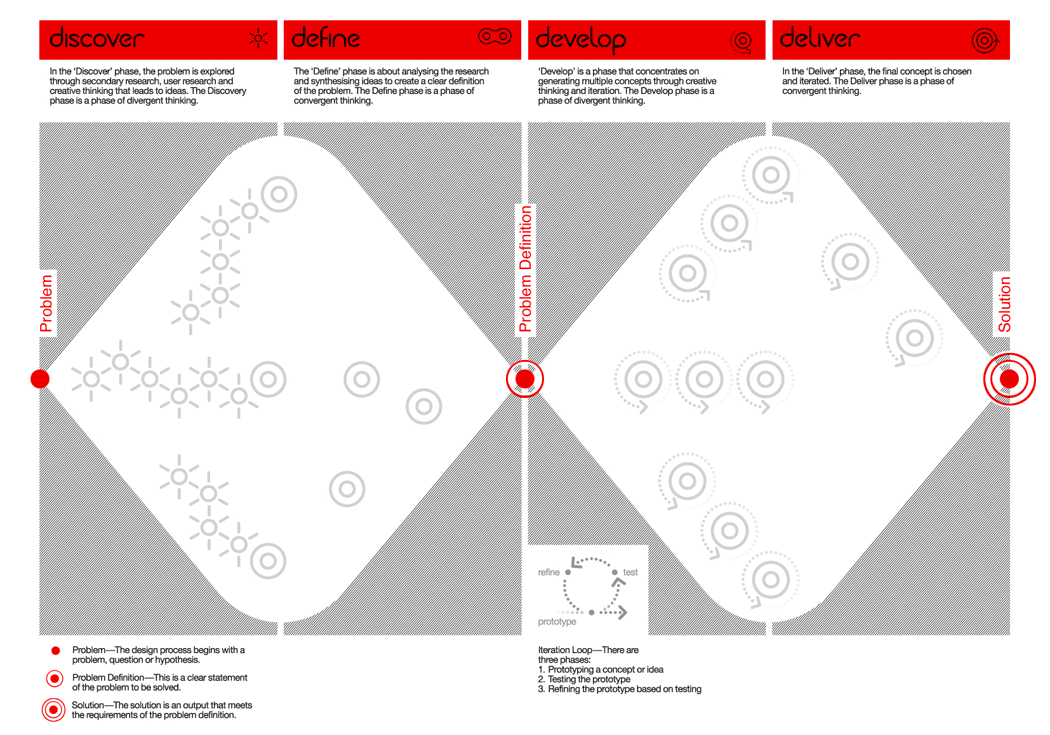
Dividing the design process up like this can help you to develop and plan the timetable for your new project. You can use the project structure as the basis for communication between all those involved in the design project. Throughout the process it is important to encourage people to share their views, hold regular reviews and be flexible enough to adjust plans when problems come up.
To see examples of how businesses structure and manage their design projects, browse through the Design Council's case studies.
How to evaluate your design process
Once you complete the design project, there is one last essential step in the process. Don't forget to evaluate the impact of delivering a new product on the service your business offers.
A number of indicators will help you to evaluate the success of a particular design project:
- Has your market share increased?
- Are more people using your service?
- Is customer satisfaction increasing?
- Is brand awareness increasing?
- Does it cost you less to manufacture your goods or deliver your service?
Alternatively, find out more about the design support for your business.
Also on this siteContent category
Source URL
/content/key-stages-design-process
Links
In-house or outsourced design?
How to decide if you should commission a design agency to handle your design, or manage a design project in-house
Depending on your resources and skills, you may choose to design in-house or find a designer externally.
Working with a designer or design agency
If you commission an external company to handle your design, they should bring you each new version of the design for review. Make sure that the designer has direct access to the decision-makers in your business so that communication is efficient.
If you plan to commission a series of design projects, it may be helpful to employ a design manager. The manager can act as the main point of contact between an external design agency and your company.
See more on how to choose and work with a designer.
Managing design projects in-house
You may have, or want to, set up an in-house design team, to embed the unique quality of your business in the creation of new products and services.
Your decision may depend on:
- whether you want design as a variable budget or a fixed overhead
- how confident you feel running design projects
- how the market you are in uses design services
In both cases, you should be diligent about documenting the design project and take care when drafting effective design documents.
When you are planning the design of a new product or service, it is important to be aware of intellectual property issues, ie who will hold the rights to the design. For more information, read about the design right and registration and protecting intellectual property.
Also on this siteContent category
Source URL
/content/house-or-outsourced-design
Links
Documenting the design process
Why it’s important to document your design process, and how to use this to help you evaluate the design’s contribution to your business success
Clearly written and structured documentation is crucial when you are planning the design process. Whether printed or electronic, this document will help to capture design ideas, decisions and solutions.
Document each stage of the design process
The content of your design documentation should include different information at each stage of the design process. For example:
- Discover - document all the attributes or functions needed in the new product you are designing. You can then perfect your ideas in your concept brief.
- Define - list what needs to be done to make your product or service function as required. The concept brief is usually signed off at this stage, and approval given to either begin on the design of the product or service itself or to continue developing the design.
- Develop - give details of the potential solutions which are being investigated. You may need to do competitor analysis at this stage.
- Deliver - your business needs feedback on the new product or service as part of final testing. Document the reactions of customers, point-of-sale staff, service and maintenance teams. Always record any safety analysis undertaken for the product or service and use all this feedback to develop the designs further. Set deadlines for production, making sure to co-ordinate with sales outlets and promotional activities.
You may find it useful to plan what documentation you will use and include it in the design brief that you write for your designers at the start of the project. Find out more about briefing a designer.
You may also want to integrate design with other business processes.
Advantages of documenting the design process
Documenting the design process and recording feedback helps your business to monitor the contribution that design is making to its success. It can also help you prove that you own the intellectual property rights of any designs should you discover that someone is infringing your rights.
Also on this siteContent category
Source URL
/content/documenting-design-process
Links
Drafting effective design documents
Well-constructed design documents are valuable assets in keeping the design process on track
Drafting effective design documents may help your business in several ways. For example, it can:
- Offer a clear point of reference - the document is the key resource for all team members. Any new employees can quickly learn what is involved in the project.
- Ensure continuity - staff and management may change but the document remains the same.
- Ensure compliance - good documentation helps with any necessary legal compliance and may help if someone takes legal action against your business.
- Improve quality control - comprehensive documentation makes the quality assurance process easier.
- Improve workflow - documenting the process helps to establish the deadlines and make sure that they are met.
- Avoid costly mistakes - documentation helps in detecting mistakes and identifying cost-saving opportunities.
How to write an effective design document
When you write your design document, you should:
- Know your audience - who will read the document and what do they need from it? This helps you to structure the document and give the right tone, emphasis and content. Restrict review of the document to those who need to see it. Circulating it too widely could confuse the project. It may also mean that sensitive, confidential information gets into the wrong hands - such as your competitors.
- Tell a story - this helps to convince your design team of the needs for your product or service. Use personas and scenarios to show the experiences of people using your design. Remember to tell stories in pictures as well as words.
- Explain your reasons for commissioning the design - give the reasons why you need features of the new product or service.
- Use a clear format - make sure that you present your design documents well and use a consistent format with all pages to make it easier for readers to understand what is required of them.
- Use the active voice and the present tense - this is clearer and more direct. Say - "The customer chooses this because..." rather than "We found that, when presented with a choice, customers chose...".
- Ask someone to edit your design document so that you can be sure it does its job in communicating your goals to others.
Also on this siteContent category
Source URL
/content/drafting-effective-design-documents
Links
Managing creative employees
How adapting your management style to encourage creativity can help you get the best from your designers
If you manage the creative process effectively and encourage other people to generate ideas and solve problems, you should see the rewards for your business.
Managing a relationship with your designers
It pays to build a strong relationship with the designers you're working with, and manage it in a way that encourages their creative processes but also makes sense for your business. For example, you could:
- Create an environment that encourages creativity - designers may prefer working alone or in teams, so give them that choice.
- Give designers structure in their work with a schedule, and make sure deadlines are clearly stated.
- Make designers fully aware of the problem you need them to solve.
- Give designers time to work - an atmosphere of crisis or constant deadlines may stifle the process.
- Acknowledge designers' creative work. Give constructive feedback about what improvements would benefit the end user.
- Remember designers may need time out of the office to find inspiration and to develop professionally.
- Try to reward creative productivity rather than time spent at work.
- Provide a 'lab' environment in which designers can keep trying out their latest idea.
- Make sure that designers do not neglect the necessary but less creative aspects of the job, particularly the routine paperwork.
- Make designers aware of your budget constraints but don't overload them with financial information that they don't need.
- Involve designers right from the beginning - they may produce better results having been involved from the first brainstorming of ideas.
Involving designers right from the start of a new development project can help to resolve many other business challenges. Learn more about the choice between in-house or outsourced design.
Also on this siteContent category
Source URL
/content/managing-creative-employees
Links
Integrate design with other business processes
How to involve designers in all stages of development of a new product or service, and why you should integrate design from the start
Design does not have to be a separate element of your development project. You should involve designers throughout the planning and launch of a new product or service:
- Upstream - designers can contribute to the 'roadmap' of product development and brand values. They can also conduct user needs assessment and consult users at the concept stage.
- Downstream - designers can help to ensure that the values and intentions defined by your business are not diluted as the new product or service is being produced. Remember that design helps to reinforce and protect your brand.
Bring designers and manufacturers together at an early stage
Incorporating designers in a multidisciplinary team will allow them to interact with other people involved in developing a new product or service. By bringing designers and manufacturers together, for example, you can identify potential problems early on in the development process.
Designers can learn if their ideas will work in commercial production, and if after-sales service and support for a product or service is practical.
Use design in brand development
Design is crucial in establishing and developing your business' brand. Designers work to communicate the values of your company to your customers. Involve designers when you plan your brand strategies, and keep them up-to-date on strategies, so that they can make sure that what they create is in tune with your business' aims and brand attributes.
From your brief, your designers will create brand guidelines - the 'rules' that govern how each aspect of the design should be used. For visual branding this may include instructions on typography, colours, sizing, etc. Sticking to these guidelines will ensure that you use your brand with consistency, and helps you to control where and how your company's brand and logos are used. See more on branding: the basics.
Also on this siteContent category
Source URL
/content/integrate-design-other-business-processes
Links
Managing creative employees
The key stages of the design process
Understand the different stages in the design of products and services, from discovery to delivery
Whatever your resources and business size, effectively managing design projects can benefit your business.
You may find it useful to divide the design process into different stages. Each clearly defined stage becomes an important milestone in bringing your new product or service to market.
Different stages in the design of products or services
There are four distinct design process stages:
- discovery - forming your ideas, once you have identified the need for a new product or service
- definition - refining ideas, establishing the business objectives of creating this new product, ongoing management of the design project
- development - creating a prototype of your new product and testing it in order to see if it performs as it is designed to do
- delivery - producing and launching the product or service
Dividing the design process up like this can help you to develop and plan the timetable for your new project. You can use the project structure as the basis for communication between all those involved in the design project. Throughout the process it is important to encourage people to share their views, hold regular reviews and be flexible enough to adjust plans when problems come up.
To see examples of how businesses structure and manage their design projects, browse through the Design Council's case studies.
How to evaluate your design process
Once you complete the design project, there is one last essential step in the process. Don't forget to evaluate the impact of delivering a new product on the service your business offers.
A number of indicators will help you to evaluate the success of a particular design project:
- Has your market share increased?
- Are more people using your service?
- Is customer satisfaction increasing?
- Is brand awareness increasing?
- Does it cost you less to manufacture your goods or deliver your service?
Alternatively, find out more about the design support for your business.
Also on this siteContent category
Source URL
/content/key-stages-design-process
Links
In-house or outsourced design?
How to decide if you should commission a design agency to handle your design, or manage a design project in-house
Depending on your resources and skills, you may choose to design in-house or find a designer externally.
Working with a designer or design agency
If you commission an external company to handle your design, they should bring you each new version of the design for review. Make sure that the designer has direct access to the decision-makers in your business so that communication is efficient.
If you plan to commission a series of design projects, it may be helpful to employ a design manager. The manager can act as the main point of contact between an external design agency and your company.
See more on how to choose and work with a designer.
Managing design projects in-house
You may have, or want to, set up an in-house design team, to embed the unique quality of your business in the creation of new products and services.
Your decision may depend on:
- whether you want design as a variable budget or a fixed overhead
- how confident you feel running design projects
- how the market you are in uses design services
In both cases, you should be diligent about documenting the design project and take care when drafting effective design documents.
When you are planning the design of a new product or service, it is important to be aware of intellectual property issues, ie who will hold the rights to the design. For more information, read about the design right and registration and protecting intellectual property.
Also on this siteContent category
Source URL
/content/house-or-outsourced-design
Links
Documenting the design process
Why it’s important to document your design process, and how to use this to help you evaluate the design’s contribution to your business success
Clearly written and structured documentation is crucial when you are planning the design process. Whether printed or electronic, this document will help to capture design ideas, decisions and solutions.
Document each stage of the design process
The content of your design documentation should include different information at each stage of the design process. For example:
- Discover - document all the attributes or functions needed in the new product you are designing. You can then perfect your ideas in your concept brief.
- Define - list what needs to be done to make your product or service function as required. The concept brief is usually signed off at this stage, and approval given to either begin on the design of the product or service itself or to continue developing the design.
- Develop - give details of the potential solutions which are being investigated. You may need to do competitor analysis at this stage.
- Deliver - your business needs feedback on the new product or service as part of final testing. Document the reactions of customers, point-of-sale staff, service and maintenance teams. Always record any safety analysis undertaken for the product or service and use all this feedback to develop the designs further. Set deadlines for production, making sure to co-ordinate with sales outlets and promotional activities.
You may find it useful to plan what documentation you will use and include it in the design brief that you write for your designers at the start of the project. Find out more about briefing a designer.
You may also want to integrate design with other business processes.
Advantages of documenting the design process
Documenting the design process and recording feedback helps your business to monitor the contribution that design is making to its success. It can also help you prove that you own the intellectual property rights of any designs should you discover that someone is infringing your rights.
Also on this siteContent category
Source URL
/content/documenting-design-process
Links
Drafting effective design documents
Well-constructed design documents are valuable assets in keeping the design process on track
Drafting effective design documents may help your business in several ways. For example, it can:
- Offer a clear point of reference - the document is the key resource for all team members. Any new employees can quickly learn what is involved in the project.
- Ensure continuity - staff and management may change but the document remains the same.
- Ensure compliance - good documentation helps with any necessary legal compliance and may help if someone takes legal action against your business.
- Improve quality control - comprehensive documentation makes the quality assurance process easier.
- Improve workflow - documenting the process helps to establish the deadlines and make sure that they are met.
- Avoid costly mistakes - documentation helps in detecting mistakes and identifying cost-saving opportunities.
How to write an effective design document
When you write your design document, you should:
- Know your audience - who will read the document and what do they need from it? This helps you to structure the document and give the right tone, emphasis and content. Restrict review of the document to those who need to see it. Circulating it too widely could confuse the project. It may also mean that sensitive, confidential information gets into the wrong hands - such as your competitors.
- Tell a story - this helps to convince your design team of the needs for your product or service. Use personas and scenarios to show the experiences of people using your design. Remember to tell stories in pictures as well as words.
- Explain your reasons for commissioning the design - give the reasons why you need features of the new product or service.
- Use a clear format - make sure that you present your design documents well and use a consistent format with all pages to make it easier for readers to understand what is required of them.
- Use the active voice and the present tense - this is clearer and more direct. Say - "The customer chooses this because..." rather than "We found that, when presented with a choice, customers chose...".
- Ask someone to edit your design document so that you can be sure it does its job in communicating your goals to others.
Also on this siteContent category
Source URL
/content/drafting-effective-design-documents
Links
Managing creative employees
How adapting your management style to encourage creativity can help you get the best from your designers
If you manage the creative process effectively and encourage other people to generate ideas and solve problems, you should see the rewards for your business.
Managing a relationship with your designers
It pays to build a strong relationship with the designers you're working with, and manage it in a way that encourages their creative processes but also makes sense for your business. For example, you could:
- Create an environment that encourages creativity - designers may prefer working alone or in teams, so give them that choice.
- Give designers structure in their work with a schedule, and make sure deadlines are clearly stated.
- Make designers fully aware of the problem you need them to solve.
- Give designers time to work - an atmosphere of crisis or constant deadlines may stifle the process.
- Acknowledge designers' creative work. Give constructive feedback about what improvements would benefit the end user.
- Remember designers may need time out of the office to find inspiration and to develop professionally.
- Try to reward creative productivity rather than time spent at work.
- Provide a 'lab' environment in which designers can keep trying out their latest idea.
- Make sure that designers do not neglect the necessary but less creative aspects of the job, particularly the routine paperwork.
- Make designers aware of your budget constraints but don't overload them with financial information that they don't need.
- Involve designers right from the beginning - they may produce better results having been involved from the first brainstorming of ideas.
Involving designers right from the start of a new development project can help to resolve many other business challenges. Learn more about the choice between in-house or outsourced design.
Also on this siteContent category
Source URL
/content/managing-creative-employees
Links
Integrate design with other business processes
How to involve designers in all stages of development of a new product or service, and why you should integrate design from the start
Design does not have to be a separate element of your development project. You should involve designers throughout the planning and launch of a new product or service:
- Upstream - designers can contribute to the 'roadmap' of product development and brand values. They can also conduct user needs assessment and consult users at the concept stage.
- Downstream - designers can help to ensure that the values and intentions defined by your business are not diluted as the new product or service is being produced. Remember that design helps to reinforce and protect your brand.
Bring designers and manufacturers together at an early stage
Incorporating designers in a multidisciplinary team will allow them to interact with other people involved in developing a new product or service. By bringing designers and manufacturers together, for example, you can identify potential problems early on in the development process.
Designers can learn if their ideas will work in commercial production, and if after-sales service and support for a product or service is practical.
Use design in brand development
Design is crucial in establishing and developing your business' brand. Designers work to communicate the values of your company to your customers. Involve designers when you plan your brand strategies, and keep them up-to-date on strategies, so that they can make sure that what they create is in tune with your business' aims and brand attributes.
From your brief, your designers will create brand guidelines - the 'rules' that govern how each aspect of the design should be used. For visual branding this may include instructions on typography, colours, sizing, etc. Sticking to these guidelines will ensure that you use your brand with consistency, and helps you to control where and how your company's brand and logos are used. See more on branding: the basics.
Also on this siteContent category
Source URL
/content/integrate-design-other-business-processes
Links
Documenting the design process
The key stages of the design process
Understand the different stages in the design of products and services, from discovery to delivery
Whatever your resources and business size, effectively managing design projects can benefit your business.
You may find it useful to divide the design process into different stages. Each clearly defined stage becomes an important milestone in bringing your new product or service to market.
Different stages in the design of products or services
There are four distinct design process stages:
- discovery - forming your ideas, once you have identified the need for a new product or service
- definition - refining ideas, establishing the business objectives of creating this new product, ongoing management of the design project
- development - creating a prototype of your new product and testing it in order to see if it performs as it is designed to do
- delivery - producing and launching the product or service
Dividing the design process up like this can help you to develop and plan the timetable for your new project. You can use the project structure as the basis for communication between all those involved in the design project. Throughout the process it is important to encourage people to share their views, hold regular reviews and be flexible enough to adjust plans when problems come up.
To see examples of how businesses structure and manage their design projects, browse through the Design Council's case studies.
How to evaluate your design process
Once you complete the design project, there is one last essential step in the process. Don't forget to evaluate the impact of delivering a new product on the service your business offers.
A number of indicators will help you to evaluate the success of a particular design project:
- Has your market share increased?
- Are more people using your service?
- Is customer satisfaction increasing?
- Is brand awareness increasing?
- Does it cost you less to manufacture your goods or deliver your service?
Alternatively, find out more about the design support for your business.
Also on this siteContent category
Source URL
/content/key-stages-design-process
Links
In-house or outsourced design?
How to decide if you should commission a design agency to handle your design, or manage a design project in-house
Depending on your resources and skills, you may choose to design in-house or find a designer externally.
Working with a designer or design agency
If you commission an external company to handle your design, they should bring you each new version of the design for review. Make sure that the designer has direct access to the decision-makers in your business so that communication is efficient.
If you plan to commission a series of design projects, it may be helpful to employ a design manager. The manager can act as the main point of contact between an external design agency and your company.
See more on how to choose and work with a designer.
Managing design projects in-house
You may have, or want to, set up an in-house design team, to embed the unique quality of your business in the creation of new products and services.
Your decision may depend on:
- whether you want design as a variable budget or a fixed overhead
- how confident you feel running design projects
- how the market you are in uses design services
In both cases, you should be diligent about documenting the design project and take care when drafting effective design documents.
When you are planning the design of a new product or service, it is important to be aware of intellectual property issues, ie who will hold the rights to the design. For more information, read about the design right and registration and protecting intellectual property.
Also on this siteContent category
Source URL
/content/house-or-outsourced-design
Links
Documenting the design process
Why it’s important to document your design process, and how to use this to help you evaluate the design’s contribution to your business success
Clearly written and structured documentation is crucial when you are planning the design process. Whether printed or electronic, this document will help to capture design ideas, decisions and solutions.
Document each stage of the design process
The content of your design documentation should include different information at each stage of the design process. For example:
- Discover - document all the attributes or functions needed in the new product you are designing. You can then perfect your ideas in your concept brief.
- Define - list what needs to be done to make your product or service function as required. The concept brief is usually signed off at this stage, and approval given to either begin on the design of the product or service itself or to continue developing the design.
- Develop - give details of the potential solutions which are being investigated. You may need to do competitor analysis at this stage.
- Deliver - your business needs feedback on the new product or service as part of final testing. Document the reactions of customers, point-of-sale staff, service and maintenance teams. Always record any safety analysis undertaken for the product or service and use all this feedback to develop the designs further. Set deadlines for production, making sure to co-ordinate with sales outlets and promotional activities.
You may find it useful to plan what documentation you will use and include it in the design brief that you write for your designers at the start of the project. Find out more about briefing a designer.
You may also want to integrate design with other business processes.
Advantages of documenting the design process
Documenting the design process and recording feedback helps your business to monitor the contribution that design is making to its success. It can also help you prove that you own the intellectual property rights of any designs should you discover that someone is infringing your rights.
Also on this siteContent category
Source URL
/content/documenting-design-process
Links
Drafting effective design documents
Well-constructed design documents are valuable assets in keeping the design process on track
Drafting effective design documents may help your business in several ways. For example, it can:
- Offer a clear point of reference - the document is the key resource for all team members. Any new employees can quickly learn what is involved in the project.
- Ensure continuity - staff and management may change but the document remains the same.
- Ensure compliance - good documentation helps with any necessary legal compliance and may help if someone takes legal action against your business.
- Improve quality control - comprehensive documentation makes the quality assurance process easier.
- Improve workflow - documenting the process helps to establish the deadlines and make sure that they are met.
- Avoid costly mistakes - documentation helps in detecting mistakes and identifying cost-saving opportunities.
How to write an effective design document
When you write your design document, you should:
- Know your audience - who will read the document and what do they need from it? This helps you to structure the document and give the right tone, emphasis and content. Restrict review of the document to those who need to see it. Circulating it too widely could confuse the project. It may also mean that sensitive, confidential information gets into the wrong hands - such as your competitors.
- Tell a story - this helps to convince your design team of the needs for your product or service. Use personas and scenarios to show the experiences of people using your design. Remember to tell stories in pictures as well as words.
- Explain your reasons for commissioning the design - give the reasons why you need features of the new product or service.
- Use a clear format - make sure that you present your design documents well and use a consistent format with all pages to make it easier for readers to understand what is required of them.
- Use the active voice and the present tense - this is clearer and more direct. Say - "The customer chooses this because..." rather than "We found that, when presented with a choice, customers chose...".
- Ask someone to edit your design document so that you can be sure it does its job in communicating your goals to others.
Also on this siteContent category
Source URL
/content/drafting-effective-design-documents
Links
Managing creative employees
How adapting your management style to encourage creativity can help you get the best from your designers
If you manage the creative process effectively and encourage other people to generate ideas and solve problems, you should see the rewards for your business.
Managing a relationship with your designers
It pays to build a strong relationship with the designers you're working with, and manage it in a way that encourages their creative processes but also makes sense for your business. For example, you could:
- Create an environment that encourages creativity - designers may prefer working alone or in teams, so give them that choice.
- Give designers structure in their work with a schedule, and make sure deadlines are clearly stated.
- Make designers fully aware of the problem you need them to solve.
- Give designers time to work - an atmosphere of crisis or constant deadlines may stifle the process.
- Acknowledge designers' creative work. Give constructive feedback about what improvements would benefit the end user.
- Remember designers may need time out of the office to find inspiration and to develop professionally.
- Try to reward creative productivity rather than time spent at work.
- Provide a 'lab' environment in which designers can keep trying out their latest idea.
- Make sure that designers do not neglect the necessary but less creative aspects of the job, particularly the routine paperwork.
- Make designers aware of your budget constraints but don't overload them with financial information that they don't need.
- Involve designers right from the beginning - they may produce better results having been involved from the first brainstorming of ideas.
Involving designers right from the start of a new development project can help to resolve many other business challenges. Learn more about the choice between in-house or outsourced design.
Also on this siteContent category
Source URL
/content/managing-creative-employees
Links
Integrate design with other business processes
How to involve designers in all stages of development of a new product or service, and why you should integrate design from the start
Design does not have to be a separate element of your development project. You should involve designers throughout the planning and launch of a new product or service:
- Upstream - designers can contribute to the 'roadmap' of product development and brand values. They can also conduct user needs assessment and consult users at the concept stage.
- Downstream - designers can help to ensure that the values and intentions defined by your business are not diluted as the new product or service is being produced. Remember that design helps to reinforce and protect your brand.
Bring designers and manufacturers together at an early stage
Incorporating designers in a multidisciplinary team will allow them to interact with other people involved in developing a new product or service. By bringing designers and manufacturers together, for example, you can identify potential problems early on in the development process.
Designers can learn if their ideas will work in commercial production, and if after-sales service and support for a product or service is practical.
Use design in brand development
Design is crucial in establishing and developing your business' brand. Designers work to communicate the values of your company to your customers. Involve designers when you plan your brand strategies, and keep them up-to-date on strategies, so that they can make sure that what they create is in tune with your business' aims and brand attributes.
From your brief, your designers will create brand guidelines - the 'rules' that govern how each aspect of the design should be used. For visual branding this may include instructions on typography, colours, sizing, etc. Sticking to these guidelines will ensure that you use your brand with consistency, and helps you to control where and how your company's brand and logos are used. See more on branding: the basics.
Also on this siteContent category
Source URL
/content/integrate-design-other-business-processes
Links
Drafting effective design documents
The key stages of the design process
Understand the different stages in the design of products and services, from discovery to delivery
Whatever your resources and business size, effectively managing design projects can benefit your business.
You may find it useful to divide the design process into different stages. Each clearly defined stage becomes an important milestone in bringing your new product or service to market.
Different stages in the design of products or services
There are four distinct design process stages:
- discovery - forming your ideas, once you have identified the need for a new product or service
- definition - refining ideas, establishing the business objectives of creating this new product, ongoing management of the design project
- development - creating a prototype of your new product and testing it in order to see if it performs as it is designed to do
- delivery - producing and launching the product or service
Dividing the design process up like this can help you to develop and plan the timetable for your new project. You can use the project structure as the basis for communication between all those involved in the design project. Throughout the process it is important to encourage people to share their views, hold regular reviews and be flexible enough to adjust plans when problems come up.
To see examples of how businesses structure and manage their design projects, browse through the Design Council's case studies.
How to evaluate your design process
Once you complete the design project, there is one last essential step in the process. Don't forget to evaluate the impact of delivering a new product on the service your business offers.
A number of indicators will help you to evaluate the success of a particular design project:
- Has your market share increased?
- Are more people using your service?
- Is customer satisfaction increasing?
- Is brand awareness increasing?
- Does it cost you less to manufacture your goods or deliver your service?
Alternatively, find out more about the design support for your business.
Also on this siteContent category
Source URL
/content/key-stages-design-process
Links
In-house or outsourced design?
How to decide if you should commission a design agency to handle your design, or manage a design project in-house
Depending on your resources and skills, you may choose to design in-house or find a designer externally.
Working with a designer or design agency
If you commission an external company to handle your design, they should bring you each new version of the design for review. Make sure that the designer has direct access to the decision-makers in your business so that communication is efficient.
If you plan to commission a series of design projects, it may be helpful to employ a design manager. The manager can act as the main point of contact between an external design agency and your company.
See more on how to choose and work with a designer.
Managing design projects in-house
You may have, or want to, set up an in-house design team, to embed the unique quality of your business in the creation of new products and services.
Your decision may depend on:
- whether you want design as a variable budget or a fixed overhead
- how confident you feel running design projects
- how the market you are in uses design services
In both cases, you should be diligent about documenting the design project and take care when drafting effective design documents.
When you are planning the design of a new product or service, it is important to be aware of intellectual property issues, ie who will hold the rights to the design. For more information, read about the design right and registration and protecting intellectual property.
Also on this siteContent category
Source URL
/content/house-or-outsourced-design
Links
Documenting the design process
Why it’s important to document your design process, and how to use this to help you evaluate the design’s contribution to your business success
Clearly written and structured documentation is crucial when you are planning the design process. Whether printed or electronic, this document will help to capture design ideas, decisions and solutions.
Document each stage of the design process
The content of your design documentation should include different information at each stage of the design process. For example:
- Discover - document all the attributes or functions needed in the new product you are designing. You can then perfect your ideas in your concept brief.
- Define - list what needs to be done to make your product or service function as required. The concept brief is usually signed off at this stage, and approval given to either begin on the design of the product or service itself or to continue developing the design.
- Develop - give details of the potential solutions which are being investigated. You may need to do competitor analysis at this stage.
- Deliver - your business needs feedback on the new product or service as part of final testing. Document the reactions of customers, point-of-sale staff, service and maintenance teams. Always record any safety analysis undertaken for the product or service and use all this feedback to develop the designs further. Set deadlines for production, making sure to co-ordinate with sales outlets and promotional activities.
You may find it useful to plan what documentation you will use and include it in the design brief that you write for your designers at the start of the project. Find out more about briefing a designer.
You may also want to integrate design with other business processes.
Advantages of documenting the design process
Documenting the design process and recording feedback helps your business to monitor the contribution that design is making to its success. It can also help you prove that you own the intellectual property rights of any designs should you discover that someone is infringing your rights.
Also on this siteContent category
Source URL
/content/documenting-design-process
Links
Drafting effective design documents
Well-constructed design documents are valuable assets in keeping the design process on track
Drafting effective design documents may help your business in several ways. For example, it can:
- Offer a clear point of reference - the document is the key resource for all team members. Any new employees can quickly learn what is involved in the project.
- Ensure continuity - staff and management may change but the document remains the same.
- Ensure compliance - good documentation helps with any necessary legal compliance and may help if someone takes legal action against your business.
- Improve quality control - comprehensive documentation makes the quality assurance process easier.
- Improve workflow - documenting the process helps to establish the deadlines and make sure that they are met.
- Avoid costly mistakes - documentation helps in detecting mistakes and identifying cost-saving opportunities.
How to write an effective design document
When you write your design document, you should:
- Know your audience - who will read the document and what do they need from it? This helps you to structure the document and give the right tone, emphasis and content. Restrict review of the document to those who need to see it. Circulating it too widely could confuse the project. It may also mean that sensitive, confidential information gets into the wrong hands - such as your competitors.
- Tell a story - this helps to convince your design team of the needs for your product or service. Use personas and scenarios to show the experiences of people using your design. Remember to tell stories in pictures as well as words.
- Explain your reasons for commissioning the design - give the reasons why you need features of the new product or service.
- Use a clear format - make sure that you present your design documents well and use a consistent format with all pages to make it easier for readers to understand what is required of them.
- Use the active voice and the present tense - this is clearer and more direct. Say - "The customer chooses this because..." rather than "We found that, when presented with a choice, customers chose...".
- Ask someone to edit your design document so that you can be sure it does its job in communicating your goals to others.
Also on this siteContent category
Source URL
/content/drafting-effective-design-documents
Links
Managing creative employees
How adapting your management style to encourage creativity can help you get the best from your designers
If you manage the creative process effectively and encourage other people to generate ideas and solve problems, you should see the rewards for your business.
Managing a relationship with your designers
It pays to build a strong relationship with the designers you're working with, and manage it in a way that encourages their creative processes but also makes sense for your business. For example, you could:
- Create an environment that encourages creativity - designers may prefer working alone or in teams, so give them that choice.
- Give designers structure in their work with a schedule, and make sure deadlines are clearly stated.
- Make designers fully aware of the problem you need them to solve.
- Give designers time to work - an atmosphere of crisis or constant deadlines may stifle the process.
- Acknowledge designers' creative work. Give constructive feedback about what improvements would benefit the end user.
- Remember designers may need time out of the office to find inspiration and to develop professionally.
- Try to reward creative productivity rather than time spent at work.
- Provide a 'lab' environment in which designers can keep trying out their latest idea.
- Make sure that designers do not neglect the necessary but less creative aspects of the job, particularly the routine paperwork.
- Make designers aware of your budget constraints but don't overload them with financial information that they don't need.
- Involve designers right from the beginning - they may produce better results having been involved from the first brainstorming of ideas.
Involving designers right from the start of a new development project can help to resolve many other business challenges. Learn more about the choice between in-house or outsourced design.
Also on this siteContent category
Source URL
/content/managing-creative-employees
Links
Integrate design with other business processes
How to involve designers in all stages of development of a new product or service, and why you should integrate design from the start
Design does not have to be a separate element of your development project. You should involve designers throughout the planning and launch of a new product or service:
- Upstream - designers can contribute to the 'roadmap' of product development and brand values. They can also conduct user needs assessment and consult users at the concept stage.
- Downstream - designers can help to ensure that the values and intentions defined by your business are not diluted as the new product or service is being produced. Remember that design helps to reinforce and protect your brand.
Bring designers and manufacturers together at an early stage
Incorporating designers in a multidisciplinary team will allow them to interact with other people involved in developing a new product or service. By bringing designers and manufacturers together, for example, you can identify potential problems early on in the development process.
Designers can learn if their ideas will work in commercial production, and if after-sales service and support for a product or service is practical.
Use design in brand development
Design is crucial in establishing and developing your business' brand. Designers work to communicate the values of your company to your customers. Involve designers when you plan your brand strategies, and keep them up-to-date on strategies, so that they can make sure that what they create is in tune with your business' aims and brand attributes.
From your brief, your designers will create brand guidelines - the 'rules' that govern how each aspect of the design should be used. For visual branding this may include instructions on typography, colours, sizing, etc. Sticking to these guidelines will ensure that you use your brand with consistency, and helps you to control where and how your company's brand and logos are used. See more on branding: the basics.
Also on this siteContent category
Source URL
/content/integrate-design-other-business-processes
Links
Using design to boost our sales - Mullins Ice Cream (video)
In this guide:
- How can I use design in my business?
- The business benefits of design
- How businesses use design
- The design audit
- Creating a design strategy for business
- How you can use product design
- How you can use graphic design and packaging design
- How you can use service design
- How you can use workplace design
- How you can use retail design
- Design management process
- Maximise the success of your design projects
- Using design to boost our sales - Mullins Ice Cream (video)
The business benefits of design
Understand the advantages of design to your business, how it can increase the value of your products and services, and reduce costs and risks
Using design in business can bring about many benefits. It can improve your performance, your efficiencies, and the value of your products and services. It can also reduce costs and risks to your business.
Advantages of design to your business
Using design across your business can help you:
- increase sales of your products or services
- improve market position
- boost customer loyalty
- reduce customer complaints
- build a stronger identity for your business
- create new products and services and open up new markets
- reduce time to market for new products and services
- improve environmental record and compliance with regulations
Why is design important in business?
Effective design can encourage customers to buy from you and not from your competitors. It can help your product, service or business stand out - see more on user-centred design.
Design can also add value to products and services. Customers are often willing to pay more for products that look better and offer greater usability, better functionality and sustainability. See ecodesign in product or service development.
Using design to improve efficiency
The role of design doesn't stop with products and services. Design can also help you:
- improve the way your business operates
- cut costs and boost efficiencies, for example with the raw materials it uses
- enhance the quality of your packaging
Design can also help cut production costs. For example, careful design of the manufacturing process can bring large savings. It can also make processes and the use of materials more efficient and environmentally friendly, helping you to comply with sustainability regulations and legislation. For more information, see how businesses use design.
Also on this siteContent category
Source URL
/content/business-benefits-design
Links
How businesses use design
An overview of the many ways you can use design in business - from branding and marketing, to product design, packaging and ergonomics
You can use design in your business in many ways. Design covers much more than just the visible appearance of products, or the graphic elements of things such as your website, packaging and marketing materials. It plays a part in nearly every aspect of what most businesses do.
The role of design in business
Businesses use many types of design, including:
- product design
- ergonomic design
- engineering design
- graphic design (eg for manuals, marketing literature, signage and software interfaces)
- packaging design
- website and interface design
- retail design
- interior design and fit-outs
- exhibition design
- architecture (eg for refurbishments and building modifications)
In some areas, the importance of design is obvious. For example, when a business creates a consistent look across its products, signage, stationery and marketing activities.
However, you should realise that design isn't just about managing the appearance of your business. It's also about managing your business processes so that they're as cost-effective as possible.
Benefits of a design audit
It may be a good idea to conduct a design audit. In an audit, you should look at all the different elements that your company uses to interact with its customers and the public.
Examine the key areas of your business, such as:
- your brand
- your product and service development
- your work practices
- customer communication
Consider each area thoroughly to understand what role design plays in them. See more on the design audit.
There may be opportunities to use design to make your business more efficient or sustainable and to add value to your products and services for your customers.
Also on this siteContent category
Source URL
/content/how-businesses-use-design
Links
The design audit
What is a design audit, how to conduct one, and what are the related advantages to your business
A design audit is a systematic review of all the different elements that your company uses to interact with customers and the public.
How to carry out a design audit
When you carry out an audit, you should think about:
- The materials that you use to communicate with your customers - are they printed, delivered via email or in one-to-one presentations?
- How often do your customers visit your company premises? Have you designed your offices, retail spaces or warehouses so that they support your company's brand? Do they function efficiently?
- How does your customer service compare to your competitors? Are your call centre, distribution and advice services performing well?
Design audit process
The process begins by collecting all the visual elements used in or by your business - eg business cards, flyers, leaflets, brochures, website, staff uniforms, vehicle liveries, packaging and products. If you operate in several locations, gather materials from each of them.
Then, work with a designer to map your business processes. This map should show the key stages you go through to create, produce and deliver your products or services.
Mark on this map the different types of people you interact with at each step along the way. Include details of how you communicate and influence them. For example, if your delivery drivers are interacting with manufacturers when collecting final products from a production line, mark on the business map the vehicles they drive, uniforms they wear, and the receipts and information they deliver.
This will help you spot any inconsistencies in the way your business is presented. You can then develop a plan to ensure that your business and your message are consistent with each other.
Design standards manual
Everyone in your business needs to be aware of a consistent design plan. You should communicate to all how they should portray your business and your visual style in the future.
You can create design standards document to lay down what your company logo should look like, which colours and font to use. The manual may also explain:
- how staff should interact with customers
- what standards should your products, spaces or services meet
Also on this siteContent category
Source URL
/content/design-audit
Links
Creating a design strategy for business
How to use design strategically in your business, and include it as part of your overall business strategy
Successful businesses include design as part of their business strategy from the start. This is because involving design at an early stage can save you money in the long run. It can also result in a better experience for your customers.
If you are not sure why design should matter to your business, see more about the business benefits of design.
What is a design strategy?
There are many definitions of a design strategy. In simple terms, a design strategy is a long-term plan for how you will use design to achieve your business objectives. It converges closely with other business strategies - for example, your IT strategy, web strategy or your intellectual property priorities.
It is a good idea to articulate and formalise your design strategy early on in the business. At the very least, your strategy should:
- define your target audience, key messages and value propositions
- describe your business objectives, and how design relates to them
- outline your core brand elements - eg logos, colours, typography etc
- show the value your design will bring to products, services and customers
Having a design strategy allows you to integrate design processes and design thinking into the larger business goals.
How to use design strategically
You don't need a professional designer to use design strategically. Your first steps to using design more strategically should include:
- locating where and how design is currently being used within your business
- identifying ways of improving the design process - such as increasing management involvement or using a professional design consultant
- looking for areas of your business where design opportunities are being missed
- making sure design considerations are featured in all your business planning meetings and documents
- conducting market research to ensure you know what your customers need
To determine how you are currently using design in your business, you might want to carry out a targeted audit - read more about the design audit.
Making even minor changes, or thinking differently about your customers' needs, can provide considerable rewards. For an in-depth look at using design for your customers, see user-centred design.
Also on this siteContent category
Source URL
/content/creating-design-strategy-business
Links
How you can use product design
How careful design of your products can increase your profits and reduce your production costs
Good design can increase your product's reach in the marketplace and make it more attractive to customers. These are important factors in selling the product, improving it and getting a return on your investment.
Careful product design can also help you to reduce your production costs, optimise the use of materials and minimise waste.
Product design process
Product designers do many things before their concepts go into production. They have key roles through the product's design and development project, including:
- strategic enquiry and orientation - informing the overall strategy of your product and providing direction and context
- briefing - producing a record of your product's description, functionality and features, how it compares to its main competitors, any recent research, sales targets and forecasts that should inform the design development
- social, economic and technological context - carrying out market research to find out how relevant and attractive your product would be
- innovation - providing sketches, proof of principle models and/or computer-aided design layouts of the new product
- concept generation - leading design and development of potential ideas to create an original design that meets the brief
- design development - deciding what the product will look like, what it will be made from and how it will be produced after design and prototype
Working with a designer on product development
Depending on how often your business develops new products, you may want to employ a designer to work as part of your in-house product development team.
This does not mean that you need to establish a separate design department. Designers can work in-house as part of the marketing team or can help manage your manufacturing function. They are used to considering both the commercial and operational implications of their designs.
Designers, whether in-house or independent, can also help you manage your product portfolio and plan for new developments. How and where your products are made, warehousing, distribution and scheduling are all part of the product design process. See how to choose and work with a designer.
Also on this siteContent category
Source URL
/content/how-you-can-use-product-design
Links
How you can use graphic design and packaging design
Ways you can use graphic design to communicate ideas and business information, and the benefits of packaging design
Graphic design is the process of using words, images, colours and messages to communicate ideas and important business information.
Using graphic design
You can use graphic design for anything from annual reports to large-scale advertising or banners. It can help you to communicate and connect with your customers, and influence how they see your business, product or brand.
Graphic designers can help:
- create a memorable brand identity for your business or products
- strengthen your business' position within its industry
- set you apart from your competitors
- promote your business and its offerings to different audiences
- increase sales through better advertising
Common uses of graphic design in business
Graphic designers can help on a range of projects, including:
- websites
- marketing materials (eg brochures and product sales sheets)
- business cards
- flyers
- annual reports
- logos
- signage
- product packaging
See how to choose and work with a designer.
Using packaging design
The main function of packaging is to sell the product at its point of purchase. It's important to think carefully about how your products are packaged. In particular, you should think about:
- the structural design of your packaging - eg how it can help advertise your product, and make it more recognisable and practical for the stockists, customers, etc
- the functional design of your packaging - eg how it can protect your product during delivery to shops, customers and beyond
Consider if combining the two would offer your business more value. For example, retail-ready packaging is designed to protect your product during transport to shops, but it can also be easily opened and put onto the shelf - where it becomes part display case, part dispensing aid.
Sustainable packaging
The use of 'green' packaging is on the rise, with consumers demanding more environment-friendly solutions. Designers can help you develop sustainable packaging, making it more attractive to potential customers.
When deciding on your packaging needs, think about:
- how far your product has to travel from its source to its point of purchase
- how many products can be shipped per pallet
- how your product's full lifecycle impacts the environment, from its initial packaging to the point of sale, use by the customer and finally to its disposal
You can read more about the packaging design: essential top tips.
Also on this siteContent category
Source URL
/content/how-you-can-use-graphic-design-and-packaging-design
Links
How you can use service design
How service design can improve customer satisfaction and enhance your business' profitability and brand
Service design is a way of helping you improve your services by making them more useful, efficient and desirable for your customers.
What is service design?
Service design involves planning and creating the infrastructure, communication materials and levels of service delivered by staff.
You can use service design at any point where customers interact with your business to:
- improve their satisfaction
- enhance your reputation and profitability
- eliminate potential failures when you are developing new services
What does a service designer do?
If you employ a service designer, they will look at how you deliver your service and how efficiently it operates. They can interpret what your customers need and what their behaviours are, and they can turn this into potential services.
They will look at designing the full service as well as each individual aspect within the service. Redesigning existing services can be just as challenging as developing innovative new ones.
Examples of service design
Many types of businesses could benefit from using service design more efficiently.
For example, if your business is a transport provider, you use service design to offer supplementary services, such as:
- online tracking of packages or shipments
- availability indicator to show when low-cost or free delivery is available
If you are a food seller, you could use service design to extend your service. For example, you could offer:
- home delivery
- new menus based on your customer research
- seasonal offers based on ingredients supplied by local growers
- daily menus delivered by social media channels to local customers
If your business is an educational institution, you could use service design to extend your offering. For example, you could offer:
- distance learning courses
- online communication tools for lecturers and students
- access to library resources
You can apply service design in your business in many ways. Its role is ultimately to improve your customers' overall experience.
Also on this siteContent category
Source URL
/content/how-you-can-use-service-design
Links
How you can use workplace design
Understand how workplace design affects your employees' productivity and can lead to an improved working environment
Workplace design isn't just about choosing the paint colours for your office space. Your work environment can directly affect staff productivity and creativity. If clients regularly visit your workplace, it can also affect how they see your company.
There are many things to consider when designing your workplace, such as:
- architecture
- functional layout
- appropriate lighting
- furniture
- materials
- technology
- meeting rooms
- an open and inviting reception area
Examples of where a workplace designer could help
A workplace designer can help improve your business' image and, as a result, improve communication and the development of new ideas and processes.
For example, workplace designers can:
- improve the way a car manufacturer's administration and assembly hub functions
- help an accountancy firm shed its grey image
- help a clothing retailer integrate a new wing of its business into the company's headquarters
How do you start creating an innovative workspace?
If you want to redesign your workspace, the best place to start is research. You should try to:
- determine your business objectives
- analyse the areas you want to improve
- involve a selection of staff - choose people from different parts of the business, including managers and more junior staff
- set a realistic budget
- set clear objectives
- attempt the project on a small scale before introducing it throughout the organisation
- do a post-project evaluation to see if any changes are needed
If you hire a workplace designer, they can offer more than just visual and creative skills. They can also manage the design project, work with you to set the brief and involve stakeholders in the development process. When the implementation of their designs is underway, they can manage the relationship with the builders and other contractors, and adapt designs where necessary.
If you are searching for an entirely new workspace, see our six tips for choosing the right business premises.
Also on this siteContent category
Source URL
/content/how-you-can-use-workplace-design
Links
How you can use retail design
How to use design in your retail business to increase sales, attract customers and offer them a unique shopping experience
Retail design involves creating a space for selling your goods. This could be in a high street shop, shopping centre or department store concession, but increasingly is means selling online too.
Retail design principles
Retail businesses have one primary goal - to get the customer over the doorstep and influence them to buy their products. The layout of your retail space is arguably the most powerful tool in retail design. It can improve the shopping experience if you follow principles of good design, including:
- define the space clearly - know what are you selling and to whom
- keep things consistent in terms of style and function in your shop
- organise the space so it's intuitive and easy to navigate
- plan the layout for optimal customer experience, from entry to purchasing
- give customers visual cues, such as signage and branding
As well as retail space, other areas of your business could benefit from following basic retail design principles. These areas could include:
- store frontage
- fascia
- signage
- lighting
- packaging
- merchandising
- furniture
- point of sale displays
- decorations
Benefits of retail design
Retail design can improve your customers' perception of your business and your brand. It should represent your customer base and the message you are trying to get across.
For example, if a retail store sells luxury, high-end clothing, the store design should reflect the same message. However, a store that sells contemporary clothes to teenagers will often benefit from a young and 'edgy' look. Read more about visual merchandising for retailers.
Retail design in ecommerce
If you are an online retailer, you can also use design to your benefit. However, your focus will be on the graphics and interactive tools on your website that enable customers to buy your products.
You can still deliver a unique shopping experience online. Designers can help you ensure that the way you deliver your goods not only works, but also communicates your company brand and delivers an enjoyable experience. This will help build customer loyalty. See more on best practice in web design.
You can also read our practical tips on retailing: 5 ways to improve your business.
Also on this siteContent category
Source URL
/content/how-you-can-use-retail-design
Links
Design management process
Key steps involved in managing the design process - from setting the goals to evaluating results and feedback
The key to managing the design process is to break it down into manageable chunks. You will also need to co-ordinate those involved - designers, managers and employees - to ensure that your use of design delivers the outcomes you require at the cost you have budgeted.
Key tips for managing the design process
- Begin by defining the problem. Identify the purpose and goal of the project, such as raising brand awareness or improving a product or service offering.
- Collect information and carry out research both before and during the project. Keep focused on what your customers want. Use market research and market reports to get to know your customers' needs.
- Decide who in your business will be responsible for the design process.
- Set a budget and a timetable with measurable targets.
- Choose your designer and prepare a design brief outlining the project's aims, budget, timetable and any legal, technical or other constraints on developing the design. Consult as many departments as possible when drawing it up. Brainstorm and analyse different ideas. See how to choose and work with a designer.
- Make sure that your production, marketing and sales departments are ready for any new product, service or branding that you develop.
- Monitor the process as it develops. If the project deviates from the brief, investigate and make sure it's for a good reason.
- Remember that your designs may result in intellectual property that needs protecting. See more on protecting intellectual property.
When you finish the process, make sure that you gather as much feedback as possible from those involved - it will help you run future design projects even more smoothly. Find out how to maximise the success of your design projects.
Finally, it can help to take your solutions back through the design process to refine and clarify them. Find out more about managing your design projects and the basics of project management.
Also on this siteContent category
Source URL
/content/design-management-process
Links
Maximise the success of your design projects
How to use targets to evaluate the success of your design project and to identify problems
For every design project you undertake, you should set clear targets for measuring its success. In many situations, customer response will be a crucial factor. For instance, if you design a new product, the key benchmark of its success will be its performance in the market.
You may also need to consider a wide range of additional factors when judging the success of your project. For example:
- Cost - did aspects of the design process - such as prototyping or user testing - go over budget? If so, why?
- Timescales - if you missed deadlines, was it because they were unrealistic or were the delays avoidable?
- Working relationships - did poor communication or other problems cause problems in co-operation between you and your designer?
Involve key people to help you set specific targets and review dates for your project. This will make it more likely that you will reap the return you want on your design investment.
If problems arise, deal with them as quickly as possible. Revise the design brief if important new information or priorities emerge. Try not to get locked into a project that won't deliver what you need.
After you conclude a design project, review it to see what lessons you can learn - this will make it easier to ensure the success of future projects. Finally, don't look at individual design projects in isolation. Achieving your overall objectives may call for a series of design investments to build on each other.
Also on this siteContent category
Source URL
/content/maximise-success-your-design-projects
Links
How can I use design in my business?
Using design to boost our sales - Mullins Ice Cream (video)
Peter Lynn from Mullins Ice Cream talks about how a packaging redesign project led to a 900 per cent increase in salesMullins Ice Cream specialise in making luxury ice cream. Mullins carried out a packaging design project to reposition their product in the cluttered ice cream market place.
Peter Lynn, Sales Manager for the company, talks about their approach to the design project. He explains how the new packaging improved their standing in the local marketplace, recording a 900 per cent sales increase in Sainsbury's and double the number of distribution outlets selling their product.
Case StudyPeter LynnContent category
Source URL
/content/using-design-boost-our-sales-mullins-ice-cream-video
Links
Build your brand online
Benefits of design in establishing a brand
Good design can help you develop a great brand with a strong corporate identity
Good design plays a major role in building a great brand. It is important to understand how the two can benefit your business.
Advantages of designing a brand
Branding offers a number of key benefits:
- A competitive advantage - eg it can help you compete for audience attention, employee talent, resources and funding.
- A stable asset - when aligned with your business strategy, it can outlast products, technologies, market changes. Consider, for example, the 'Coca Cola' brand that's been around for more than a century.
- Financial value - although intangible, branding can create a lot of value for your business. For example, by building awareness for your business and helping you attract customers, suppliers, etc.
While branding is a strategic activity, there is usually a vital creative component too. Think about - for example - the Nike 'swoosh', which is a simple, yet effective, logo that conveys energy and movement, and is appropriate to a company that makes performance sportswear.
Types of design used in building a brand
Many design disciplines are used in developing a successful brand, including:
- graphic design - to create a visual image for your business
- website design - to help you market and sell your products online
- retail design - to build the look and feel of the environment where you sell your products
- office design - to create a space that expresses your brand and shows what your business stands for
Find 8 design tips for creating a successful brand.
Building a corporate identity
Your corporate identity is made up of the visible elements of your business, including:
- logo
- business and brand names
- any specific colours you use in your logo, branding, premises, etc
- letterhead
- advertising
- packaging
- website
- retail environment or office
Read more about branding for your business.
Also on this siteContent category
Source URL
/content/benefits-design-establishing-brand
Links
Choosing a logo and brand name
How to choose a brand name, select a logo for your business, and create a corporate identity to convey your brand
Your logo and brand name are part of your corporate identity, which includes the visual elements people associate with your business, such as your letterhead, business cards, packaging and advertising.
Brand vs. logo
A common belief is that a brand is simply a logo. The logo is just one part of a brand - although it's often the element that's most widely seen and remembered.
A whole range of other design elements can convey a brand and help make it successful. For example:
- colour
- shape
- name
- touch/materials
- sound
- illustration
- typography
- environment
A logo should embody the key ingredients of the brand in a distinctive, recognisable way. For more information, see key elements of a successful brand strategy and branding for your business.
Creating a logo can help your business by:
- enhancing the experience you deliver
- improving the feeling of brand spirit across the business
- representing a reassurance
- acting as a guarantee of quality
How to create a logo
To create a logo, you will probably need to commission a graphic designer who is used to creating visual languages that communicate values as well as information.
A graphic designer will make sure that the logo:
- is designed so that it can be printed or reproduced according to the media you use
- conveys the right message about the business
- fits with your business image and branding
Find out how to choose and work with a designer.
Importance of brand name
Your brand name is important in setting the tone and personality of your brand and should reflect your overall brand strategy.
A brand name may be:
- descriptive - the name states what the brand is or what the product or service does
- evocative - it suggests associations to the brand without describing the offer precisely
- abstract - it makes no reference to the nature of the business
Choosing the right brand name can be difficult. It's important to check that names aren't already in use and protected by trade mark law. Find out how to search for trade marks and read top tips on selecting a strong trade mark.
Also on this siteContent category
Source URL
/content/choosing-logo-and-brand-name
Links
Choosing the right brand strategy
How to develop a brand strategy, and use design to create strong brands for your business
Your brand strategy defines what your business stands for. It captures the promise you make to your customers and the image that your business conveys.
Businesses often rely on the creative elements to express their brand, for example:
- their logo
- colour scheme
- tagline
- website
- sales literature
It's important to remember that your brand exists in every day-to-day interaction you have with your customers as well. This could be your:
- messaging on your websites or advertisement campaigns
- recruitment drives
- customer interactions
Your brand strategy should consider both the fixed creative elements and the less prominent, day-to-day dealings with your market. It should be an integral part of your overall design strategy for business.
Strategy for creating a new brand
When developing a new brand, you can build your strategy around:
- emotional benefits - focus on the features and benefits of your product or service that will appeal to your customers or meet their needs
- brand personality - describe the essence of your business then convey these traits in everything that you do or create
- positioning statements and brand story - choose colours, fonts and other visual elements that match your brand personality and help you convey the story
Small businesses will often need to start developing their brand from scratch, including choosing a logo and brand name.
Strategies for existing brands
If you have an existing brand, make sure that you keep your communications fresh. Review regularly if your brand is working for your and - if not - decide if you want to:
- overhaul your brand
- reinvigorate it occasionally
- create additional endorsed brands
- develop sub brands and use brand stretching
For more information, see branding: the basics.
Using designers to help with this process every few years should be an ongoing investment rather than a costly extra.
Rebranding strategy
Rebranding might be an option if your customer base is declining, the market has changed substantially or you have no point of difference from your competitors. It can be a good idea to hire a designer to help you rebrand. Find out how to choose and work with a designer.
Also on this siteContent category
Source URL
/content/choosing-right-brand-strategy
Links
Ensuring brand consistency
Why consistency matters in brand design, and how to make sure that your brand is consistent across your business
Consistency is an important part of branding and brand management. It reinforces your business identity, drives positive sentiment and builds consumer trust.
This doesn't mean that all of your communications have to look the same, but you should strive for visual cohesion. As a minimum, make sure that you follow set standards, such as your colour palette, visual style, font and size and spacing of your logo.
It is important to consider how you can apply your brand consistently across all the different media that you use, from online and print, to billboards and packaging.
Brand guidelines
After working through a branding project, your designer should give you brand guidelines to ensure consistency. These will tell you how to apply the different design elements in different situations, contexts and scales.
For example, the brand guidelines can specify:
- typography - the layout and style of lettering, including typefaces and fonts
- graphics - images, design, etc
- colours
- materials
- templates
Brand guidelines may also include specific areas such as cultural or behavioural directions for staff training.
Managing your brand
You can use brand guidelines to manage the brand after the designer's work on the project is completed. This will help you to ensure you maintain brand consistency and - most importantly - your original big idea.
Consistency can help your business move into a new market sector without changing its core brand identity. For example, application of the Tesco brand, such as ease of access and low price, has allowed the business to move into new market sectors including financial services and mobile phones.
Find out more about key elements of a successful brand strategy and branding for your business .
Also on this siteContent category
Source URL
/content/ensuring-brand-consistency
Links
Build your brand online
The importance of online branding to your business, and how a web design agency can benefit your business
Websites are increasingly important for many businesses to reach new customers and keep existing ones, so it's important to have a brand that works online.
Online branding strategies
Larger companies will have specific brand guidelines that their web designers will need to incorporate, which will dictate style, colours and fonts, position of the logo, etc.
Small businesses will often need to start developing their brand from scratch, including designing a logo. A web designer can often help you with this - see how to choose and work with a designer.
A web designer or a web design agency can help you:
- do your customer research
- plan the scope of your website
- design a website suited to your customers - see user-centred design for website
- move your brand onto the web, keeping its values and identity preserved
- create content to attract and engage visitors and convey your brand
Online branding techniques
The web is an excellent platform to build your brand, so it's important not to ignore branding when working on your website. The elements you will have to pay particular attention to are:
- Colour - stick to your brand colour palette, but perhaps use different shades for different elements (eg background colours, headings and links).
- Character and tone of voice - think how the content and images used on your site match your brand personality. Does your brand promise reliability? Does it stand for adventure? Is it trust-worthy? Make sure that your content and web visuals support your brand promise and position in the market.
- Consistency - you should keep colours, visuals and typography consistent throughout so that your website can project a uniform image. See ensuring brand consistency.
- Positioning of the logo and navigation - follow accepted norms, ie a logo in the upper left area of the page, linking to the site's homepage. Navigational elements will generally sit horizontally on top or vertically aligned to the left.
See more on best practice in web design.
Also on this siteContent category
Source URL
/content/build-your-brand-online
Links
8 design tips for creating a successful brand
Follow eight simple tips to utilise design in building your brand and develop a consistent and memorable brand identity for your business
Creating a brand is a difficult task. Here are eight design tips which you can follow to help you create a successful and memorable brand.
1. Keep it simple - building a brand doesn't have to be complicated. It can start with a clean, simple typeface that's followed consistently through all corporate materials. Be thorough and careful when choosing the right brand strategy.
2. Make your offering distinctive - this could be as simple as your choice of colour in design or packaging - one which no other competitors are using. A distinctive offering creates a strong impression in consumers' minds.
3. Be consistent - every aspect of your brand should make customers feel the same way about you. Read more about ensuring brand consistency
4. Listen to and understand your customers - your brand is no good to you if it isn't delivering what customers want. Learn more about your brand and your customers. User-centred design techniques can help you create a successful brand by engaging directly with consumers in the early stages of the design process and involving them throughout. For more information, see user-centred design.
5. Communicate your brand - make sure every advertisement, brochure and letter helps reinforce the same message. If you have a logo, use it whenever possible.
6. Manage your brand - continually look for opportunities to make improvements. Read more about how to manage your brand.
7. Involve your employees - make sure they understand the brand and believe in it. Find out more in your brand and your staff.
8. Create an aspirational brand - pay attention to customers' needs, but control what you want your brand to mean to them, creating something customers can aspire to. For example, visible aspects of mobile phones are typically designed to project a lifestyle image.
Also on this siteContent category
Source URL
/content/8-design-tips-creating-successful-brand
Links