
Managing your design projects
Find out how to manage your design projects, either in-house or by working with external designers
Managing a design project can be an exciting, but daunting experience for a small business owner.
If you are working on a creative project for your business - perhaps a new website or product design - it can help to follow a defined process. This usually involves developing a creative brief, finding a designer, identifying concepts, refining the details and producing the piece - in keeping with the schedule and budget.
This guide will outline the key stages of the design process and ways of managing design projects effectively. It will help you choose between in-house or outsourced design, and show you how to integrate design with other business processes.
It will also explain why documenting the design process and drafting effective design documents is so important for the success of your project.
The key stages of the design process
Understand the different stages in the design of products and services, from discovery to delivery
Whatever your resources and business size, effectively managing design projects can benefit your business.
You may find it useful to divide the design process into different stages. Each clearly defined stage becomes an important milestone in bringing your new product or service to market.
Different stages in the design of products or services
There are four distinct design process stages:
- discovery - forming your ideas, once you have identified the need for a new product or service
- definition - refining ideas, establishing the business objectives of creating this new product, ongoing management of the design project
- development - creating a prototype of your new product and testing it in order to see if it performs as it is designed to do
- delivery - producing and launching the product or service
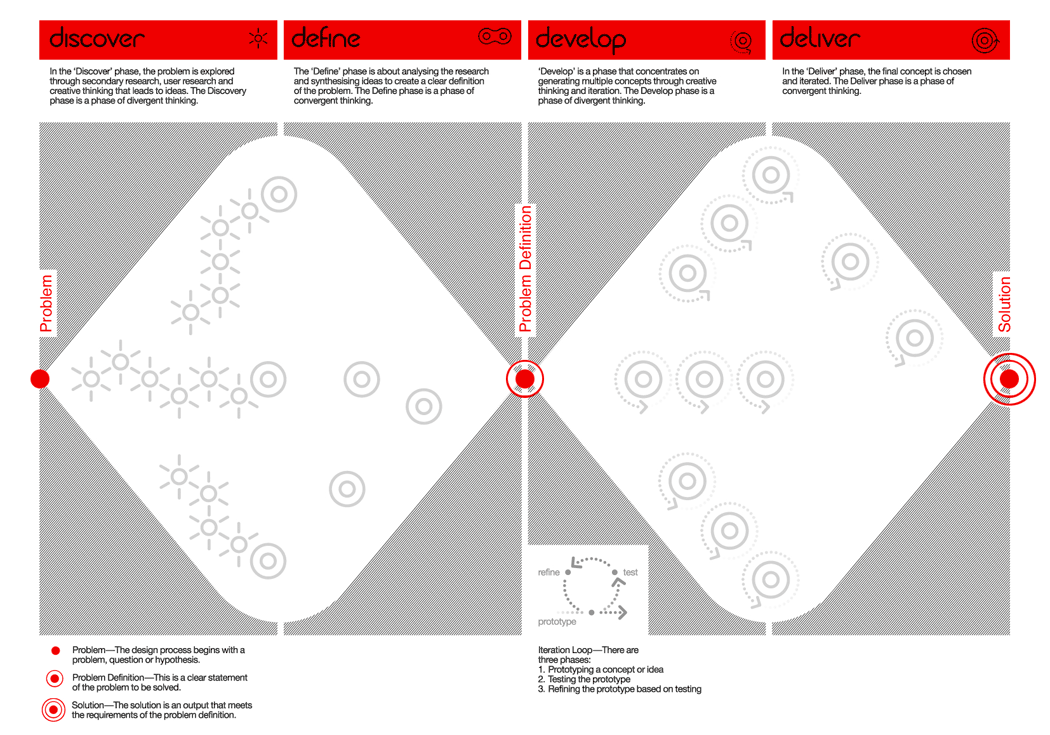
Dividing the design process up like this can help you to develop and plan the timetable for your new project. You can use the project structure as the basis for communication between all those involved in the design project. Throughout the process it is important to encourage people to share their views, hold regular reviews and be flexible enough to adjust plans when problems come up.
To see examples of how businesses structure and manage their design projects, browse through the Design Council's case studies.
How to evaluate your design process
Once you complete the design project, there is one last essential step in the process. Don't forget to evaluate the impact of delivering a new product on the service your business offers.
A number of indicators will help you to evaluate the success of a particular design project:
- Has your market share increased?
- Are more people using your service?
- Is customer satisfaction increasing?
- Is brand awareness increasing?
- Does it cost you less to manufacture your goods or deliver your service?
Alternatively, find out more about the design support for your business.
In-house or outsourced design?
How to decide if you should commission a design agency to handle your design, or manage a design project in-house
Depending on your resources and skills, you may choose to design in-house or find a designer externally.
Working with a designer or design agency
If you commission an external company to handle your design, they should bring you each new version of the design for review. Make sure that the designer has direct access to the decision-makers in your business so that communication is efficient.
If you plan to commission a series of design projects, it may be helpful to employ a design manager. The manager can act as the main point of contact between an external design agency and your company.
See more on how to choose and work with a designer.
Managing design projects in-house
You may have, or want to, set up an in-house design team, to embed the unique quality of your business in the creation of new products and services.
Your decision may depend on:
- whether you want design as a variable budget or a fixed overhead
- how confident you feel running design projects
- how the market you are in uses design services
In both cases, you should be diligent about documenting the design project and take care when drafting effective design documents.
When you are planning the design of a new product or service, it is important to be aware of intellectual property issues, ie who will hold the rights to the design. For more information, read about the design right and registration and protecting intellectual property.
Documenting the design process
Why it’s important to document your design process, and how to use this to help you evaluate the design’s contribution to your business success
Clearly written and structured documentation is crucial when you are planning the design process. Whether printed or electronic, this document will help to capture design ideas, decisions and solutions.
Document each stage of the design process
The content of your design documentation should include different information at each stage of the design process. For example:
- Discover - document all the attributes or functions needed in the new product you are designing. You can then perfect your ideas in your concept brief.
- Define - list what needs to be done to make your product or service function as required. The concept brief is usually signed off at this stage, and approval given to either begin on the design of the product or service itself or to continue developing the design.
- Develop - give details of the potential solutions which are being investigated. You may need to do competitor analysis at this stage.
- Deliver - your business needs feedback on the new product or service as part of final testing. Document the reactions of customers, point-of-sale staff, service and maintenance teams. Always record any safety analysis undertaken for the product or service and use all this feedback to develop the designs further. Set deadlines for production, making sure to co-ordinate with sales outlets and promotional activities.
You may find it useful to plan what documentation you will use and include it in the design brief that you write for your designers at the start of the project. Find out more about briefing a designer.
You may also want to integrate design with other business processes.
Advantages of documenting the design process
Documenting the design process and recording feedback helps your business to monitor the contribution that design is making to its success. It can also help you prove that you own the intellectual property rights of any designs should you discover that someone is infringing your rights.
Drafting effective design documents
Well-constructed design documents are valuable assets in keeping the design process on track
Drafting effective design documents may help your business in several ways. For example, it can:
- Offer a clear point of reference - the document is the key resource for all team members. Any new employees can quickly learn what is involved in the project.
- Ensure continuity - staff and management may change but the document remains the same.
- Ensure compliance - good documentation helps with any necessary legal compliance and may help if someone takes legal action against your business.
- Improve quality control - comprehensive documentation makes the quality assurance process easier.
- Improve workflow - documenting the process helps to establish the deadlines and make sure that they are met.
- Avoid costly mistakes - documentation helps in detecting mistakes and identifying cost-saving opportunities.
How to write an effective design document
When you write your design document, you should:
- Know your audience - who will read the document and what do they need from it? This helps you to structure the document and give the right tone, emphasis and content. Restrict review of the document to those who need to see it. Circulating it too widely could confuse the project. It may also mean that sensitive, confidential information gets into the wrong hands - such as your competitors.
- Tell a story - this helps to convince your design team of the needs for your product or service. Use personas and scenarios to show the experiences of people using your design. Remember to tell stories in pictures as well as words.
- Explain your reasons for commissioning the design - give the reasons why you need features of the new product or service.
- Use a clear format - make sure that you present your design documents well and use a consistent format with all pages to make it easier for readers to understand what is required of them.
- Use the active voice and the present tense - this is clearer and more direct. Say - "The customer chooses this because..." rather than "We found that, when presented with a choice, customers chose...".
- Ask someone to edit your design document so that you can be sure it does its job in communicating your goals to others.
Managing creative employees
How adapting your management style to encourage creativity can help you get the best from your designers
If you manage the creative process effectively and encourage other people to generate ideas and solve problems, you should see the rewards for your business.
Managing a relationship with your designers
It pays to build a strong relationship with the designers you're working with, and manage it in a way that encourages their creative processes but also makes sense for your business. For example, you could:
- Create an environment that encourages creativity - designers may prefer working alone or in teams, so give them that choice.
- Give designers structure in their work with a schedule, and make sure deadlines are clearly stated.
- Make designers fully aware of the problem you need them to solve.
- Give designers time to work - an atmosphere of crisis or constant deadlines may stifle the process.
- Acknowledge designers' creative work. Give constructive feedback about what improvements would benefit the end user.
- Remember designers may need time out of the office to find inspiration and to develop professionally.
- Try to reward creative productivity rather than time spent at work.
- Provide a 'lab' environment in which designers can keep trying out their latest idea.
- Make sure that designers do not neglect the necessary but less creative aspects of the job, particularly the routine paperwork.
- Make designers aware of your budget constraints but don't overload them with financial information that they don't need.
- Involve designers right from the beginning - they may produce better results having been involved from the first brainstorming of ideas.
Involving designers right from the start of a new development project can help to resolve many other business challenges. Learn more about the choice between in-house or outsourced design.
Integrate design with other business processes
How to involve designers in all stages of development of a new product or service, and why you should integrate design from the start
Design does not have to be a separate element of your development project. You should involve designers throughout the planning and launch of a new product or service:
- Upstream - designers can contribute to the 'roadmap' of product development and brand values. They can also conduct user needs assessment and consult users at the concept stage.
- Downstream - designers can help to ensure that the values and intentions defined by your business are not diluted as the new product or service is being produced. Remember that design helps to reinforce and protect your brand.
Bring designers and manufacturers together at an early stage
Incorporating designers in a multidisciplinary team will allow them to interact with other people involved in developing a new product or service. By bringing designers and manufacturers together, for example, you can identify potential problems early on in the development process.
Designers can learn if their ideas will work in commercial production, and if after-sales service and support for a product or service is practical.
Use design in brand development
Design is crucial in establishing and developing your business' brand. Designers work to communicate the values of your company to your customers. Involve designers when you plan your brand strategies, and keep them up-to-date on strategies, so that they can make sure that what they create is in tune with your business' aims and brand attributes.
From your brief, your designers will create brand guidelines - the 'rules' that govern how each aspect of the design should be used. For visual branding this may include instructions on typography, colours, sizing, etc. Sticking to these guidelines will ensure that you use your brand with consistency, and helps you to control where and how your company's brand and logos are used. See more on branding: the basics.